
How to choose packaging: 2026 guide
In a nutshell:
- Choosing the right packaging requires balancing product characteristics, distribution method, and sustainability certifications. Test shipments and modular personalization help prevent damage and enhance brand experience. Efficient inventory management and attention to the unboxing experience optimize customer satisfaction and costs.
Choosing packaging is a strategic process where you balance protection, appearance, and sustainability to find the best solution for your product and customer. The right packaging protects the product, enhances brand experience, and meets growing sustainability requirements. In 2026, certified materials such as FSC-certified cardboard and BPI-certified bioplastics will play a central role. Themed packaging and personalization are no longer a luxury but a conscious choice that builds customer loyalty. This guide explains how to choose packaging that works for your specific situation, whether you are a consumer or an entrepreneur.
What criteria determine how you choose packaging?
The choice of packaging starts with the product's characteristics. Weight, fragility, and moisture sensitivity determine the necessary material and form. A fragile glass object requires different protection than a stack of books or a piece of clothing.
In addition to product features, the distribution method plays a significant role. Shipping via PostNL or DHL places different demands on sturdiness than a product you hand over in a store. Packaging without unnecessary space prevents up to 80% of damage during transport. This means: choose a box that precisely encloses the product, not one that is twice as large.
Sustainability requirements are becoming increasingly concrete. Certifications such as FSC, PEFC, and OK Compost have become the standard for avoiding greenwashing and substantiating genuine environmental claims. Always ask for verifiable certificates before choosing a supplier.
The main selection criteria are:
- Product characteristics: weight, fragility, moisture sensitivity, and shelf life
- Distribution method: shipping, retail sales, or direct handover
- Dimensions: choose packaging that precisely encloses the product
- Cost-benefit ratio: balancing protection against material costs and shipping weight
- Sustainability certification: FSC, PEFC, or OK Compost for credible environmental claims
- Brand value: appearance and customer experience as a communication tool
Pro-tip: Calculate the total shipping weight, including packaging material, before making a final decision. Heavier packaging will consistently increase shipping costs, especially for large volumes.
Which packaging materials are suitable in 2026?
The range of packaging materials in 2026 is wider than ever. Each material has specific advantages and disadvantages that directly impact protection, cost, and environmental footprint.

Cardboard boxes are popular in retail and e-commerce due to their combination of strength, recyclability, and low cost. They are versatile, suitable for everything from small jewelry to large electronics. Glass offers a premium look but is heavy and fragile during shipping. Recycled plastic and bioplastics fill the middle ground: BPI-certified bioplastics are compostable, but some variants have a limited shelf life. Recycled PE films remain stable for up to 24 months, making them more suitable for longer storage.
Innovative cushioning materials like PaperEZ® offer sustainable protection without plastic waste. They are suitable for heavy and fragile products and completely replace traditional bubble wrap. Cotton bags and fabric packaging are reusable and popular for gift items and luxury products.
| Material | Sustainability | Cost | Best application |
|---|---|---|---|
| FSC-cardboard | High (certified) | Low to medium | E-commerce, retail, shipping |
| Recycled plastic | Medium | Low | Food, industry, bulk |
| BPI-bioplastic | High (compostable) | Medium to high | Short shelf life, food |
| PaperEZ® infill | High (plastic-free) | Medium | Fragile and heavy products |
| Cotton bags | High (reusable) | Medium | Gifts, luxury retail |
| Glass | Medium (recyclable) | High | Premium products, cosmetics |
Themed packaging is available in almost all material types. An FSC-certified cardboard box can be printed with a seasonal design or a personalized label. This allows you to combine sustainable and stylish wrapping without compromising functionality.
What steps do you follow to select the right packaging?
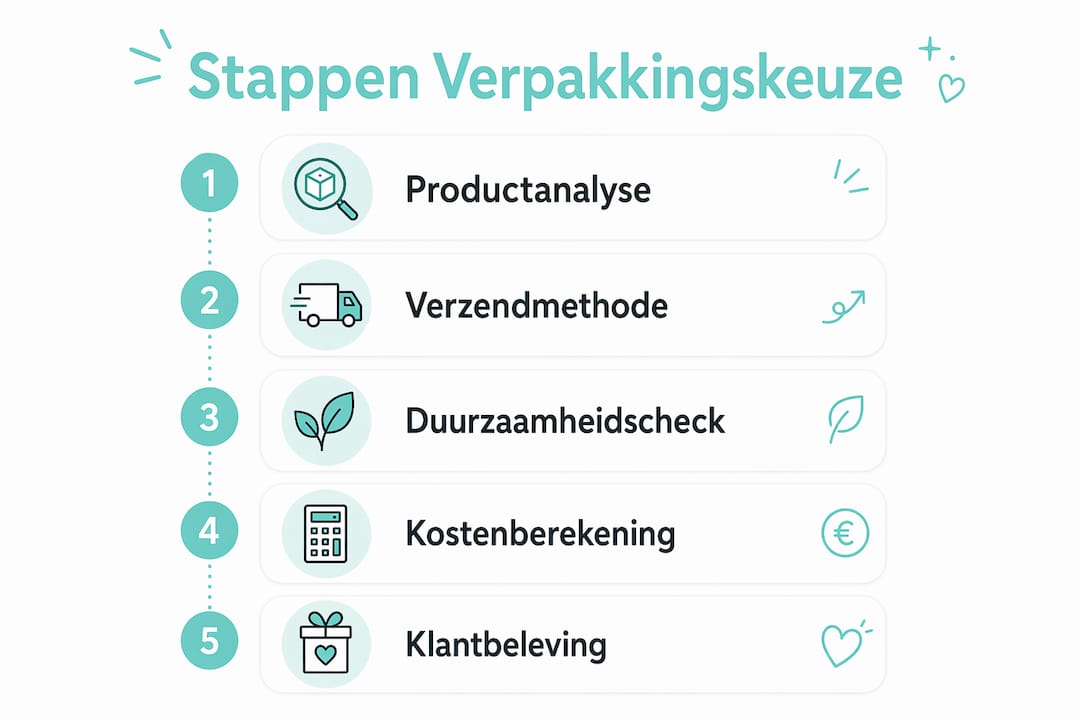
A structured approach prevents expensive mistakes. Follow these steps to select the right packaging for your product or event.
- Accurately measure the product. Note length, width, height, and weight. Add a maximum of 1–2 centimeters of clearance for protective material, no more.
- Determine the packaging type. Choose between a shipping box, mailer box, envelope, or gift bag based on the distribution method and product characteristics.
- Select the material. Use the table from the previous section as a starting point. Check that the material has the correct certification for your sustainability goals.
- Perform a test shipment. Send a test package to yourself to check if the packaging withstands the journey without damage or unnecessary movement.
- Balance protection, appearance, and cost. Cheap packaging that damages the product ultimately costs more than a slightly more expensive solution.
- Add thematic elements if appropriate. Ribbons, labels, or a seasonal print enhance brand experience without major changes to the basic packaging.
- Evaluate after each campaign or season. Customer feedback and return rates provide direct information on packaging performance.
The unboxing experience determines customer perception of product quality. This applies to both an online store and a physical store. A well-chosen package communicates brand values even before the customer sees the product.
Pro-tip: For themed packaging, use small modular adjustments like a ribbon or a sticker instead of a completely new packaging design. This is more cost- and inventory-efficient and still gives a seasonal look.
How do you effectively compare packaging options?
You compare packaging based on four criteria: price, sustainability, functionality, and appearance. If you only select based on price, you miss the broader impact on brand experience and return costs.
Standard versus personalized packaging
A standard brown cardboard box costs less per unit and is immediately available. A personalized envelope or printed box with FSC certification costs more but enhances the brand experience with every shipment. For businesses that ship regularly, this investment quickly pays off through higher customer loyalty and fewer returns.
Checklist for comparison
Use these points as a fixed check when comparing packaging options:
Do this:
- Always compare the total weight including filling material
- Check certifications (FSC, OK Compost, PEFC) with every supplier
- Test multiple sizes for a new product before large-scale purchasing
- Consider seasonal demand for themed packaging
Avoid this:
- Choosing based on unit price without including shipping costs
- Building large inventories of themed packaging that become unusable after the season
- Accepting environmental claims without verifiable certification
- Choosing packaging that is too large for the product
For themed packaging for brand value, the design must stand out, but it should never compromise product protection. Packaging that looks good but damages the product harms the brand more than neutral packaging.
For inventory management, it's wise to use basic packaging year-round and adjust it seasonally with separate decorative elements. This keeps inventory manageable and costs low. See the gift packaging checklist for a practical overview of clever combinations.
Key insights
Choosing the right packaging requires balancing product characteristics, distribution method, sustainability certification, and brand experience, with test shipments and modular personalization being the most effective approach.
| Point | Details |
|---|---|
| Start with the product | Accurately measure dimensions and weight; choose packaging that precisely encloses the product. |
| Check certifications | FSC, PEFC, and OK Compost are the standard for avoiding greenwashing and proving true sustainability. |
| Test before scaling up | Send a test shipment to yourself to assess damage, movement, and costs. |
| Personalize modularly | Use ribbons, labels, or stickers for seasonal themes instead of entirely new packaging. |
| Compare total costs | Unit price plus shipping weight plus return risk gives the true cost picture. |
Choosing packaging: what I do differently after years of practice
After years of working with packaging for various products and events, one mistake consistently stands out: the tendency to choose too large. A roomier box feels safer but, in practice, leads to higher shipping costs, more filler material, and a less polished presentation to the recipient. I now always choose the smallest possible packaging that fully protects the product.
What also strikes me is that companies consistently underestimate the value of the unboxing experience. A customer who receives a carefully packaged parcel is more likely to share it, repurchase sooner, and complain less quickly about minor flaws. The packaging is the first physical contact with the brand. That moment deserves as much attention as the product page or the advertisement.
For consumers who occasionally wrap gifts, my advice is simple: invest in one good basic package and vary with decoration. Neutral kraft paper or a white box with a beautiful ribbon always gives a neat impression, regardless of the season. Also, check out the wrapping methods for seasonal gifts for concrete inspiration.
For entrepreneurs, the rule is: evaluate packaging at least once a year. Material costs change, sustainability requirements become stricter, and customer expectations shift. Those who do not adjust their packaging strategy will sooner or later pay the price in higher costs or lower customer satisfaction.
— M
Embellish your packaging with ribbons and decorations from Kadopapier
A good basic packaging is the foundation. The finish determines the impression. Kadopapier offers an extensive range of ribbons and decorations with which you can quickly and affordably personalize any packaging. From luxurious organza Christmas ribbons in glitter and wired versions to soft curling ribbons in dozens of colors: there is always an option that suits your product and occasion. A ribbon adds a festive or professional look in seconds, without having to replace the entire packaging. This makes it the most cost-effective way to create themed packaging. View the full range on Kadopapier.net and order Monday to Friday before 15:00 for same-day shipping.
Frequently asked questions
What is the first thing you do when choosing packaging?
Accurately measure the product's length, width, height, and weight. Then choose the smallest possible packaging that fully protects the product, without unnecessary movement space.
Why choose themed packaging?
Themed packaging increases brand value and creates urgency through scarcity. They work best as small modular adjustments, such as a ribbon or label, on an existing basic package.
Which sustainable packaging options are reliable in 2026?
FSC-certified cardboard, PEFC-certified paper, BPI-certified bioplastics, and PaperEZ® infill material are demonstrably sustainable. Always ask for the certificate before choosing a supplier.
How do you objectively compare packaging materials?
Compare on four criteria: price including shipping weight, sustainability certification, protective function, and appearance. Perform a test shipment before purchasing on a large scale.
How do you avoid oversized packaging?
Add a maximum of 1–2 centimeters of clearance to the product dimensions and choose packaging that fits exactly. Test the choice with a test shipment to yourself to assess movement space and protection.