
Must-have retail packaging that enhances your presentation
TL;DR:
- Choose basic packaging in neutral colors for consistency and cost savings.
- Essential packaging types include paper bags, wrapping paper, boxes, and ribbon.
- A strategically chosen small assortment enhances brand experience and customer loyalty.
Choosing retail packaging seems simple, but in practice, you quickly get stuck. The offer is huge: bags, boxes, paper, ribbon, stickers, pouches, and that's just the beginning. Which packaging is truly indispensable? Which ones suit your products, your customers, and your store concept? This article provides you with concrete criteria, a clear overview of the most important packaging types, a practical comparison, and immediately applicable tips. This way, you no longer choose based on intuition, but on facts and insights. The result: a presentation that customers remember.
Table of Contents
- How to select must-have retail packaging?
- Indispensable packaging types: from bags to wrapping paper
- Comparison: which packaging suits your store best?
- Practical tips: how to use retail packaging smartly?
- Our vision: make a difference with smart retail packaging
- Curious about our assortment of must-have retail packaging?
- Frequently asked questions about retail packaging
Key Insights
| Point | Details |
|---|---|
| Choose packaging consciously | Inventory customer needs and product type for the best packaging choice. |
| Mix basics and decoration | Combine standard packaging with decorative accents for maximum experience. |
| Sustainability matters | Reusable and recyclable packaging is environmentally friendly and cost-effective. |
| Packaging is branding | Good packaging strengthens your brand identity and customer loyalty. |
How to select must-have retail packaging?
Now that we know how difficult choosing can be, let's start with the criteria that every retailer can use. A good selection begins not with the product itself, but with the customer who buys it. Who is your target group? A gift shop with a luxurious appearance needs different packaging than an artisan cheese shop or a trendy clothing boutique.
Use the following steps to determine your selection:
- Determine the product type and target group. Fragile products require sturdy boxes or protective tissue paper. Clothing fits better in a carrier bag with tissue paper. Food products require specific, sometimes food-safe packaging.
- Weigh presentation, protection, and sustainability. Beautiful packaging that breaks quickly works counterproductively. Choose materials that are both functional and visually strong. Good packaging enhances the customer experience and sets you apart from the crowd.
- Make room for creativity and personalization. Your own colors, logos, or a handwritten note turn a standard purchase into something special. The benefits of personalized packaging are demonstrable: customers remember the store better and return sooner.
- Plan for seasonal changes and trends. Christmas, Valentine's Day, Mother's Day: each season demands a different atmosphere. Ensure your basic assortment is easily adaptable with seasonal accents.
- Consider practical logistics. Packaging should be easy to store, quick to use, and affordable to order in larger quantities.
Also, look at the essential packaging materials specifically compiled for retail. That gives you a good starting point for your basic assortment.
Pro-tip: Choose basic packaging in neutral colors such as white, black, or kraft. These can be used all year round, and you can easily dress them up with seasonal ribbon, stickers, or decorative tissue paper. This saves on stock costs without compromising on appearance.
A common mistake is buying too much variety at once. Start with three to five core packaging items that you fully master, and then expand specifically based on customer demand and season.
Indispensable packaging types: from bags to wrapping paper
With these selection criteria clear, here is an overview of the packaging you simply can't do without. Carrier bags, wrapping paper, and ribbon together form the basis of every store presentation. But there's more. Here are the packaging types that appear in almost every type of store:
- Paper carrier bags. Sturdy, recyclable, and available in countless sizes and colors. Ideal for clothing, books, cosmetics, and gifts. Paper bags exude quality and are an extension of your brand identity.
- Plastic carrier bags. Water-resistant and cheaper per piece. Suitable for products that need protection against moisture, or for stores with a high volume of small purchases.
- Gift wrap and wrapping paper. Available in plain colors, prints, and seasonal themes. Gift wrap immediately increases the perceived value of a product. Customers are happy to pay a little extra for a beautifully wrapped gift.
- Gift boxes. Cardboard boxes in various sizes are indispensable for jewelry, electronics, cosmetics, and other valuable products. They protect and present at the same time.
- Organza and paper pouches. Perfect for small items such as jewelry, sweets, or promotional items. Organza pouches give a luxurious look for a low price.
- Ribbon and decorative twine. Satin ribbon, kraft ribbon, or curling ribbon: each type creates a different atmosphere. Ribbon is a simple way to immediately upgrade packaging.
- Sealing stickers and cards. Small details with a big impact. A sticker with your logo or a handwritten card makes the packaging personal and professional at the same time.
See the complete guide to packaging materials for a more extensive overview per category and application.
| Packaging type | Suitable for | Price level |
|---|---|---|
| Paper carrier bag | Clothing, gifts, books | Medium |
| Gift box | Jewelry, cosmetics, electronics | Medium to high |
| Organza pouch | Jewelry, sweets, promo | Low to medium |
| Gift wrap | All products | Low |
| Satin ribbon | Decoration, closure | Low |
| Sealing sticker | Branding, closure | Low |
Pro-tip: Combine a simple paper carrier bag with tissue paper in an accent color and a sticker with your logo. This costs little extra, but the effect on the customer experience is significant. Customers often keep such bags and reuse them, which provides free brand visibility.
Comparison: which packaging suits your store best?
Now that you know what types are available, this overview will help with your final choice. Not every packaging suits every type of store. The functions of packaging range from protection to experience. This makes the choice dependent on multiple factors simultaneously.
| Store type | Recommended packaging | Seasonal adjustment |
|---|---|---|
| Gift shop | Gift boxes, wrapping paper, ribbon | High: Christmas, Valentine's, Easter |
| Clothing store | Paper bags, tissue paper, stickers | Medium: sales, new collection |
| Jewelry store | Small boxes, organza pouches, satin ribbon | Low to medium |
| Bakery or delicatessen | Paper bags, kraft paper, stickers | Medium: holidays |
| Artisan shop | Kraft paper, twine, cards | Low: seasonal accents |
Basic packaging is functional and affordable. It does what it needs to do: protect and transport. Luxury packaging adds an extra layer to the customer experience. It communicates quality even before the product itself is seen.
The choice between basic and luxury is not just a matter of budget. It's about the expectation you want to create for the customer. Luxury packaging for a cheap product can even be counterproductive. Consistency between product, price, and packaging is key.
“Packaging is the first thing a customer touches. It forms the first physical impression of your brand. Invest in it consciously and strategically.”
When choosing, also consider the different packaging types and their specific applications per store type. This helps you to make targeted choices without investing too much in variants you rarely use.
Some points to consider in the comparison:
- Seasonal influences: Stores with strong seasonal sales, such as gift shops and bakeries, benefit most from adaptable basic packaging.
- Promotions and offers: Temporary stickers or limited edition bags are cost-effective and create urgency among customers.
- Inventory management: Choose packaging that you can order in larger quantities without it quickly becoming outdated or damaged in storage.
Practical tips: how to use retail packaging smartly?
Besides the facts and comparison, practical success can be achieved with the right applicable tips. Using packaging goes beyond simply putting something in a bag. The way you package directly communicates something about your store and your values.
- Opt for reusable and recyclable materials. Customers increasingly appreciate sustainable choices. Reusable packaging offers a sustainable and cost-effective alternative to single-use solutions. Paper bags, fabric pouches, and recycled gift wrap are popular choices that also send a positive signal about your business practices.
- Surprise customers with seasonal or festive themes. Changing packaging themes for holidays or seasons encourages repeat visits. Customers who know you always have something new and fitting will return. Use the seasonal packaging tips to approach this structured and purchase in time.
- Ensure a recognizable private label or sticker. Your logo on a sticker or card costs little but has a big impact on brand recognition. Customers carrying your bag on the street are a walking billboard. Consistency in color and style reinforces this effect.
- Combine functionality with aesthetics. Beautiful packaging that is also sturdy gives customers confidence. Choose materials that look good and perform their function well. Thin bags that tear at the first purchase damage your reputation.
- Train your staff in packaging. The best packaging materials only work if they are used correctly. Let employees practice neat wrapping, tying ribbons, and writing cards. A consistent packaging process increases the perception of quality.
Pro-tip: Small details, such as a ribbon or a personalized card, turn every purchase into an experience. Customers remember not only the product but also how it felt to receive it. This emotional connection is precisely what leads to loyalty and word-of-mouth advertising.
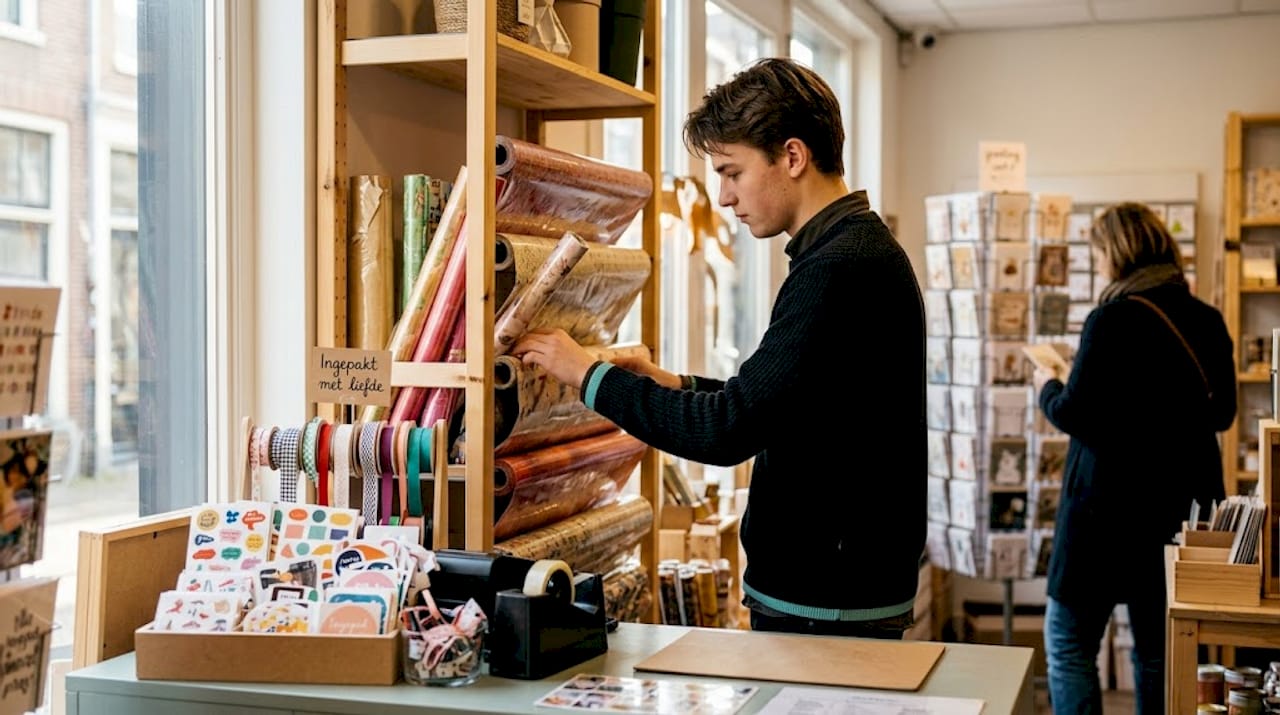
Also consider the presentation in the store itself. Packaging materials visible to customers, such as a roll of beautiful gift wrap or a basket of colorful ribbons, arouse curiosity and stimulate additional purchases. Customers then more often ask for beautiful packaging, even if they hadn't initially planned to.
Sustainability is no longer a trend; it's an expectation. More and more consumers consciously choose stores that act environmentally friendly. By investing in recyclable or biodegradable packaging material, you position your store as a responsible choice.
Our vision: make a difference with smart retail packaging
Many retailers think that more variety automatically leads to a better presentation. That's not true. Ten different types of bags in storage does not mean customers have a better experience. The opposite is often true: too much choice leads to inconsistency, higher costs, and an unclear brand image.
Our experience shows that the strongest retail presentations are built on a small, well-chosen basic assortment that is consistently used. Three to five packaging types, always in stock, always fitting the brand. Supplemented with seasonal accents that refresh the experience without disturbing the base.
Packaging is part of your brand experience, not an afterthought. Customers who take home a beautifully wrapped product feel valued. That feeling translates into repeat purchases and positive reviews. See how you can concretely enhance customer experience with gift packaging for your store.
Multifunctional packaging, such as a neutral kraft carrier bag that works for both daily purchases and gifts, is the smartest investment. They are versatile, cost-efficient, and timeless in appearance.
Curious about our assortment of must-have retail packaging?
Want to get started right away? At Kadopapier.net you will find a wide range of retail packaging that aligns with everything discussed in this article. From basic packaging to decorative accents: everything is directly available and quickly deliverable. Order Monday through Friday before 15:00, and your order will be shipped the same business day. For example, check out the decorative curlpins for a professional finish, or the popular organza pouches for a luxurious presentation of small items. Free shipping from 100 euros excluding VAT. Fast, clear, and complete.
Frequently asked questions about retail packaging
What are the most important retail packaging items for a gift shop?
Carrier bags, wrapping paper, and ribbon together form the basis of every store presentation, supplemented with gift boxes for valuable items.
Which retail packaging is the most sustainable?
Reusable packaging such as fabric bags, recycled paper, and biodegradable pouches are the most sustainable choices for stores that want to operate environmentally consciously.
How do I personalize my retail packaging?
Use stickers, cards, or personalized gift wrap with your logo and brand colors, because good packaging enhances the customer experience and sets you apart from the crowd.
What is a quick way to adapt packaging to seasons?
Add seasonal accents such as thematic ribbon, festive stickers, or limited edition bags, without completely replacing your basic assortment.