
E-commerce Packaging: The Complete Guide 2026
TL;DR:
- High costs due to poor packaging lead to more returns, damage, and negative reviews. Good, compact packaging strengthens brand image and increases repeat purchases. New EU rules, such as traceability and maximum empty space, will apply from 2026, so timely documentation is essential.
Poor packaging costs you more than you think. A damaged product leads to a return, a negative review, and a customer who won't come back. Good e-commerce packaging goes far beyond sealing a box. Packaging is the last physical touchpoint with your customer before they hold the product. It influences brand perception, customer satisfaction, and return costs simultaneously. In this guide, you'll learn which materials to choose, how to pack step-by-step, which mistakes to avoid, and what the new European regulations mean for your webshop.
Table of Contents
- Key Insights
- What you need for efficient packaging
- Step-by-step packing an order
- Common packing mistakes
- PPWR: new packaging rules in 2026
- Packaging as a brand instrument
- My vision on packaging as an entrepreneur
- Packaging materials from Kadopapier for your webshop
- FAQ
Key Insights
| Point | Details |
|---|---|
| Material determines protection | Choose packaging material based on product type, not just price. |
| Process prevents errors | A standardized procedure with a checklist systematically reduces damage, returns, and waste. |
| Packaging strengthens your brand | Good packaging increases repeat purchases; 52% are more likely to reorder after a positive unboxing experience. |
| PPWR applies from August 2026 | Documentation, traceability, and maximum empty space are mandatory under the new EU regulations. |
| Sustainability is a customer demand | 70% of consumers pay more for sustainable packaging. Don't wait until it's mandatory. |
What you need for efficient packaging
Choosing the right shipping material for webshops begins with understanding what you are shipping. Not every product requires the same approach. A ceramic plate needs different protection than a T-shirt or an external hard drive.
Basic material per product type
| Product Type | Recommended packaging | Points of attention |
|---|---|---|
| Clothing and textiles | Polybag or cardboard box | Moisture resistance, keep compact |
| Electronics | Double-walled box with foam or bubble wrap | Antistatic protection, no movement space |
| Fragile products | Rigid cardboard box with tissue paper or film | Multiple layers of void fill all around |
| Small accessories | Cardboard envelope or sturdy padded mailer | Keep weight low, good sealing |
| Food and cosmetics | Food-grade packaging with seal | Comply with hygiene regulations |
The box size deserves extra attention. Boxes that are too large mean more void fill, higher shipping costs, and a customer who receives a half-empty box. That feels sloppy. Boxes that are too small cause damage or force products, which also results in damage.
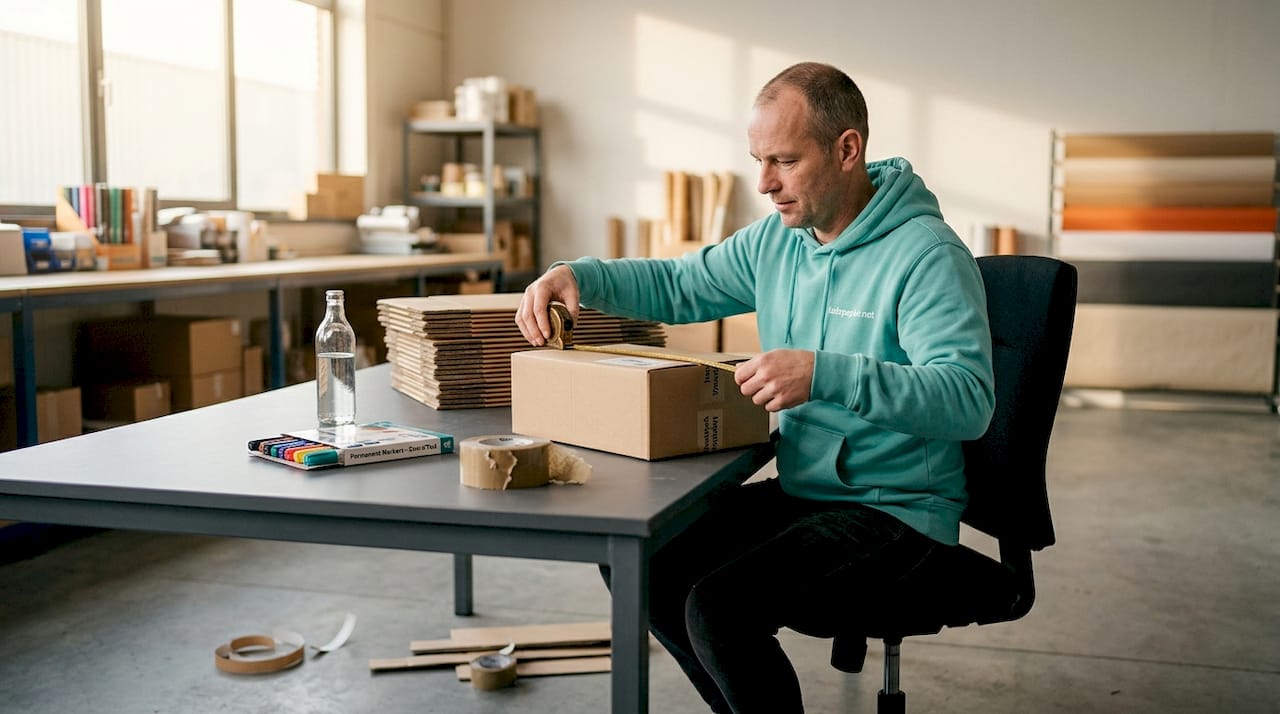
Use this as a basic rule: the product should have a maximum of 1 to 2 centimeters of play on all sides. This is enough space for protective void fill without excess.
Void fill: choose consciously
- Bubble wrap: Good protection, lightweight, less durable.
- Kraft paper: Recyclable, effective for filling, less suitable for fragile items.
- Tissue paper: Ideal for clothing and cosmetics, gives a premium feel.
- Recycled packaging material: Sustainable choice, works well as void fill for non-fragile products.
- EPE foam or cardboard inlays: Custom protection for fragile items and electronics.
Pro tip: Buy void fill in bulk and don't vary too much in type. One or two consistent choices make your process faster and your inventory more manageable.
Step-by-step packing an order
Correct packing follows a fixed sequence. Standardizing this process leads to fewer errors and faster shipping. The following steps are applicable to almost any webshop order.
-
Check the order before packing. Compare the picking list with the product. Packing the wrong product costs you twice as much work: a return and a new shipment.
-
Choose the right packaging. Select a box or envelope that fits the product. Refer to the material table above. Do not use a box you happen to have lying around if the size is incorrect.
-
Lay a base layer of void fill. At least 3 to 5 centimeters at the bottom for fragile products. This absorbs shocks during transport.
-
Wrap the product if necessary. Use bubble wrap or tissue paper around the product itself. Ensure no hard edges or corners are unprotected.
-
Place the product in the box and fill the sides. Leave no empty space. The product should not shift when shaken. Test this by gently moving the box back and forth.
-
Seal the box using the H-taping method. This means: tape over the central seam and over both ends of the box. This distributes tension across the entire cardboard and prevents the bottom or lid from tearing open under weight.
-
Add the packing slip, return label, or personalized card. Place this on top of the product, visible upon opening. Customers look for this first.
-
Apply the shipping label to a flat part of the box, never over a fold or seam. A label that is partially over a fold can detach or become unreadable by scanners.
-
Perform a final visual inspection. Check that the tape adheres well, the label is legible, and the box shows no damage.
Pro tip: Create a dedicated packing station in your warehouse or workspace with all necessary supplies within reach. This saves an average of 30 to 60 seconds per package, which adds up significantly for high volumes.
For more concrete advice on correctly packing and shipping packages, you can also consult Kadopapier's step-by-step shipping guide.
Common packing mistakes
Many e-commerce problems start with the packing process. Incorrect packaging significantly increases returns. For comparison: in Germany, approximately 25% of all online orders are partially or fully returned. Damage due to poor packaging is one of the main causes.
The most common mistakes:
- Oversized box without void fill. Product moves freely and gets damaged. Additional disadvantage: higher shipping costs due to volumetric weight.
- Insufficient protection around fragile products. One layer of bubble wrap is almost always too little for glass or pottery. Use multiple layers or a cardboard inlay.
- Tape only over the central seam. Without taping the sides, the box can open under weight or external pressure.
- Placing the label over a fold or seam. This leads to unreadable barcodes and delays in the carrier's sorting process.
- Over-packaging. A simple product in three layers of plastic, two boxes, and a pile of void fill causes irritation. Customers are put off by excessive packaging, especially if they are environmentally conscious.
- Not including a return label. This sounds simple, but its absence directly leads to additional customer service calls and frustration.
Quality control doesn't have to be complex. Review ten random shipments each week and check if all steps have been performed correctly. This simple measurement quickly gives you insight into recurring errors in your process.
Structural quality measurements such as BCT (Box Compression Test) and ECT (Edge Crush Test) are worthwhile for larger volumes. They provide objective data on how well your cardboard performs under pressure. Small improvements in material and process can yield significant gains in customer satisfaction and costs.
PPWR: new packaging rules in 2026
The European Packaging and Packaging Waste Regulation (PPWR) is no longer a distant future. From August 2026, organizations will be obliged to draw up a declaration of conformity, make packaging traceable, and comply with requirements regarding empty space and recyclability.
What the PPWR specifically means for your webshop
| Obligation | What this entails | When applicable |
|---|---|---|
| Declaration of Conformity | Document that packaging complies with EU requirements | Mandatory from August 2026 |
| Traceability | Link packaging to technical dossiers in the supply chain | Applies to all sellers on the EU market |
| Maximum empty space | Maximum 40% of package volume may be empty | Applies to all e-commerce shipments |
| Recyclability | Only use materials that are recyclable by 2030 | Gradually mandatory |
| EPR reporting | Registration and reporting to Extended Producer Responsibility systems | Dependent on country and volume |
Packaging Management emphasizes that PPWR compliance is an organizational task, not just a technical one. Documentation, quality management systems, and registration are part of the requirements.
What should you do now? Start by inventorying all packaging materials you use. Document the origin, recyclability, and supplier information for each material type. This way, you'll already be building the technical dossier you'll need later.
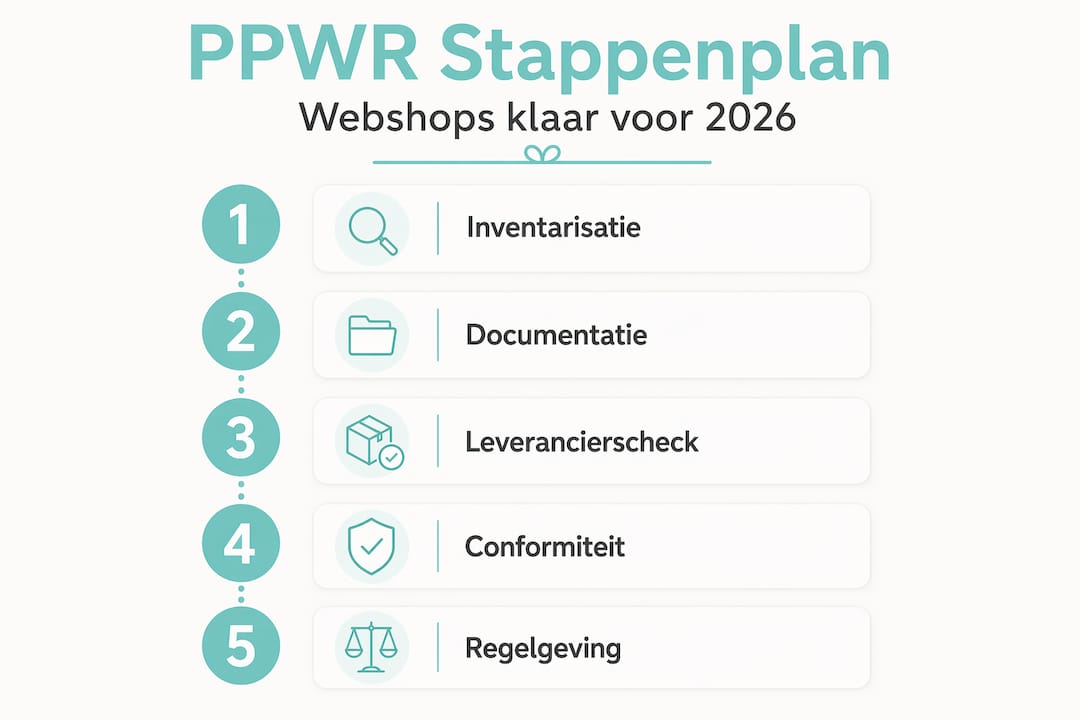
Pro tip: Ask your packaging supplier for a material declaration or product datasheet. This document significantly speeds up your conformity process and will soon be a mandatory part of your dossier.
The impact on sustainable packaging material and related regulations has been extensively documented. Use existing knowledge resources to prepare, so you don't fall behind when enforcement begins.
Packaging as a brand instrument
Packaging is not a neutral obligation. It is a communication tool. Research shows that 74% of consumers say packaging influences their brand perception. And 52% are more likely to reorder if the packaging is positive.
These are not small numbers. They mean your packaging directly contributes to your revenue, separate from the product itself.
The unboxing culture is growing strongly. Personalized packaging has become mainstream and influences sales, especially during busy periods like Christmas and Valentine's Day. Those who capitalize on this moment give customers something to talk about.
Where packaging as a brand instrument has a concrete effect:
- Repeat purchases: A positive unboxing experience increases the likelihood of a customer returning.
- Social media: Beautifully packaged products are shared. That's free reach.
- Perception of quality: Consistent, well-finished packaging shows that you, as a seller, take quality seriously.
- Sustainability as a signal: 70% of consumers pay more for sustainable packaging. Choosing recyclable material is also a brand statement.
The balance lies in a simple principle: focus on packaging 'fit' first. The right size, the right materials, the right closure. Then comes branding. A well-fitting box with a neutral finish does more for your brand experience than an overly printed box that is too large. Read more about personalizing packaging and the concrete benefits for your webshop.
My vision on packaging as an entrepreneur
In my experience, packaging is the most underestimated part of e-commerce operations. Everyone invests in advertising, product pages, and customer service, but the moment the package arrives rarely receives strategic attention.
What I've learned: small adjustments here yield disproportionately large returns. One adjustment to the box size I implemented for a client reduced the return rate by 8 percentage points in three months. Not through better products, but through better protection.
What strikes me about many webshops is the tendency to view packaging as a cost item that should be kept as low as possible. That is a mistake. The real costs lie in returns, damaged products, and customers who don't come back. That's where the savings are to be made.
My practical advice that you rarely hear: measure the usable internal dimensions of your boxes and compare them with your product dimensions. Deviations of more than 20% in volume signal that you are using the wrong box. And: test your packaging yourself by sending a package to yourself. What you receive at home is what your customer experiences.
The PPWR makes all this more urgent. Those who start documenting and testing materials now will not face surprises later. Those who wait will deal with time pressure and potentially fines.
— M
Packaging materials from Kadopapier for your webshop
Kadopapier supplies a wide range of packaging materials and accessories, specifically aimed at webshops that take quality and appearance seriously. From sturdy shipping materials to decorative finishing: the range aligns with the practice of daily high-volume packing.
For a professional finishing touch for your packages, Kadopapier offers luxurious options such as wholesale organza ribbon in various widths and designs, and decorative elastic for a functional and aesthetic finish. These materials are suitable for both seasonal campaigns and standard webshop shipments.
Kadopapier delivers orders placed before 3:00 PM on the same working day. Free shipping for orders over 100 euros excluding VAT. Wide assortment, direct delivery, everything on one platform.
FAQ
What is the best box for e-commerce shipments?
Use a single-wall cardboard box for lightweight products up to 10 kilograms, and a double-wall box for heavier or fragile goods. Ensure that the box's volume is no more than 20% larger than the product including void fill.
How do I safely pack fragile products?
Wrap each fragile product individually in at least two layers of bubble wrap or EPE foam. Place a 5 cm layer of void fill at the bottom of the box, position the product centrally, and fill all sides so nothing can move.
What changes will the PPWR bring for webshops?
As of August 2026, the PPWR mandates a declaration of conformity, material traceability, and a maximum empty space of 40% in packages. Start documenting your materials and suppliers now.
How does packaging contribute to more repeat purchases?
Research by Dotcom Distribution shows that 52% reorder more frequently after a positive packaging experience. Consistent, careful packaging strengthens brand trust and gives customers a reason to return.
What are sustainable alternatives to bubble wrap?
Kraft paper, recycled cardboard, and reusable tissue paper are good alternatives. They are recyclable, comply with upcoming PPWR requirements, and are positively valued by consumers as a sign of environmental responsibility.