
How to recycle wrapping paper eco-friendly in 5 steps
TL;DR:
- Only clean, dry, and uncoated wrapping paper can go in with old paper.
- Glossy, metallic, and glitter papers belong with residual waste.
- Always remove tape, stickers, and staples before putting paper in the bin.
After every party or birthday, it's there: a pile of torn wrapping paper on the floor. The question then arises whether it can simply go with old paper or if it belongs with residual waste. Many people mindlessly throw wrapping paper in with paper waste, even though some of it actually disrupts the recycling process. This article provides a clear, practical explanation based on current Dutch regulations. You'll learn step by step how to correctly separate wrapping paper, which materials are suitable, and how your choices contribute to less waste.
Table of Contents
- What can go with old paper: requirements for recyclable wrapping paper
- Supplies and preparation: what do you need for responsible recycling?
- Step-by-step plan: how to recycle wrapping paper in 5 easy steps
- What happens to recycled wrapping paper?
- Our vision: why conscious handling of wrapping paper makes a difference
- Sustainable wrapping? Discover suitable materials and decorations
- Frequently asked questions about recycling wrapping paper
Key Insights
| Point | Details |
|---|---|
| Separate paper correctly | Wrapping paper without plastic and glitter can go with old paper. |
| Check and prepare | Remove tape, stickers, and staples before recycling. |
| High recycling rate | Over 80% of paper in the Netherlands is successfully recycled. |
| Choose eco-friendly | Choose matte or uncoated wrapping paper for easy recycling. |
What can go with old paper: requirements for recyclable wrapping paper
Now that you know it's important what you recycle, the question is: which wrapping paper can go into the paper bin? Not all wrapping paper is the same. The rule of thumb is simple: paper that is clean, dry, and free of plastic can go with old paper. But practice is sometimes a bit more nuanced.
Wrapping paper and greeting cards can go with old paper if the paper is clean, dry, and free of plastic, foil, or glossy coatings. This also applies to printed or colored paper, as long as there are no extra layers on it. Matte, uncoated paper is the standard for recyclable wrapping paper.
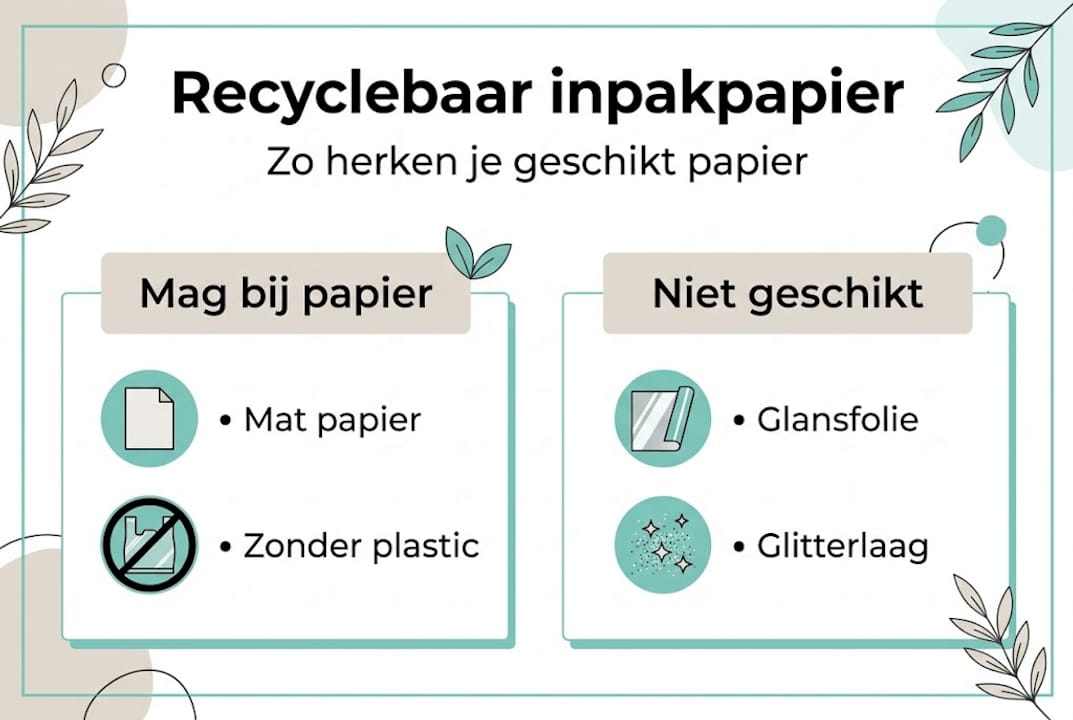
The problem lies in popular festive variants. Glossy paper, metallic wrapping paper, and paper with glitter contain coatings or plastic particles that disrupt the recycling process. The same applies to paper with a foil layer, such as silver or gold glossy wrapping paper. These belong with residual waste.
What can go with old paper:
- Matte, uncoated wrapping paper without glitter
- Printed paper without plastic coating
- Kraft paper and brown wrapping paper
- Paper bags without plastic windows
- Clean greeting cards without foil
What belongs with residual waste:
- Glossy or metallic wrapping paper
- Paper with glitter or foil layer
- Wet or dirty sheets
- Paper with a lot of tape that cannot be removed
“Separate clean wrapping paper with old paper for high recycling rates. Choose matte or uncoated paper for easy recycling to wrap more environmentally friendly.”
A useful test: does the paper crumple easily and feel matte? Then it can probably go with old paper. Does it feel smooth or spring back? Then it probably has a coating.
Pro-tip: Consciously choose matte, uncoated sustainable wrapping paper tips when purchasing so that recycling is always possible. This saves you the trouble of sorting afterwards and directly contributes to eco-friendly wrapping.
Supplies and preparation: what do you need for responsible recycling?
Now that it is clear which paper is suitable, the practical preparation follows. Proper preparation prevents suitable paper from still ending up in the residual waste or disrupting the recycling process.
It starts with sorting. After a party, put all sheets of wrapping paper aside and briefly examine each sheet. Is the sheet clean and dry? Then check for tape, stickers, ribbons, or staples. All these materials must be removed before the paper goes with old paper. "What waste belongs where" indicates that clean and dry are the basic conditions for high recycling percentages.
| Material | With old paper? | Action needed |
|---|---|---|
| Matte wrapping paper | Yes | Remove tape and stickers |
| Kraft paper | Yes | Immediately suitable |
| Glossy paper | No | With residual waste |
| Metallic/foil paper | No | With residual waste |
| Paper with glitter | No | With residual waste |
| Greeting cards without foil | Yes | Remove any ribbon |
| Paper ribbon | No | Check for plastic |
What you need for preparation:
- Two bins or piles: one for recyclable, one for residual waste
- Scissors to remove tape
- Space to unfold and check sheets
- A bin for reusable pieces that you fold for later use
Pro-tip: Large pieces of paper are easier to reuse or recycle. Do not tear sheets further apart. Fold them neatly and save them for a next time if they are still intact. See also the guide on reusable gift packaging for more ideas.
Also remove hidden plastic. Think of that small sticker with the price, or a piece of tape that is almost invisible. Even small amounts of plastic or foil can make an entire batch of paper unsuitable for recycling in the facility.
Step-by-step plan: how to recycle wrapping paper in 5 easy steps
After preparation, it's time for the actual execution. The paper recycling process involves sorting, baling, pulping by dissolving in water, removing contaminants such as staples and ink, bleaching if necessary, and drying into new paper. Your home sorting is the first step in that process.
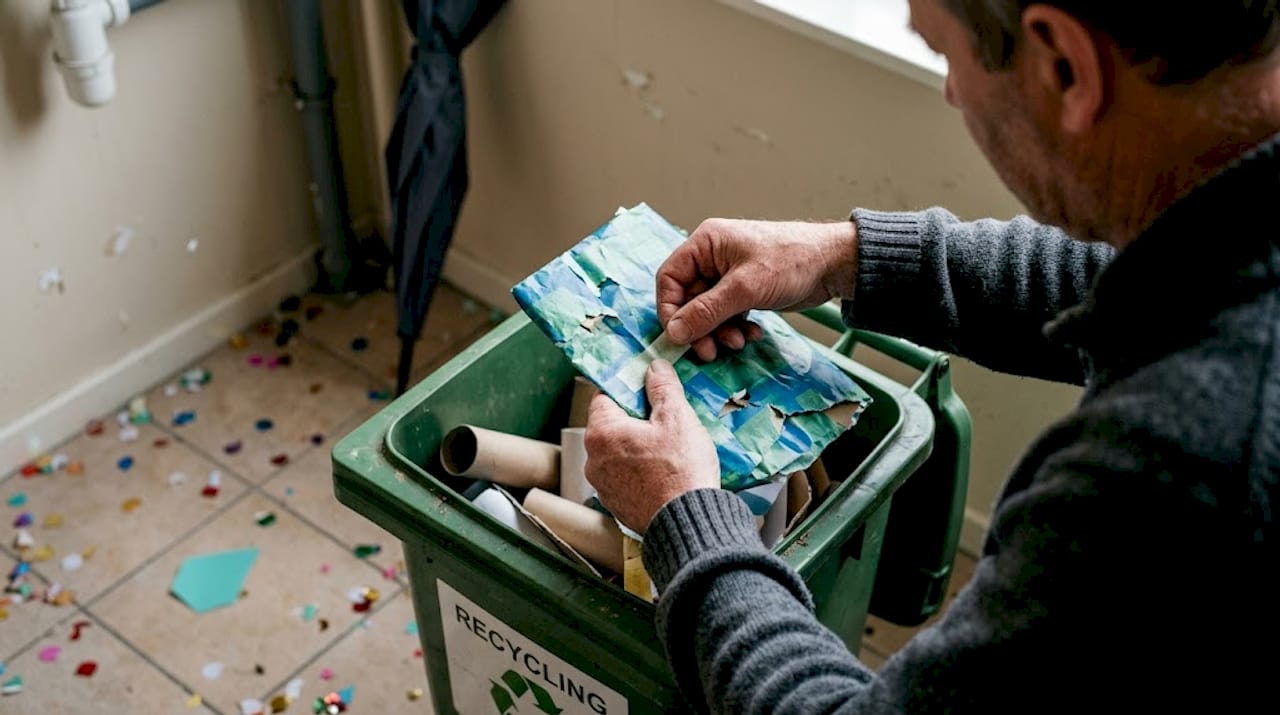
- Sort immediately after unwrapping. Make two piles: recyclable and residual waste. Don't wait until later, because then sheets get mixed up.
- Check each sheet individually. Feel if the paper is matte. Check for glossy coating or foil layer. If in doubt? Then it belongs with residual waste.
- Remove all non-paper materials. Remove tape, stickers, ribbons, and any staples. Use scissors if tape is stuck.
- Add suitable paper to the old paper. Fold large sheets neatly. Don't cram them into a bag, but place them loosely in the paper bin or bundle them.
- Offer it correctly. Check the local rules in your municipality. Some municipalities want paper bundled, others accept it loose. Also check the extensive packaging materials recycling guide for additional information.
| Common mistake | Correct approach |
|---|---|
| Glossy paper with old paper | Glossy paper with residual waste |
| Not removing tape | Always remove tape |
| Wet sheets with paper | Dry sheets only |
| Cramming everything into one bag | Sorting by type and condition |
| Ignoring local rules | Checking municipal rules |
Pro-tip: Let children participate in sorting. This increases their awareness of recycling and waste separation in a practical way. More about what happens to the paper afterwards can be read at recycling gift packaging.
What happens to recycled wrapping paper?
After recycling, you are naturally curious about what happens to your collected paper. The answer is encouraging. In the Netherlands, 81 to 89% of paper and cardboard is actually recycled. This is one of the highest percentages in the world. Furthermore, 87% of new paper in the Netherlands consists of old paper.
After you put the paper in the paper bin, a structured process begins. The collector picks it up and takes it to a paper mill. There, the paper is sorted, pressed into bales, and then dissolved in water to form pulp. Contaminants such as ink, tape, and small amounts of plastic are filtered out. The pulp is cleaned, possibly bleached, and then dried into new sheets of paper or cardboard.
“Paper performs better than plastic due to high recycling rates and the ability to reuse fibers multiple times.”
One important fact: paper is not endlessly recyclable. Paper fibers are reused 5 to 25 times before they become too short for further processing. After that, a supplement of new, so-called virgin pulp is always needed to maintain quality.
What is made from old wrapping paper:
- New wrapping paper and gift paper
- Cardboard boxes and packaging material
- Newsprint and printed matter
- Toilet paper and kitchen paper
- Corrugated cardboard for industrial packaging
The choice for types of gift bags and packaging that are recyclable directly aligns with this system. The more clean paper is collected, the fewer new fibers are needed.
Our vision: why conscious handling of wrapping paper makes a difference
With insight into what happens to old paper, it's time to reflect on your role. There's a widespread misconception that individual behavior doesn't matter much. That's not true. Recycling plants operate at scale, and that scale consists of millions of individual choices.
One sheet of incorrect paper in the bin is not a disaster. But if an entire country systematically throws foil and glitter with old paper, the quality of the collected paper decreases. Factories then have to sort more, dispose of more waste, and use more energy. The influence of consumer behavior is thus directly visible in recycling efficiency.
The choice starts with purchasing. Those who consciously choose matte, uncoated paper or reusable gift packaging reduce the impact at the beginning of the chain. Separation is a second step. Both steps together make a difference. Small, consistent habits work better than one-time major efforts.
Sustainable wrapping? Discover suitable materials and decorations
Need inspiration for responsible wrapping? At Kadopapier.net, you'll find a wide range of materials that align with a conscious choice. Think of kraft paper and matte wrapping paper that is directly recyclable, or reusable decorations that you can use again and again. For finishing touches, there are options such as gift decoration curls and pins that can be reused, or a beautiful soft pink curling ribbon as a sustainable packaging addition. View the full assortment for recyclable and eco-friendly wrapping material. This way, you combine stylish wrapping with a conscious choice for the environment.
Frequently asked questions about recycling wrapping paper
Can colored or printed wrapping paper go with old paper?
As long as the paper does not contain plastic, foil, or glitter, printed or colored wrapping paper can also go with old paper. The color or printing itself does not pose a problem for the recycling process.
What should I do with paper with pieces of tape or staples?
Remove tape and staples as much as possible before putting the paper with old paper. The recycling process filters out small contaminants, but less is always better.
Why can't glossy or metallic paper go with old paper?
Because foil and coating disrupt the recycling process, glossy or metallic wrapping paper belongs with residual waste. The plastic coating cannot be separated from the paper in the pulping phase.
What happens to recycled wrapping paper?
It is processed into pulp and ultimately used for new paper or cardboard. The recycling process involves sorting, baling, pulping, and drying into new paper.
How many times can paper be recycled?
Paper can be recycled between 5 and 25 times before new fibers are needed due to the shortening of paper fibers.