
What is Decorative Material? Complete Guide 2026
Decorative materials encompass a surprisingly wide range of products, from natural fibers to synthetic fabrics, each with unique properties that determine the success of your project. Whether you're wrapping a personalized gift, designing an event, or realizing creative projects, the right material choice makes the difference between an average and an excellent result. In this guide, you'll discover which materials are available, their specific properties, and how to effectively combine and secure them for maximum impact in gifts, events, and other decorative applications.
Table of Contents
- Key Takeaways
- Overview of Types of Decorative Materials and Their Properties
- The Importance of Material Choice in Decoration for Gifts and Events
- Practical Tips for Combining and Securing Decorative Materials
- Discover High-Quality Decorative Materials at Kadopapier.net
- What is Decorative Material? Frequently Asked Questions
Key Insights
| Point | Details |
|---|---|
| Material types overview | Decorative material includes natural materials such as wood and cotton, and synthetic materials such as polyester and plastic, each with its own properties and application possibilities. |
| Natural versus synthetic | Natural materials provide warmth and authenticity but are less weather-resistant than synthetic materials, which last longer and offer ease of maintenance. |
| Important properties | Fire safety, water resistance, and durability are crucial when choosing, depending on whether the decoration will be placed indoors or outdoors. |
| Applications per material | Natural fibers are suitable for gift wrapping and rustic decoration, while synthetic fabrics provide ribbons and bows, and foam materials allow for 3D decorations. |
| Texture and sustainability | Try combining materials with different textures, such as organza and wood, to create visual contrast and a professional look. |
Overview of Types of Decorative Materials and Their Properties
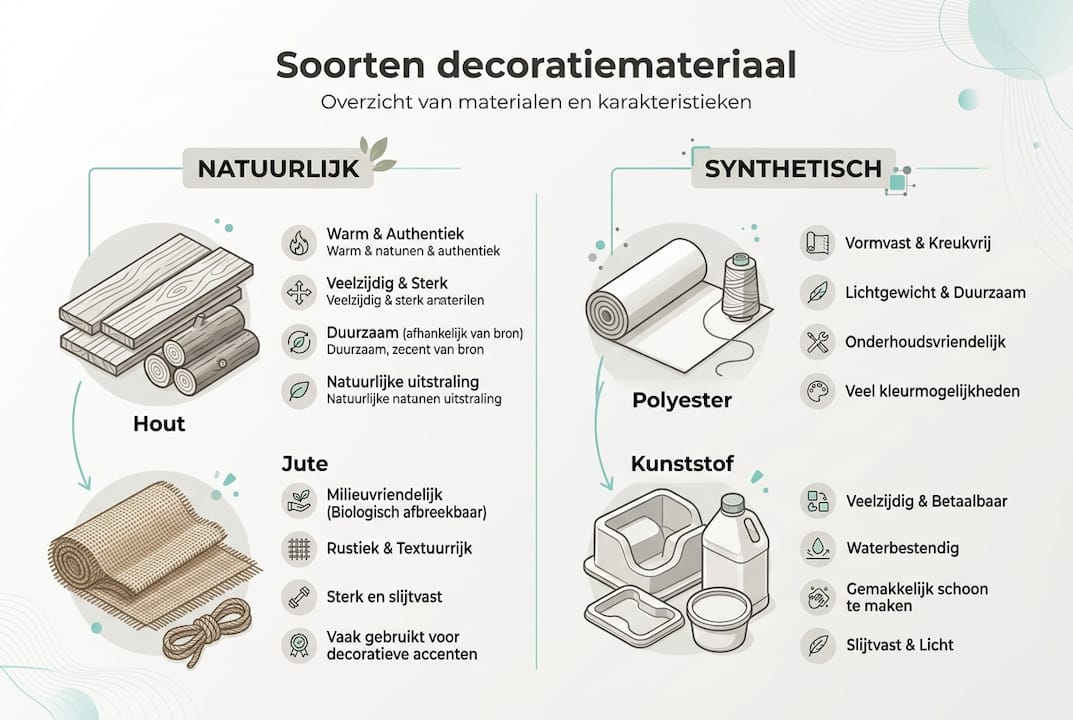
The landscape of decorative materials consists of two main categories, each with its own advantages and limitations. Natural materials like wood, cotton, and jute offer warmth and an authentic look that synthetic alternatives can hardly match. However, these materials require regular maintenance and are more sensitive to weather conditions, making them less suitable for long-term outdoor use.
Synthetic materials such as polyester, PU foam, and plastic, on the other hand, offer excellent durability and easy maintenance. They retain their shape and color longer, even under challenging conditions. The downside is that they have a less natural appearance and are often not biodegradable, which is an important consideration for environmentally conscious consumers.
Specific properties determine which material best suits your project. Fire safety, for example, plays a crucial role in event decoration. Gypsum is completely non-combustible according to NEN-EN 13501-1, while many plastics require flame-retardant treatment. Water resistance is essential for outdoor applications, where materials like varnished wood or coated textiles are preferred over untreated natural fibers.
Durability varies greatly by material type. Teak wood scores very high on durability, while standard plastic scores low on lifespan and environmental impact. This benchmark helps in making informed choices for projects where durability is a priority.
Comparison of decorative material properties:
| Material | Fire Safety | Durability | Flexibility | Maintenance |
|---|---|---|---|---|
| Gypsum | Non-combustible | Moderate | Low | Low |
| PU foam | Treated | High | Very high | Very low |
| Teak wood | Moderate | Very high | Low | Moderate |
| Polyester | Treated | High | High | Very low |
| Cotton | Combustible | Moderate | High | High |
| Plastic | Variable | Low to moderate | Moderate | Low |
Flexibility is another crucial property that determines how easily you can shape and adapt a material. Textile materials such as organza and satin are easy to drape and tie, ideal for ribbons and bows. Rigid materials like wood and gypsum provide structure but limit shaping.
Main applications per material type:
- Natural fibers (jute, cotton): gift wrapping, rustic decoration, seasonal ornaments
- Synthetic fabrics (polyester, organza): ribbons, bows, elegant packaging accents
- Foam material (PU, EVA): 3D decorations, letters, shapes for events
- Wood and cork: natural accents, name cardholders, rustic themes
- Paper and cardboard: basic packaging material, labels, decorative elements
Pro-tip: combine materials with different textures for visual contrast and depth. For example, mix soft organza with rigid wooden elements, or combine matte jute with glossy satin for a balanced, professional look that stands out.
For those who value eco-friendly gift wrapping, natural materials with FSC certification or recycled synthetic alternatives offer the best balance between aesthetics and environmental consciousness.
The Importance of Material Choice in Decoration for Gifts and Events
The choice of decorative material directly determines the atmosphere, appearance, and ease of use of your gifts and events. A luxury gift deserves packaging that reflects its value, while a children's party requires colorful, playful materials that can withstand rough handling. The context guides your material choice more than you might think.

Durability and maintenance are becoming increasingly important, especially for reusable decorations for corporate events or seasonal displays. Materials that can be used multiple times without loss of quality save costs and reduce waste. Teak wood scores very high on durability, while standard plastic scores low, which makes these benchmarks valuable when planning investments in decorative material.
For businesses, fast delivery is crucial when organizing events or providing retail displays. Last-minute changes often occur, and the availability of quality material with short delivery times can make the difference between a successful event and missed opportunities.
Seasonal influences require adjustments to your material choice. Outdoor summer projects require UV-resistant and water-repellent materials, while indoor winter decorations can benefit from warmer, textile-like options that exude coziness. This adaptation not only extends the lifespan of your decorations but also enhances their visual impact.
Steps for choosing decorative material:
- Determine the primary use and location (indoor/outdoor, temporary/permanent)
- Select materials based on required properties (fire safety, water resistance)
- Consider seasonal influences and adaptations for optimal performance
- Combine different materials for visual effect and functional benefits
- Take into account durability and reusability for cost-efficiency
The psychological impact of material choice is often underestimated. Natural materials evoke feelings of authenticity and craftsmanship, while glossy synthetic options communicate modernity and luxury. These associations influence how recipients perceive your gift or event, regardless of the actual content.
Budget, of course, also plays a role, but focus on value rather than just price. Cheap materials that quickly wear out ultimately cost more than quality options that you can use multiple times. Calculate the cost per use instead of just the purchase price for a realistic picture.
Pro-tip: adjust your material choice by season to increase impact and ease of use. Light, airy fabrics work perfectly in summer, while richer textures and warmer colors enhance winter projects. This seasonal approach makes your decorations more relevant and attractive.
For those interested in reusable gift packaging, durable materials with a timeless look offer the best investment. They remain usable season after season without becoming dated.
Practical Tips for Combining and Securing Decorative Materials
Effectively combining different materials creates visual depth and texture contrast that elevates your decorations. The key lies in balancing properties: combine soft materials like organza with harder elements like wooden accents, or mix matte surfaces with glossy details for dynamic compositions.
Fastening methods vary greatly by material type and must be chosen carefully. Glue works well for foam materials, wire for natural elements, and tape for light decorations. The wrong fastening method can damage material or cause instability, so knowledge of compatibility is essential.
Comparison of fastening methods:
| Method | Strength | Reusability | Ease of Use | Best Application |
|---|---|---|---|---|
| Hot glue | High | Low | High | Permanent fastening foam, wood |
| Double-sided tape | Moderate | Low | Very high | Light materials, paper |
| Wire/string | High | High | Moderate | Natural materials, bundles |
| Pins | Moderate | Very high | High | Textiles, soft materials |
| Glue gun | Very high | Low | Moderate | Heavy elements, permanent installations |
| Velcro | Moderate | Very high | Very high | Reusable displays, textiles |
Common problems with fastening can often be avoided with proper preparation. Ensure surfaces are clean and dry before applying glue or tape. Grease, dust, or moisture drastically reduce adhesive strength. For heavy elements, use multiple attachment points distributed over the surface instead of a single central point.
Tips for successful material combinations:
- Start with a base material and add accent materials in limited quantities
- Stick to a maximum of three different material types per project for visual coherence
- Combine complementary textures: rough with smooth, matte with glossy
- Pay attention to color harmony in addition to material differences for a balanced end result
- Test combinations on a small scale first before executing the full project
Temperature affects fastening methods more than you think. Hot glue works poorly in cold environments because it solidifies too quickly, while some tapes lose their adhesive strength at high temperatures. Choose your fastening method based on the final location and conditions.
Pro-tip: test each fastening method in advance on a small, inconspicuous surface to prevent damage. Some types of glue can discolor or weaken materials, and it's better to discover this during a test than on your final product.
For seasonal projects, reusable fastening methods such as Velcro or pins are ideal. They allow you to adapt your decorations without wasting material. This fits perfectly with budget-friendly approaches that combine flexibility and cost-efficiency.
Discover High-Quality Decorative Materials at Kadopapier.net
Now that you know the properties and applications of decorative materials, the next step is to find quality products that suit your projects. Kadopapier.net offers a wide range of decorative materials for various styles and applications, from classic elegance to modern, playful designs.
Our collection includes essential materials such as red organza ribbon for refined accents, gift decoration curl pins white for a professional finish, and seasonal options like adhesive snowman head decoration for thematic projects.
Fast delivery and reliable quality make a difference for both consumers and businesses that need to meet deadlines. Whether you're decorating a one-time gift or regularly need decorative materials for retail displays, our platform supports you with accessible product categories and practical filters.
What is Decorative Material? Frequently Asked Questions
What are the most commonly used types of decorative materials?
The most popular decorative materials are ribbons (organza, satin, kraft), paper elements, natural fibers such as jute, and synthetic options like polyester and PU foam. These materials cover most applications for gifts and events.
How do I choose the best decorative material for my project?
Start by determining the use and location, then select based on required properties such as water resistance or fire safety. Consider seasonal influences and combine materials for optimal visual effect. Budget and durability are additional factors that guide your choice.
Which materials are the most durable?
Teak wood and other FSC-certified wood types score very high on durability, followed by high-quality synthetic materials such as PU foam. Standard plastic and untreated paper score low, especially for reusable applications.
How do I combine different materials in decoration?
Combine complementary textures such as rough with smooth or matte with glossy, limit yourself to a maximum of three material types per project, and start with a base material to which you add accents. Test combinations on a small scale first for the best result.
What are safe fastening methods for decorative material?
Use hot glue for foam and wood, wire for natural materials, double-sided tape for light elements, and pins for textiles. Always test on a small surface beforehand, ensure surfaces are clean and dry, and choose multiple attachment points for heavy elements.