
Definition of transparent gift wrap: types and uses
TL;DR:
- Transparent gift wrap is clear, see-through material that makes the contents of gifts fully visible. It mainly consists of plastic film like polypropylene, cellophane, or tracing paper, and is chosen for a professional presentation where the product takes center stage. The choice of material affects both the appearance and the recyclability and sustainability of the packaging.
Transparent gift wrap is clear, see-through wrapping material that keeps the contents of a gift sharply and fully visible. In the packaging industry, this material is also called transparent wrapping film or cellophane film. It comes in rolls and is suitable for gifts, floral arrangements, and retail packaging. The choice of transparent material is no coincidence: it provides a professional presentation where the product itself is the focus. This article explains the definition, optical properties, material types, and recycling rules for both consumers and businesses.
What is the definition of transparent gift wrap?
Transparent gift wrap is defined as clear or transparent material that makes the contents of the gift fully visible, usually supplied as plastic film in rolls for gift wrapping, retail, and decoration. The term “transparent” refers to a specific optical property: light passes straight through the material without scattering. This allows the wrapped object to be seen sharply and undistorted.
In practice, transparent wrapping paper is most often offered as plastic film, such as polypropylene or cellophane. Mini-Art offers transparent wrapping film in rolls of 5 x 0.7 meters, with a smooth and sturdy plastic composition. This size is standard for both private and professional use.
The term “transparent paper” is also popularly applied to tracing paper or glassine, materials made of paper yet offering a high degree of transparency. These paper types are less clear than plastic film but offer a more sustainable and recyclable option. For businesses wanting to know exactly what transparent gift wrap is, it refers to any wrapping material where the contents are directly visible without opening the package.
How do you distinguish transparent from translucent wrapping material?
The difference between transparent and translucent material is functional and measurable. Transparent material allows light to pass straight through, providing sharp visibility. Translucent material diffuses light, making images blurry or indistinct. This distinction directly determines which material you choose for a specific application.
| Property | Transparent | Translucent |
|---|---|---|
| Light transmission | Straight, no scattering | Diffuse, scattered light |
| Contents visibility | Sharp and clear | Blurry or indistinct |
| Typical material | Polypropylene film, cellophane | Tissue paper, frosted glass film |
| Application | Gifts, floral arrangements, retail | Decorative filling, ambient lighting |
| Recyclability | Depends on material | Paper types often recyclable |
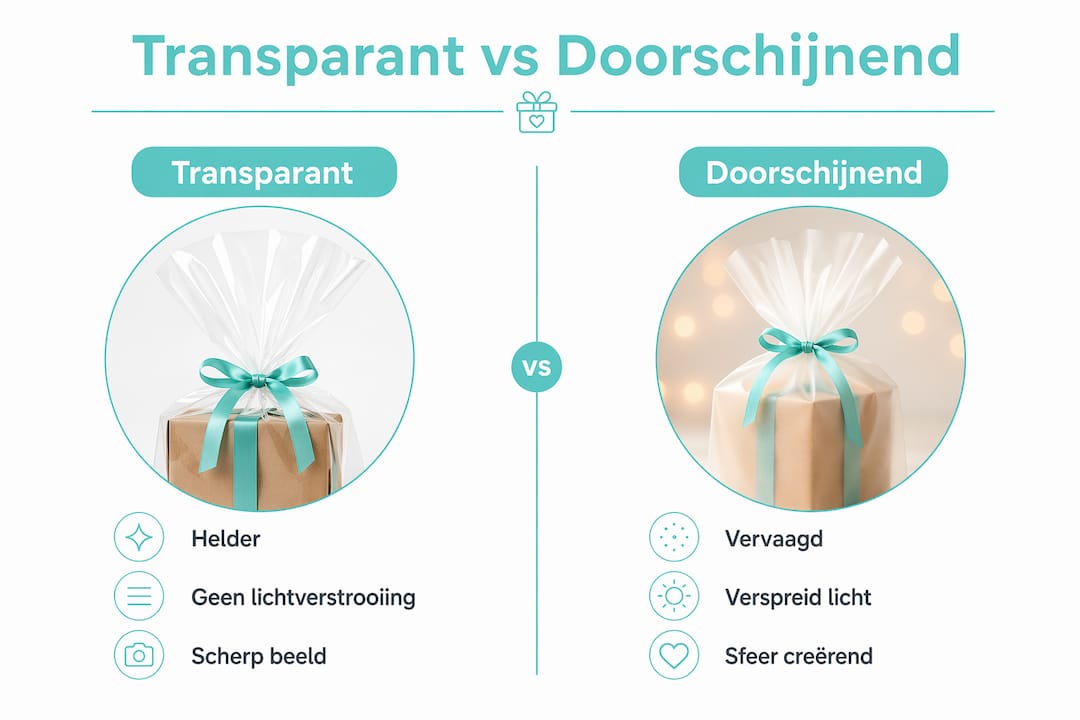
Translucent tissue paper is often used as filler material in gift bags. It adds ambiance and color but partially conceals the contents. Transparent film does the opposite: it fully displays the product and provides a sleek, professional look. For a florist wrapping a bouquet, transparent film is the standard choice because the flowers need to remain visible.
The distinction between transparent and translucent helps consumers and businesses choose the right gift packaging and avoid unnecessary confusion. If you want to wrap a gift where the product itself is the eye-catcher, choose transparent. If you want to maintain an element of surprise but still add color and texture, choose translucent material.
Pro-tip: Test the material at home by placing a printed text underneath it. Can you read the text clearly? Then it's transparent. Is the text blurry but still visible? Then it's translucent.
What types of transparent gift wrap are there?
Transparent gift wrap and film are available in multiple material types, each with its own properties and applications. The two main categories are plastic film and transparent paper. Within those categories, there are variants suitable for different situations.
Plastic films:
- Polypropylene (PP) film: The most commonly used variant for gift wrapping and floral arrangements. Strong, clear, and easy to process. Supplied in rolls, suitable for large volumes.
- Cellophane film: Made from regenerated cellulose, biodegradable and compostable. Gives a slightly warmer, less plastic look than PP film. Popular with organic and sustainable brands.
- Shrink wrap: Transparent film that shrinks tightly around the product when heated. Used for retail and food packaging, less so for decorative gift wrapping.
Transparent paper and tracing paper:
- Tracing paper (glassine): High-density paper that allows light through but is not completely transparent. Suitable for artisanal and sustainable packaging. Recyclable with old paper.
- Glassine paper: Thin, smooth paper with a slight sheen and limited transparency. Used for food and delicate products.
Transparent packaging is available as film around the gift, but also as envelopes and wrappers, each with different processing and recycling characteristics. This is relevant for businesses that process large volumes and need to consider waste streams. A florist uses film in rolls, while a retailer is more likely to choose transparent bags or envelopes.
The choice between these types depends on three factors: the desired appearance, functionality, and sustainability requirements. Cellophane scores better on environmental impact than PP film but is more expensive and less widely available. Tracing paper offers an artisanal look and is recyclable but less clear than film.
Pro-tip: Gift paper offers an overview of types of tissue paper and applications that helps in choosing the right material for gift shops and individuals.
How sustainable is transparent gift wrap?
The sustainability of transparent gift wrap depends entirely on the material used. Matte, uncoated paper is recyclable and belongs with old paper. Film with a plastic layer, gloss, or glitter coating belongs with residual waste due to recycling problems. This distinction is crucial for businesses and consumers who want to package environmentally consciously.
The recycling rules for gift wrap are as follows:
- Check the material. Paper without coating or film can go with old paper. Plastic film belongs with plastic waste or residual waste, depending on the municipality.
- Remove tape, ribbon, and stickers. These materials disrupt the recycling process. Glossy or metallic paper disrupts recycling processes and belongs with residual waste, while matte paper without coating is suitable for old paper.
- Choose cellophane over PP film. Cellophane is biodegradable and compostable. PP film is not, but can be placed with plastic waste in some municipalities.
- Use tracing paper as a sustainable alternative. Tracing paper combines a certain transparency with recyclability. It is a good choice for businesses that want transparency without plastic.
- Consider reusable packaging. Reusable gift packaging reduces waste and strengthens customer loyalty. Sustainability is gaining ground in packaging choices, especially in retail.
A clear explanation of the composition of gift wrap and its implications for recycling supports sustainable consumer choices and environmentally friendly policies in stores. Businesses that use large volumes of transparent film would do well to set up a return and cleaning system for reusable packaging. This requires logistical planning but yields long-term cost savings and a better image.
Pro-tip: Use the wrinkle test for paper: if you crumple a piece of gift wrap and it stays crumpled, it's probably recyclable paper. Does it spring back or feel plasticky? Then it's film and belongs with residual waste or plastic.
How do you choose the right transparent gift wrap?
The choice of transparent gift wrap depends on four considerations: appearance, functionality, sustainability, and ease of use. Each of these factors weighs differently, depending on the situation.
Appearance and presentation:
- Polypropylene film provides the clearest and sleekest presentation. Suitable for luxury gifts and professional retail packaging.
- Cellophane gives a slightly warmer, less industrial look. Popular with organic shops and artisanal producers.
- Tracing paper suits an artisanal or minimalist style. Less clear, but with its own character.
Functionality:
Film in rolls is the most flexible for large and irregular shapes. Transparent bags and envelopes are faster to process for standard sizes. For floral arrangements, film in rolls is the standard, as the flowers must remain fully visible.
Combinations with decorations:
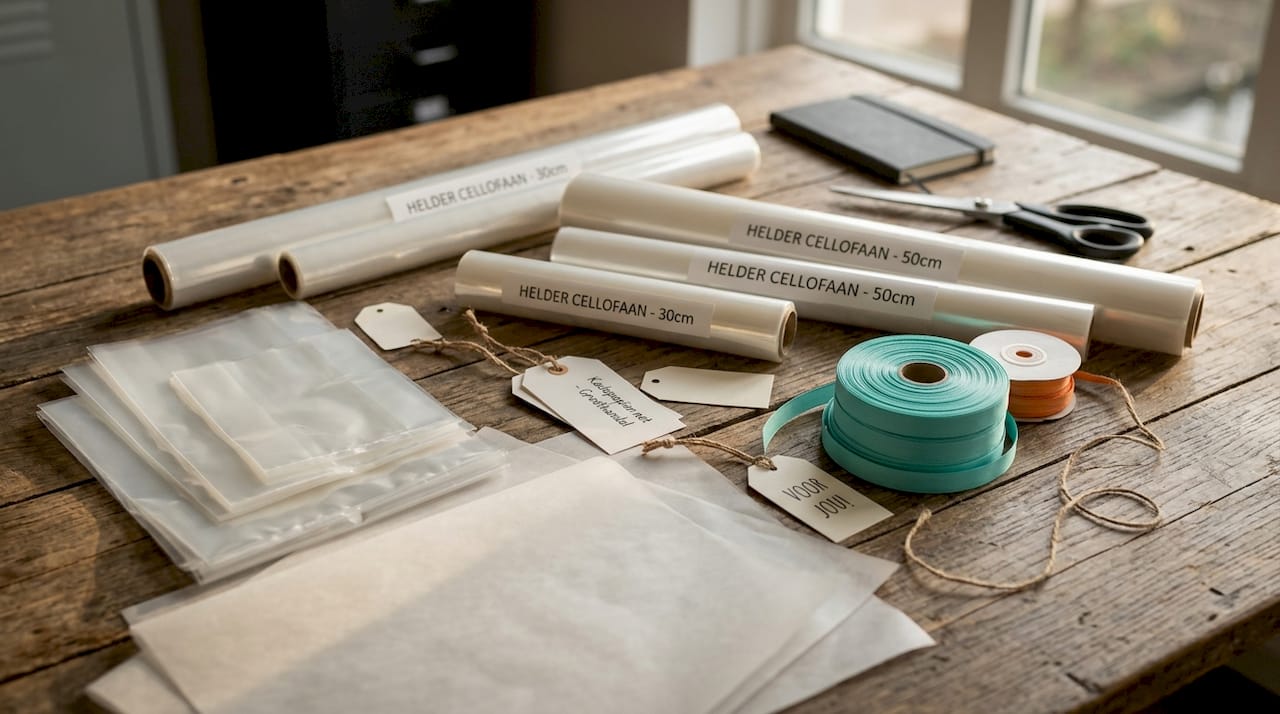
Choosing transparent gift wrap also depends on the combination with ribbons, stickers, and other decorations that enhance the presentation. A transparent film with a wide organza ribbon gives a luxurious effect. Kraft paper ribbon better suits cellophane for an artisanal look. Stickers and labels are visible through the film, providing additional opportunities for branding.
Price and volume:
PP film is the cheapest option for large volumes. Cellophane is more expensive but scores better on sustainability. Tracing paper falls in between. For individuals, the price per roll is decisive. For businesses, processing speed also counts: film in rolls is faster to process than loose sheets.
More information on the use of transparent film for stores helps retailers make the right choice for their specific situation.
Key insights
Transparent gift wrap is defined as clear, transparent packaging material where the contents remain sharply visible, and the choice of material determines both the appearance and recyclability.
| Point | Details |
|---|---|
| Definition of transparent gift wrap | Clear, transparent material through which light passes straight, making the contents sharply visible. |
| Transparent versus translucent | Transparent provides sharp visibility; translucent diffuses light and gives a blurry image. |
| Material types | Polypropylene film, cellophane, and tracing paper are the three main types, each with its own sustainability characteristics. |
| Recycling rules | Matte uncoated paper can go with old paper; plastic film and coated paper belong with residual waste or plastic. |
| Selection criteria | Appearance, functionality, sustainability, and combinations with ribbon or stickers determine the best choice. |
Transparency as an asset: my vision on modern gift presentation
Transparent gift wrap is often seen as a neutral choice, a clear packaging without distinct character. That is not correct. Anyone wrapping a product in clear film makes a conscious choice: the product is central, not the packaging. This is a strong statement in a time when packaging is becoming increasingly busy and colorful.
What I find striking is that the discussion about sustainability in transparent packaging is often too simplistic. Plastic film automatically gets a negative label, while cellophane and tracing paper are barely mentioned. The reality is more nuanced: cellophane is biodegradable, tracing paper is recyclable, and reusable packaging offers a third way that is becoming increasingly attractive to retailers.
The trend towards transparency in gift presentation also aligns with a broader shift: consumers want to see what they are buying, even if it is a gift. Transparent packaging makes the product visible and strengthens trust. For businesses, this is an opportunity to let the product speak for itself, without additional printing or eye-catching packaging.
— M
Transparent gift wrap and accessories at Kadopapier
Kadopapier offers a wide range of transparent wrapping films and matching accessories for both individuals and businesses. From polypropylene film in rolls to cellophane for sustainable packaging: the range is geared towards professional use and high volumes. Want to know more about the right film? Read the comprehensive explanation about transparent film as wrapping material on the Kadopapier website.
A transparent packaging truly shines with the right ribbon. Kadopapier offers luxurious organza Christmas ribbons in various colors and widths, which perfectly combine with clear film for a stylish presentation. Order Monday to Friday before 15:00 and receive your order shipped the same business day. Free shipping from 100 euros excl. VAT.
FAQ
What exactly is transparent gift wrap?
Transparent gift wrap is clear, see-through wrapping material through which light passes straight, keeping the contents of the gift sharply visible. It is usually supplied as plastic film, such as polypropylene or cellophane, in rolls.
What is the difference between transparent and translucent paper?
Transparent material allows light to pass straight through, providing a sharp image of the contents. Translucent material diffuses light, making the contents visible but blurry or indistinct.
Can transparent gift wrap be placed with old paper?
Plastic film does not belong with old paper and should go with plastic waste or residual waste. Tracing paper and uncoated transparent paper are recyclable and can be placed with old paper, provided tape and ribbon are removed.
Which transparent gift wrap is the most sustainable?
Cellophane is biodegradable and compostable, making it the most sustainable choice among transparent films. Tracing paper is recyclable and a good alternative for those who want a paper look combined with transparency.
How do you combine transparent gift wrap with decorations?
Transparent film combines well with wide organza ribbons, kraft paper ribbons, and stickers or labels that are visible through the film. The combination with a luxurious ribbon creates a professional and stylish presentation.