
Wrapping for the holidays: creative sustainable tips 2026
The holidays bring joy, but also the challenge of wrapping gifts in a creative and sustainable way. More and more consumers are looking for eco-friendly alternatives that are both stylish and personal. By 2026, the demand for wrapping materials that not only look beautiful but also protect the planet is growing. This guide offers practical, creative, and sustainable wrapping methods that are perfect for private consumers and creative hobbyists. You will discover how to achieve impressive results with simple materials and techniques, while simultaneously contributing to a greener future.
Table of contents
- Supplies and sustainable materials for festive wrapping
- Step-by-step creative wrapping ideas for the holidays
- Tips and common mistakes when wrapping gifts
- Discover our wrapping materials and gift ribbons for stylish holidays.
- Frequently asked questions about wrapping for the holidays
Key points
| Point | Details |
|---|---|
| DIY wrapping options | Handmade envelopes, bags, and fabric wraps offer unique and personal presentations. |
| Environmentally friendly materials | Recycled paper and reusable fabrics significantly reduce the ecological footprint. |
| Cost savings | Fabric wraps and reusable boxes yield long-term financial benefits. |
| Personal touch | Handmade packaging enhances the emotional value of every gift. |
Supplies and sustainable materials for festive wrapping
Before you start creative wrapping, it is essential to have the right materials and tools on hand. Choosing sustainable options not only makes your gifts look more beautiful but also contributes to a smaller environmental impact. Research shows that the choice of wrapping materials significantly influences the ecological footprint of gift-giving.
Sustainable materials form the basis of every eco-friendly wrapping strategy. Recycled paper offers an excellent alternative to traditional gift wrap and is available in various colors and patterns. Fabric wraps, such as the Japanese furoshiki technique, are reusable and add an elegant touch to any gift. Reusable boxes and bags can be used season after season, saving both costs and waste. Natural materials such as jute, cotton, and linen provide a rustic look and are fully biodegradable.
For a successful packing session, you need a few basic tools:
- Sharp scissors for clean cuts in paper and fabric
- Environmentally friendly water-based glue or double-sided tape
- Natural ribbons made of cotton, jute, or recycled material
- Decorative elements such as dried flowers, twigs, or homemade labels
- Measuring tape for accurate measurements
The comparison between traditional and sustainable materials reveals clear differences:
| Material type | Environmental impact | Reusability | Long-term costs |
|---|---|---|---|
| Traditional plastic paper | High waste volume | Single use | Higher due to repeat purchase |
| Recycled paper | Low CO2 emissions | Limited reusability | Average |
| Fabric wraps | Minimal waste production | Unlimited reusable | Low due to prolonged use |
| Natural fibers | Biodegradable | Usable multiple times | Very low |
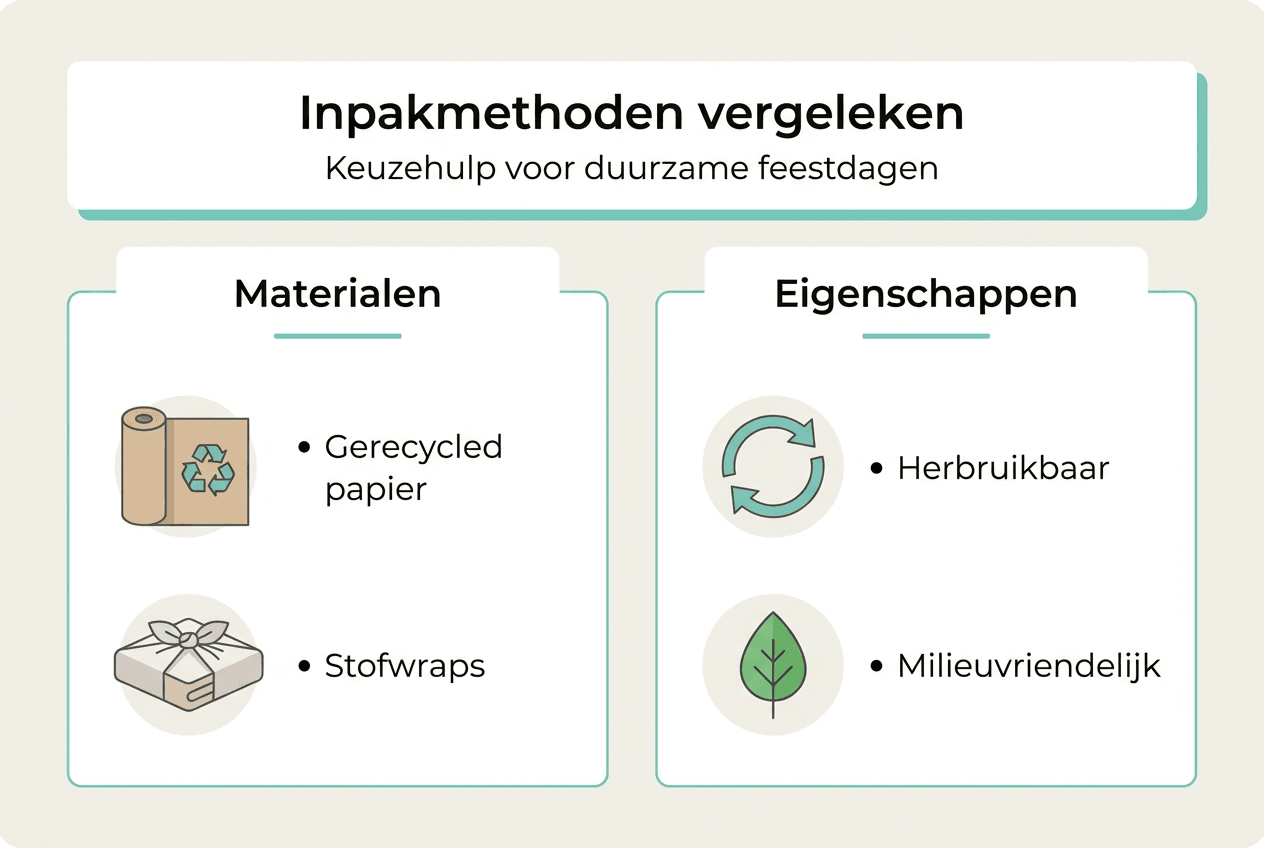
Pro tip: choose your materials based on the size of your wrapping project and the possibility of reuse. For smaller gifts, recycled paper suffices, while larger presents look excellent in fabric wraps that you can continue to use for years. Invest in a basic set of high-quality fabric wraps in neutral colors so you can use them for various occasions. Store scraps of paper and ribbon in a special box so you always have materials on hand for spontaneous wrapping projects.
The sustainable gift wrapping trend is growing exponentially in the Netherlands. Consumers appreciate not only the aesthetic value but also the awareness that their choices place less strain on the environment. By choosing reusable materials, you create a positive cycle in which every gift becomes a statement for sustainability. Many hobbyists are discovering that collecting beautiful fabrics and natural decorations becomes a creative activity in itself. Additional research confirms that conscious material choices make a measurable difference in total waste production during holiday periods.
Step-by-step creative wrapping ideas for the holidays
Now that you have gathered the right materials, it is time to let your creativity run wild. These practical techniques transform simple materials into beautiful, impressive gift packages. Each method is designed to be both accessible and effective for hobbyists of all levels.
Homemade gift envelopes made from recycled paper
- Select a sheet of recycled paper in the desired color and lay it flat on a work surface.
- Place your gift in the middle and measure how much paper you need on each side with a margin of 3 centimeters.
- Fold the long sides inwards so that they overlap in the middle by at least 2 centimeters.
- Apply eco-friendly glue to the overlapping edge and press firmly for a neat seam.
- Fold the bottom up to about a third of the height and glue the sides in place.
- Place the gift in the envelope and fold the top down.
- Decorate with a natural ribbon or a handwritten label for a personal touch.
This technique works excellently for flat objects such as books, clothing, or puzzles. Citymom.nl offers 18 DIY wrapping ideas that show how versatile this method is for various gift sizes.
DIY gift bags made of parchment and recycled material
For smaller gifts, homemade pouches are a charming solution. Recycled paper forms a sustainable and creative base for these pouches. Start with a rectangular piece of paper that is twice the width of the desired pouch plus 4 centimeters for the seams. Fold the paper in half with the right side facing inwards and glue or staple the long side and the bottom closed. Allow the glue to dry completely before turning the pouch inside out. Fold the top edge 2 centimeters inwards for a neat finish. Make two small holes on either side of the opening and thread a natural cord through them to close the pouch.
These bags are perfect for:
- Jewelry and small accessories
- Homemade cookies or chocolates
- Gift cards and personal notes
- Small toys for children
Furoshiki: the Japanese art of wrapping fabrics
Furoshiki is an ancient Japanese technique using square cloths to wrap gifts. This method is not only elegant but also fully reusable. For a basic wrap, you need a square piece of fabric that is approximately three times the size of your gift. Place the gift diagonally in the center of the cloth. Fold two opposite corners over the gift and tie them securely at the top. Next, take the other two corners and tie them in the same way, ensuring that all knots meet neatly. The result is a beautiful, eco-friendly package that the recipient can reuse later.
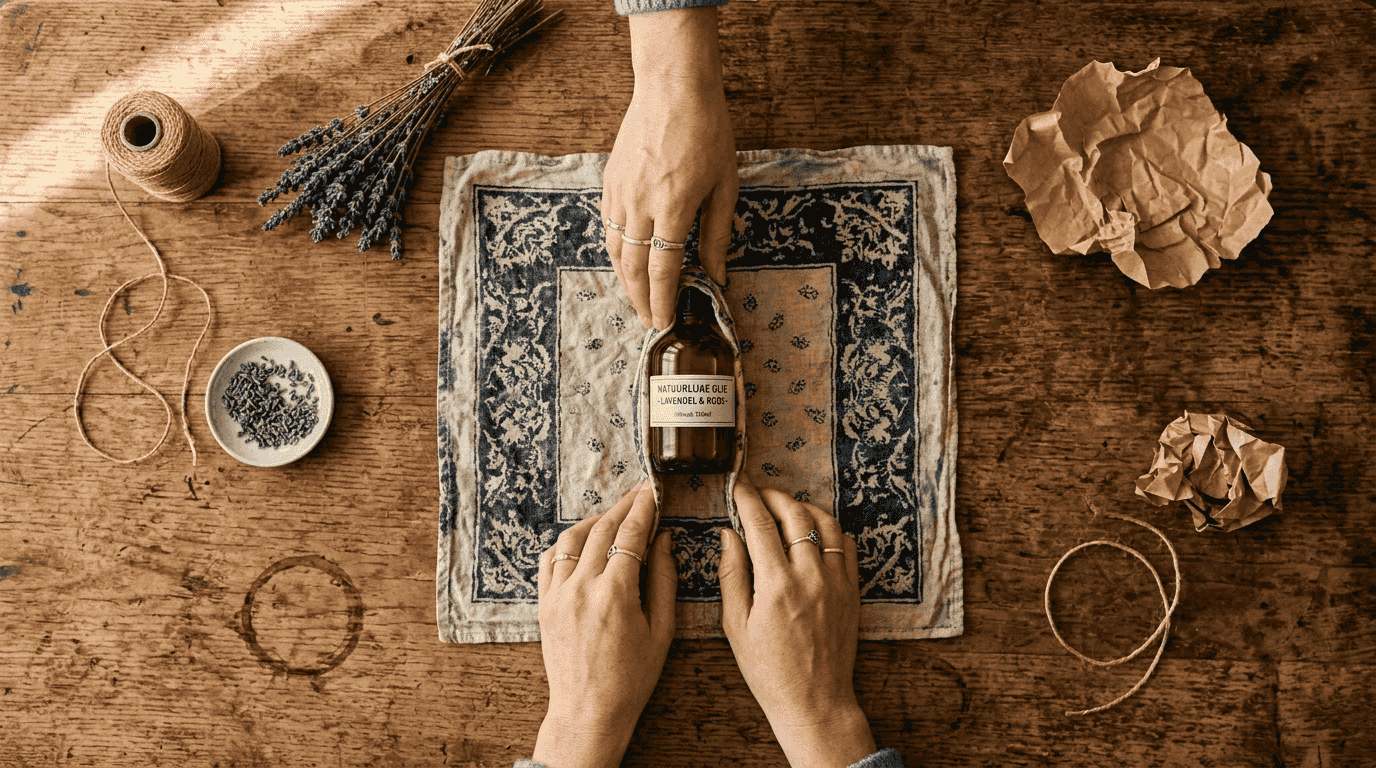
For round objects such as bottles, use a different technique. Place the bottle in the center of the cloth and bring two opposite corners together above the bottle neck. Tie them securely. Then wrap the remaining two corners around the bottle neck to make a decorative bow. This method also works excellently for pots, vases, and other cylindrical objects.
Comparison of packaging methods
| Method | Time investment | Costs | Reusability | Difficulty level |
|---|---|---|---|---|
| Paper envelope | 10-15 minutes | Low | Limited | Comfortable |
| DIY bags | 15-20 minutes | Very low | Average | Comfortable |
| Furoshiki wrap | 5-10 minutes | Average | Excellent | Average |
| Reusable box | 2-5 minutes | Higher initial | Excellent | Very easy |
Pro tip: combine transparent tissue paper with opaque recycled paper for a layered effect that adds depth and interest. First, wrap your gift in the opaque paper, then add a layer of transparent paper secured with a contrasting colored ribbon. This technique creates a professional look you would expect to see in luxury stores. Experiment with different color combinations to discover which best suit your personal style and the occasion. Visit our festive wrapping ideas for even more inspiration and seasonal suggestions.
Tips and common mistakes when wrapping gifts
Even experienced wrappers sometimes make mistakes that render the end result less appealing. By avoiding these common pitfalls and following expert advice, you significantly improve your skills. The difference between an average wrapped gift and a professional-looking presentation often lies in small details and refined techniques.
The most common mistakes are:
- Measuring out too little paper, causing seams not to overlap neatly or corners to remain exposed.
- Using the wrong type of glue that leaks through the paper or does not adhere properly
- Choosing unsuitable materials for the type of gift, such as paper that is too thin for heavy objects.
- Wrapping too tightly, causing the paper to tear on irregular shapes
- Making decorations too heavy so they don't stay in place or damage the paper
- Forgot to finish the back neatly because it is often visible
Expert tips for perfect results start with preparation. Always measure twice and cut once to prevent waste. Use double-sided tape for invisible seams that make your presentation look more professional. Iron fabric wraps beforehand to remove wrinkles and create a smooth base. Practice new techniques on test material first before applying them to your final gift. Invest in a good pair of scissors specifically designed for paper and fabric, because sharp tools make the difference between frayed and neat edges.
For neat corners and edges, use the envelope technique. First, fold the top of the paper over the edge of the gift and tape it in place. Next, fold the sides inward at a sharp 45-degree angle, creating a triangular flap. Fold this flap up and tape it in place for a sleek, professional corner. Repeat this process at both ends of the gift. This method works best with rectangular boxes and ensures symmetrical, neat corners.
The emotional aspect of handmade gift packaging is often underestimated. The personal touch of a homemade package communicates care and attention in a way that commercial packaging can never match. Recipients appreciate the time and effort you have invested, which enhances the emotional value of the gift.
Every handmade gift package tells a story of care and creativity. The time you invest in personalized packaging shows your appreciation in a way that words cannot express.
For decorations that stay in place, use lightweight natural elements. Dried flowers, small twigs with berries, or homemade paper labels stay securely in place without needing extra fastening. Secure heavier decorations with a small piece of wire or sturdy ribbon threaded under the main bow. Experiment with layered ribbons in various textures for a rich, luxurious look. Our Christmas gift decorating tips offer extensive inspiration for seasonal decorations that take your presentations to the next level.
Discover our wrapping materials and gift ribbons for stylish holidays.
Now that you possess practical knowledge and creative techniques, it is time to replenish your stock with high-quality materials that bring your vision to life. At Kadopapier.net, you will find a carefully curated assortment that perfectly complements sustainable and stylish wrapping projects. Our red organza ribbon adds festive elegance to any gift and is available in various widths for diverse applications. For a subtle, natural look, our brown organza bags offer an eco-friendly alternative that can be reused repeatedly. Explore our full range of wrapping materials for ribbons, paper, bags, and decorations that make your holidays extra special. Every product is selected with an eye for quality and sustainability, so you can choose materials that are both beautiful and responsible with confidence.
Frequently asked questions about wrapping for the holidays
What are the most environmentally friendly packaging materials?
Recycled paper, fabric wraps such as furoshiki cloths, and reusable boxes are the most sustainable options. Natural fibers such as jute, cotton, and linen are biodegradable and can be used season after season. Avoid plastic wrap and synthetic ribbons, which are not recyclable.
How can I wrap gifts more personally and creatively?
Use handwritten labels, add small pieces of artwork or photos, and experiment with natural decorations such as dried flowers or twigs. Children can create their own drawings to serve as wrapping paper. Combine different textures and materials for a unique, layered effect that reflects your personal style.
Is the use of fabric wraps such as furoshiki cost-effective?
Absolutely, fabric wraps require a higher initial investment but yield significant savings in the long run. A single furoshiki cloth can be used hundreds of times for various gift sizes. Moreover, the cloth itself becomes part of the gift, which adds extra value for the recipient.
Can children's drawings be used as gift wrap?
Yes, children's drawings make a fantastic and personal option for wrapping paper. Let children draw on large sheets of white paper with markers or paint, and use these as unique packaging. This adds an emotional dimension that is greatly appreciated, especially by family.
How do I prevent tearing when wrapping irregular shapes?
Use flexible materials such as tissue paper or thin fabrics that fold easily around curves without tearing. Wrap the gift loosely rather than tightly, and use extra paper at sharp corners. Consider placing the gift in a box first for an easier wrapping process, or choose a decorative bag that accommodates the shape without putting tension on the material.
Recommendation
- Holiday wrapping inspiration 2025: creative and sustainable ideas – Kadopapier.net
- 9 Festive wrapping ideas for every occasion – Kadopapier.net
- Eco-friendly gift packaging: sustainable and stylish wrapping – Kadopapier.net
- 8 Festive Packaging Ideas for Every Occasion – Kadopapier.net
- Les 10 Meilleures Cadeau Ado en 2023 - HUBY INNOVATION