
Choosing plastic cone bags: fast, affordable, and durable
TL;DR:
- Plastic cone bags remain permitted under new EU regulations, provided they are recyclable and contain at least 5% recycled material.
- They offer speed, low cost, and good presentation for many retail sectors, despite sustainability discussions.
- Retailers are urged to make conscious choices by checking thickness, recycling status, and PCR content.
Plastic cone bags are not banned. This might come as a surprise, given the heightened sustainability discussion in the Netherlands in recent years. Yet, plastic cone bags remain a staple choice for retailers, market vendors, and artisanal businesses looking for quick and efficient packaging. However, new sustainability requirements from the European Union apply that you, as an entrepreneur, need to be aware of. In this guide, you will find out exactly what's going on, which rules apply, how plastic and paper compare, and how to make the right choice for your store.
Table of Contents
- What are plastic cone bags and why are they popular in retail?
- What legal requirements apply to plastic cone bags?
- Sustainability: plastic versus paper cone bags
- Practical tips: how to choose the right cone bag for your store
- Our vision: why do retailers (still) choose plastic cone bags?
- Complete your gift packaging with Kadopapier.net
- Frequently Asked Questions
Key Insights
| Point | Details |
|---|---|
| Plastic cone bags not banned | They comply with regulations if recyclable and containing at least 5% recycled material. |
| Sustainability choice requires knowledge | Carefully compare plastic and paper alternatives for optimal customer and environmental experience. |
| Practical and cost-efficient | For many stores, the plastic cone bag remains the fastest and most economical packaging choice. |
| Legislation increasingly strict | Stay up-to-date with packaging regulations in the Netherlands and Europe. |
What are plastic cone bags and why are they popular in retail?
Now that we've set the context, let's first zoom in on what exactly plastic cone bags are and why they are still so widely chosen.
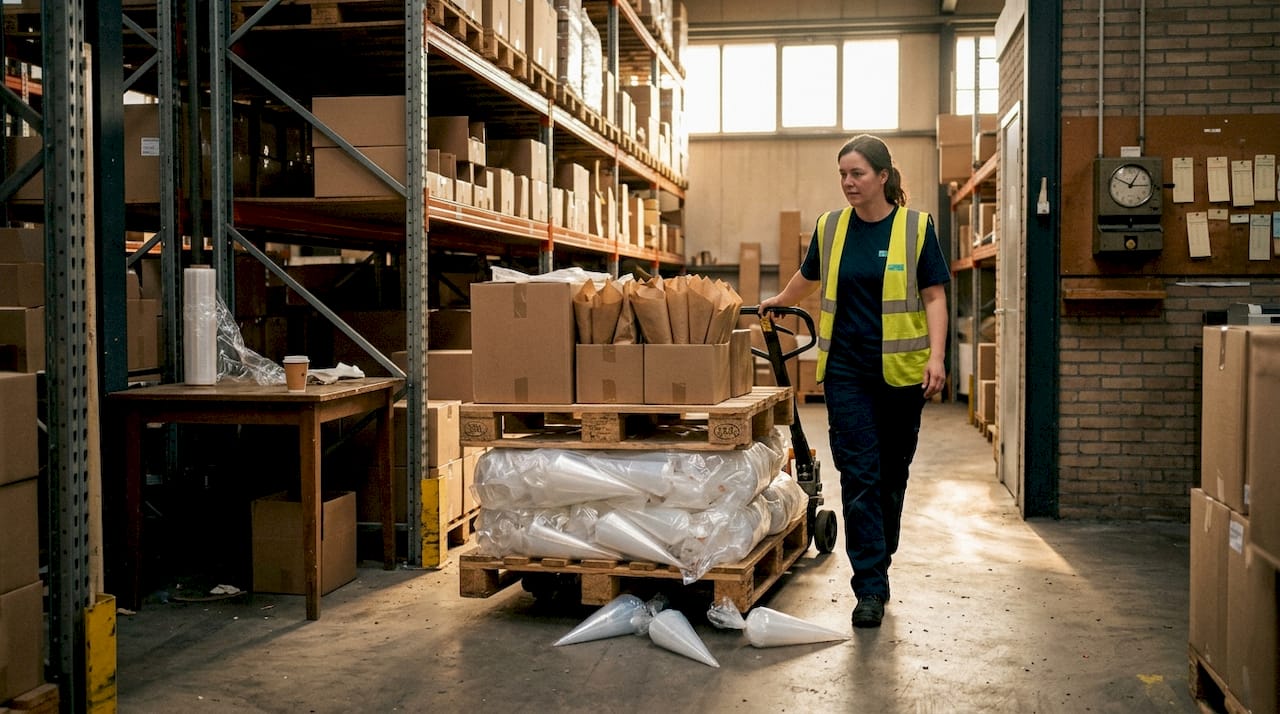
A plastic cone bag is a bag with a pointed bottom, made of transparent or colored plastic, usually polyethylene (PE). The bag stands upright thanks to its conical shape and is easily sealed with a sticker, a knot, or a ribbon. You see them everywhere: at the confectioner's with sweets, at the nut vendor at the market, at the candle shop with small gifts, and at promotional stands with giveaway products.
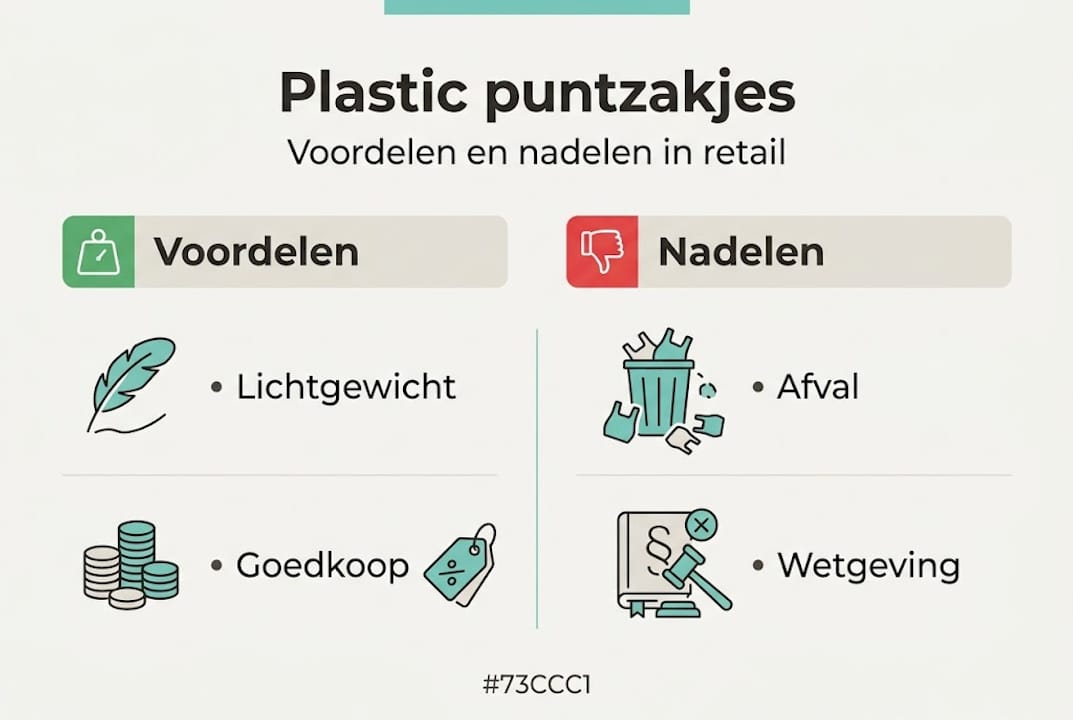
Their popularity has a clear reason. Plastic cone bags are quick to fill, easy to seal, and they present the product attractively. Transparency is a major selling point: customers immediately see what they are buying. This lowers the barrier and increases impulse purchases. Furthermore, they are lightweight, which keeps shipping costs low for webshops.
According to the KHN single-use plastic directive, plastic cone bags offer speed and low costs in sales environments, making them particularly attractive for artisanal sales and food retail. This is no coincidence: an employee serving ten customers per hour does not have time for complicated packaging.
Sectors that frequently use plastic cone bags:
- Sweets and confectionery: candy, licorice, chocolate
- Nuts and dried fruits: market and delicatessen shops
- Candle shops and gift shops: small gifts and decorative products
- Bakeries: cookies, stroopwafels, chocolates
- Promotion and events: giveaway products, goodie bags
- Artisanal makers: soap, herbs, tea, handmade jewelry
For more inspiration on how to cleverly use bags in your store, check out the types of gift bags available for retailers. If you want to look beyond the standard assortment, gift bag inspiration offers concrete ideas for stores and creative makers.
Did you know? An average market vendor packs up to 200 products per day. With plastic cone bags, this takes an average of 8 seconds per item. With flat-bottomed paper bags, this can increase to 15 seconds. Over a year, this saves dozens of labor hours.
In short: plastic cone bags win on speed, cost, and presentation. This makes them difficult to replace, even in 2026.
What legal requirements apply to plastic cone bags?
Now that you know why cone bags are still popular, it's essential to understand what rules they must comply with.
The European Packaging and Packaging Waste Regulation (PPWR 2025/40) sets new requirements for all plastic packaging, including cone bags. Plastic packaging must be recyclable and contain at least 5% PCR (post-consumer recycled content). Additionally, there are restrictions on very thin bags, specifically bags thinner than 15 microns, unless they are necessary for hygienic purposes or as primary packaging for loose food.
There is no direct ban on plastic cone bags. However, the bar for what is permitted is higher than before. These are the three core requirements for 2026:
| Requirement | Details | Applicable to |
|---|---|---|
| Recyclability | Bag must fit into existing recycling process | All plastic packaging |
| PCR content | Minimum 5% recycled material | Newly produced packaging |
| Minimum thickness | Bags thinner than 15 microns are restricted | Ultra-thin plastic bags |
For the hospitality sector, additional collection obligations apply. Hospitality businesses must actively collect soft plastics and offer them for recycling. For retail, this is strongly recommended but not always legally mandatory yet. This distinction is important for your administration and purchasing.
Pro-tip: Always ask your supplier for a material specification or technical datasheet of the cone bags. This will state the thickness in microns and the PCR percentage. This way, you can demonstrate that you meet the PPWR requirements, should you ever be audited.
More background on the regulations for plastic giveaway bags in Central Europe gives you a broader picture of how other countries handle similar legislation. This is useful if you also sell or purchase internationally.
The core message: plastic cone bags remain permitted, but you need to purchase more consciously. Check thickness, recyclability, and PCR content before placing a large order.
Sustainability: plastic versus paper cone bags
In addition to legislation, more and more entrepreneurs are paying attention to the environmental aspect of cone bags. A comparison between plastic and paper is therefore indispensable.
The debate between plastic and paper is more nuanced than it seems. Paper cone bags are often seen as the more sustainable choice, and that's partly true. Paper is easier to recycle through existing paper bins, biodegradable, and has a lower impact on the marine environment. But paper also has disadvantages: it's heavier, less moisture-resistant, and more expensive to purchase.
Plastic cone bags perform better in terms of weight and transport efficiency. Less weight means less fuel consumption during transport, which reduces the CO2 footprint. Moreover, modern plastic cone bags made from recycled PE are becoming increasingly sustainable. As the KHN single-use plastic directive indicates, plastic continues to offer a cost and speed advantage, even as pressure for paper alternatives increases.
| Feature | Plastic cone bag | Paper cone bag |
|---|---|---|
| Recyclability | Possible via soft plastics collection | Easy via paper bin |
| Weight | Light | Heavier |
| Moisture resistance | High | Low to moderate |
| Cost per item | Low | Higher |
| Biodegradable | No (standard PE) | Yes |
| Product presentation | Transparent, product visible | Closed, product not visible |
Alternatives for environmentally conscious entrepreneurs:
- Paper cone bags: classic, recyclable, good for dry products
- Cellulose bags: transparent and biodegradable, but more expensive
- Reusable fabric bags: ideal for premium gifts and loyal customers
- Recycled PE bags: plastic with high PCR content, meets PPWR requirements
For entrepreneurs who want to go beyond the minimum legal requirement, eco-friendly gift packaging offers concrete tools. Also, reusable gift packaging is an option that more and more retailers are considering as an addition to their standard assortment.
The choice is not black and white. It's about the right packaging for the right product, for the right customer.
Practical tips: how to choose the right cone bag for your store
After the comparison, it's time to get practical and make choices for your assortment.
Choosing the right cone bag starts with your product and your customer. An artisanal soap maker has different requirements than a candy store at the market. Nevertheless, there are universal steps to help you make a good decision.
- Determine the weight and contents of your product. Heavy or moist products require a thicker bag with a higher micron value. Light, dry products can be perfectly placed in a thinner bag, provided it stays above the 15-micron limit.
- Check the thickness in microns. Bags thinner than 15 microns are restricted under the PPWR. Always ask your supplier for specifications. This is not an optional step.
- Ask about the PCR percentage. A minimum of 5% post-consumer recycled content is required. Suppliers who cannot demonstrate this may be supplying non-compliant products.
- Look at the sealing method. Cone bags can be sealed with a sticker, a twist, or a ribbon. Choose the method that suits your packaging speed and desired presentation.
- Consider your brand experience. A transparent bag with a beautiful ribbon gives a premium look. A printed bag with your logo reinforces brand recognition. Both options are available in plastic and paper.
- Calculate the total costs. Don't just look at the price per bag, but also at the labor costs for filling and sealing. A slightly more expensive bag that is faster to fill can ultimately be cheaper.
Pro-tip: Always order a sample pack before buying a large batch. Test the bag with your own product for weight, filling speed, and presentation. This way, you avoid costly mistakes with bulk orders.
The PPWR requirements clearly indicate that plastic cone bags must be recycled more often and selected carefully for thickness and material. This calls for a more conscious purchasing strategy than before. More information on responsible handling of packaging material can be found under gift packaging recycling. And for broad packaging tips for retailers, there are seven practical pieces of advice that can be directly applied in your store.
Our vision: why do retailers (still) choose plastic cone bags?
Many retailers experience daily that plastic cone bags are the most efficient choice for their work situation. Not because they don't care about sustainability, but because practice simply demands certain requirements. Speed, low costs, and an attractive presentation are not luxuries. They are necessary to remain profitable.
The pressure to become more sustainable fortunately leads to innovation. Manufacturers are developing plastic bags with higher PCR percentages, better recyclability, and even compostable variants. That is the right direction. But a direct switch to paper is not the right solution for everyone. Paper does not work for moist products and significantly increases costs for smaller entrepreneurs.
Truly sustainable steps come through a smart mix: plastic where it is functionally necessary, paper or reusable material where it fits. Conscious purchasing, questioning suppliers about specifications, and informing customers about recycling. That is the approach that works. Also read our comparison of gift bags vs gift wrap for a broader consideration.
Complete your gift packaging with Kadopapier.net
Now that you know what to look for, you can efficiently take your next step. Kadopapier.net supplies everything you need for a complete and professional packaging presentation. From cone bags to decorative finishes: the assortment is wide and aimed at retailers and artisanal entrepreneurs. Combine your cone bags with gift decoration curls and pins for a festive look, or choose an elegant finish with red organza ribbon. Ordered Monday to Friday before 3 PM, shipped the same business day. Free shipping from 100 euros excl. VAT. View the full range on kadopapier.net and put together your ideal packaging package.
Frequently Asked Questions
Are plastic cone bags banned in the Netherlands?
No, plastic cone bags are not banned. However, they must comply with the new PPWR requirements, such as recyclability and a minimum of 5% recycled material.
What makes a plastic cone bag legally permitted?
The bag must be recyclable, contain at least 5% PCR content, and be thicker than 15 microns, unless it is for hygienic applications for loose food.
Is it more sustainable to use paper cone bags?
Paper bags are easier to recycle through the paper bin, but plastic cone bags are becoming more sustainable due to higher PCR percentages and improved recycling processes.
How can I best recycle plastic cone bags?
Collect used bags separately from other waste and hand them in at a recognized collection point for soft plastics. For hospitality businesses, the collection of soft plastics is mandatory; for retailers, it is strongly recommended.