
Plastic Bags – Sustainable Choices for Retailers
For many Dutch gift sellers, choosing the right plastic bags is becoming increasingly complex now that regulations are changing and sustainability is taking center stage. Three billion plastic bags are used annually in the Netherlands alone , and free plastic bags are now banned. Reliable information and clear alternatives are essential for meeting environmental requirements and customer expectations. Here you can discover what really matters when choosing sustainable plastic bags for your store.
Table of contents
- What are plastic bags and common misconceptions
- Sustainable and conventional types of plastic bags
- Key features and environmental impact explained
- Legislation and requirements for plastic bags in 2026
- Obligations, costs, and alternatives for retailers
Key Points
| Point | Details |
|---|---|
| Environmental impact of plastic bags | Plastic bags are used for an average of only 15 minutes, but remain in the environment for hundreds of years. |
| Misconceptions about plastic bags | Not all plastic bags have the same environmental impact; reusability and material composition are crucial. |
| New regulations in 2026 | A payment system for plastic bags and obligations for reusable alternatives will be introduced for retailers. |
| Sustainable alternatives | Investing in high-quality, reusable bags minimizes environmental impact and meets legal requirements. |
What are plastic bags and common misconceptions
Plastic bags are common, often misunderstood, packaging materials. They are thin, lightweight bags typically used for transporting products in retail and other sectors. On average, these bags are only used for 15 minutes , but their environmental impact is much longer lasting.
The impact of plastic bags is significant. Approximately 1 trillion plastic bags are used worldwide each year, 3 billion of which are used in the Netherlands alone. These disposable products cause significant environmental damage:
- Can persist in the environment for hundreds of years
- Pollute ecosystems and food chains
- Break down slowly and mix with toxins
- Pose a threat to wildlife and marine ecosystems
There are numerous misconceptions about plastic bags. A common misconception is that all plastic bags have the same environmental impact. In reality, the impact varies significantly depending on the material composition, thickness, and reusability. Dutch regulations now prohibit free plastic bags to reduce waste production.
Main misconceptions about plastic bags:
- All plastic bags are equally harmful
- Recycling solves all problems
- Small bags have no significant environmental impact
- Reuse is always good for the environment
Pro tip: Always choose reusable bags made from sustainable materials to reduce the environmental impact.
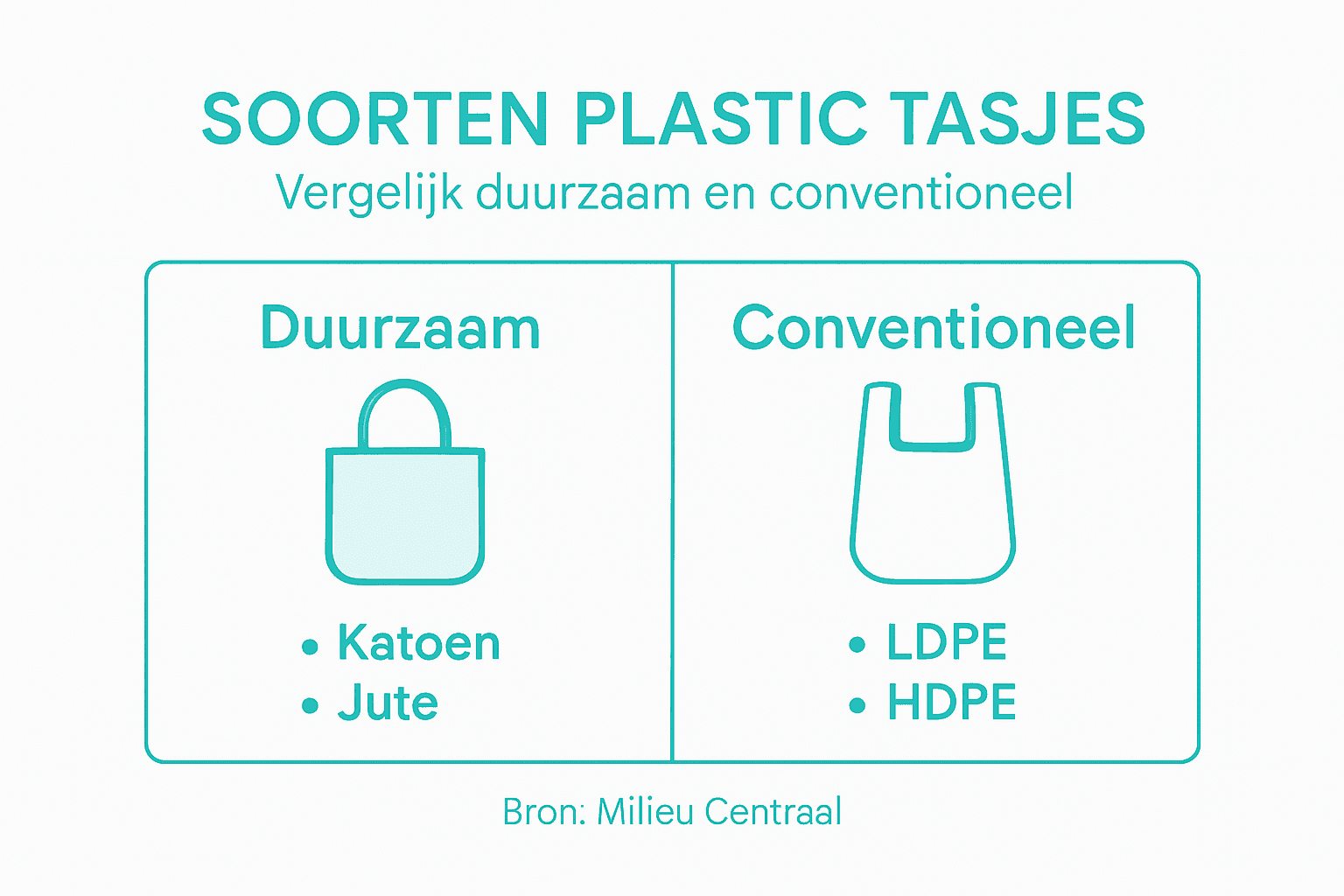
Sustainable and conventional types of plastic bags
There are different types of plastic bags with varying environmental characteristics. Reusable LDPE plastic bags are considered an environmentally friendly option when used multiple times. These bags are distinguished by their low environmental impact and reusability.
The variety of bag options is vast and includes different materials with their own advantages and disadvantages:
- Cotton bags : High water and energy consumption during production
- Paper bags : Often require multiple reuses to be environmentally friendly
- Polyester bags : Relatively durable due to long lifespan
- Jute bags : Natural material with limited environmental impact
Several factors play a role in assessing sustainability.Fabric bags made from recycled materials like polypropylene or PET are increasingly seen as sustainable alternatives. It's important to note that the actual environmental impact depends on the number of times a bag is reused.
Key considerations for sustainable bags:
Below is a clear comparison of the different types of bags:
| Bag type | Lifespan | Minimal reuse environmental benefit | Main disadvantage |
|---|---|---|---|
| Disposable plastic | Short (1x) | No | Microplastic pollution |
| LDPE reusable | Average (5-15x) | 1-2 | Non-biodegradable |
| Paper bag | Moderate (5-10x) | 8 | Low load-bearing capacity |
| Cotton bag | Very long | 100+ | High impact production |
| Polyester/jute | Long (20-50x) | 10-20 | Higher cost price |
- Total number of reuses
- Production process
- Material composition
- Recyclability
The more often a bag is reused, the lower the environmental impact per use.
Pro tip: Invest in high-quality, reusable bags and use them consistently to minimize your environmental impact.
Key features and environmental impact explained
Plastic bags have a complex environmental impact that extends far beyond their initial lifespan. These disposable products are used for only 15 minutes on average, yet they can persist in the environment for hundreds of years.
The environmental impact of different types of bags varies considerably:
- LDPE bags : Only 1-2 times reuse required for environmental compensation
- Paper bags : Minimum 8 reuse required
- Cotton bags : Only environmentally friendly after 100+ uses
- Disposable plastic bags : Pose risk of microplastic pollution
Critical environmental properties:
- Production energy
- Reusability
- Degradability
- Recycling potential
True sustainability depends on strategic use and conscious choices. Plastic bags contain numerous chemicals that are potentially harmful to humans and the environment.
Every time you reuse a bag, you reduce the total environmental impact.
Pro tip: Invest in high-quality, reusable bags and develop a consistent reuse protocol within your company.
Legislation and requirements for plastic bags in 2026
Plastic bag regulations in the Netherlands will undergo significant changes in the coming years. Free plastic bags have been banned since 2016, but the rules will be significantly tightened in 2026.
Key legal changes for retailers:
- Payment obligation for all plastic bags
- Mandatory reusable alternatives
- Stricter producer responsibility
- Extensive waste collection requirements
The new regulations have multiple dimensions. Single-use plastics are being increasingly restricted , particularly for retailers and the packaging industry. Exceptions apply only in very specific situations, such as thin bags that directly protect food.
Concrete implementation requirements in 2026:
A handy overview of what retailers need to arrange by 2026:
| Obligation | Practical impact | Possible added value |
|---|---|---|
| Minimum price plastic | Adjust cash register system | Less plastic consumption |
| Sustainable alternatives | Purchasing new bags | Greener image |
| Registration of consumption | Expand administration | Better insight into usage trends |
| Financial contribution | Contribution to waste fund | Influence on future policy |
- Do not provide free plastic bags
- Offering demonstrably sustainable alternatives
- Registration of plastic bag consumption
- Financial contribution to waste processing
Every retailer must adapt to comply with new environmental regulations.
Pro tip: Anticipate the new legislation in a timely manner by developing and implementing sustainable packaging strategies now.
Obligations, costs, and alternatives for retailers
Retail regulations regarding plastic bags are becoming increasingly strict. Retailers must prepare for significant changes in how they offer and charge for packaging materials.
Key obligations for retailers:
- Mandatory minimum price for plastic bags
- No free distribution of disposable plastic
- Offer reusable alternatives
- Encouraging a take-your-own-bag policy
The financial consequences are significant. Retailers will not only have to invest in more sustainable alternatives but also adapt their business processes. The new regulations force them to actively contribute to environmental reduction targets.
Concrete implementation costs:
- Purchase sustainable bag options
- Adjusting cash register systems
- Communication to customers
- Administrative processing
Proactive retailers will see the transition as an opportunity for innovation and differentiation.
Pro tip: Develop a phased strategy where you gradually implement sustainable alternatives and involve your customers in the sustainability transition.
Make Sustainable Choices in Retail with Responsible Packaging
Plastic bags pose a challenge for retailers who want to comply with stricter regulations and simultaneously contribute to a better environment. The article highlights that reusability and environmental impact are key aspects of making a responsible choice. Customers are looking for sustainable alternatives that are long-lasting and easily reusable. This makes it crucial to choose high-quality packaging materials that not only comply with regulations but also meet the expectations of conscious consumers.
At Kadopapier.net, you'll find a wide range of sustainable packaging solutions to align with your retail strategy. From sturdy gift bags and high-quality wrapping paper to recycled and reusable options, you'll reduce your environmental impact and demonstrate your commitment to sustainable development. Discover how our products can help your business meet these new requirements while leaving a positive impression.
Take the step toward a more sustainable future today and browse our selection at Kadopapier.net . Put your retail business on the map with eco-friendly packaging that customers appreciate.
Frequently Asked Questions
What are plastic bags?
Plastic bags are thin, lightweight bags primarily used for transporting products in retail. They are often used for only a short period, but their environmental impact is much longer lasting.
What are the environmental impacts of plastic bags?
Plastic bags can persist in the environment for hundreds of years, polluting ecosystems and posing a threat to wildlife and marine ecosystems through microplastics and toxins.
How can I reduce the environmental impact of plastic bags?
Choose reusable bags made from sustainable materials, such as LDPE bags, cotton, or jute. Reuse these bags as much as possible to reduce the environmental impact per use.
What legislation will there be around plastic bags in the future?
In 2026, plastic bag regulations will be tightened, with a mandatory payment requirement for all plastic bags and the requirement to offer reusable alternatives. Retailers must prepare for this by developing sustainable packaging strategies.