
How to recycle gift wrapping for sustainable stores
For many retailers in Central Europe, used gift wrapping quickly piles up after every holiday season. Sustainable handling of all that wrapping paper, cardboard, and ribbons presents both a challenge and an opportunity to make a difference. By carefully collecting and smartly sorting used gift wrapping, you not only reduce the amount of waste but also actively contribute to an environmentally conscious future for your store and the region.
Table of contents
- Step 1: Carefully collect used gift wrapping
- Step 2: Sort paper, ribbons, and accessories efficiently
- Step 3: Remove non-recyclable materials immediately
- Step 4: Clean and recycle packaging
- Step 5: Check your municipality's recycling instructions
- Step 6: Implement sustainable recycling in your store
Short Summary
| Key point | Explanation |
|---|---|
| 1. Reuse gift wrapping | Collect only undamaged packaging to save costs and increase sustainability. |
| 2. Efficient sorting of materials | Use separate containers and check for reusability to optimize recycling. |
| 3. Remove non-recyclable materials | Separate critical materials to prevent contamination of the recycle stream. |
| 4. Clean materials | Remove label and tape residue for higher quality recycling. |
| 5. Follow municipal recycling instructions | Please observe local guidelines to avoid errors and fines. |
Step 1: Carefully collect used gift wrapping
Carefully collecting used gift packaging is a crucial step for stores that take sustainability seriously. By collecting gift packaging efficiently , retailers can significantly reduce their environmental footprint while saving costs.
Start by creating a structured collection system for used packaging materials. Pay attention to the following aspects:
- Collect only undamaged packaging materials
- Select separate boxes or containers for different material types
- Check each item for tears, creases, or tape residue
- Separate paper, cardboard and plastic packaging
- Carefully remove any labels or stickers
By working systematically, you can ensure the quality of reusable packaging materials. Every item that can be reused contributes to a more sustainable business operation.
Please note: Damaged packaging materials may disrupt the recycling process and should be separated.
Pro tip: Train your employees to recognize reusable packaging materials to improve the efficiency of the collection process.
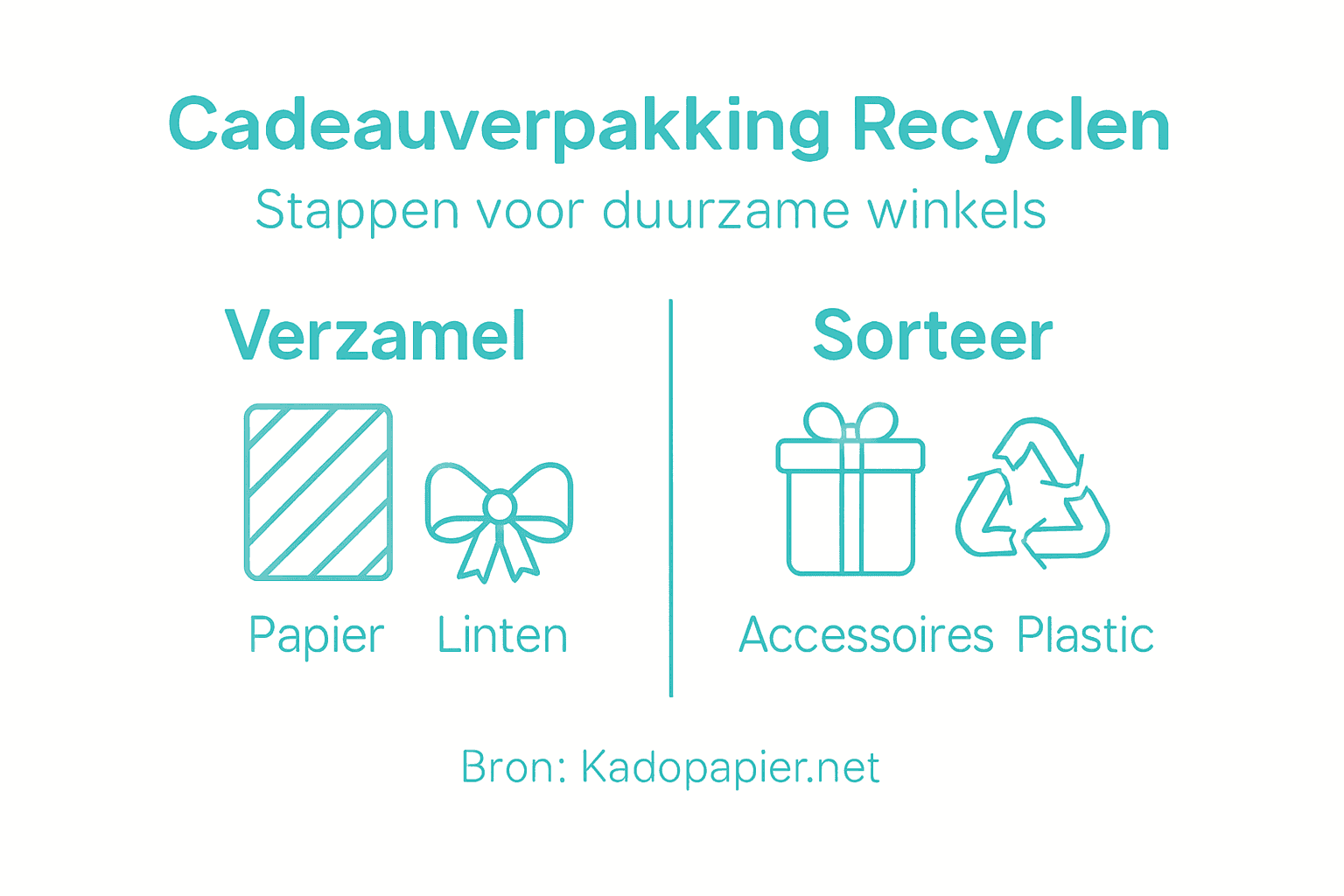
Step 2: Sort paper, ribbons, and accessories efficiently
Efficiently sorting gift wrapping materials is essential for sustainable recycling. Separating packaging materials prevents contamination and optimizes the recycling process for retailers looking to reduce their environmental footprint.
To develop an effective sorting process, follow these detailed guidelines:
- Use separate containers for different types of materials
- Divide materials into categories:
- Paper packaging
- Ribbons and decorative accessories
- Plastic components
- Non-recyclable materials
- Remove tape and labels before sorting
- Check each material for suitability for reuse
- Ensure clean and dry storage conditions
By working systematically, you minimize waste and maximize the chances of successful recycling.
Please note: Multi-component materials require extra careful separation to ensure effective recycling.
Pro Tip: Develop a color-coded sorting system to improve the efficiency of your recycling process and minimize errors.
Step 3: Remove non-recyclable materials immediately
The immediate removal of non-recyclable materials is crucial for an efficient recycling process. New EU regulations require shops to handle packaging materials responsibly and remove polluting components from the recycling chain immediately.
Here are practical steps for identifying and removing non-recyclable materials:
- Identify critical non-recyclable elements :
- Metal wires
- Plastic films
- Laminated surfaces
- Complex multi-materials
- Remove contaminated parts before recycling begins
- Use special containers for non-recyclable waste materials
- Train employees to recognize problematic materials
- Document and track removal processes
By consistently separating non-recyclable materials, you prevent contamination of the recycling stream and improve overall sustainability.
Please note: Any non-recyclable part that enters the recycling chain can disrupt the entire processing process.
Pro Tip: Develop a visual identification guide for your team to quickly identify and remove non-recyclable materials.
Step 4: Clean and recycle packaging
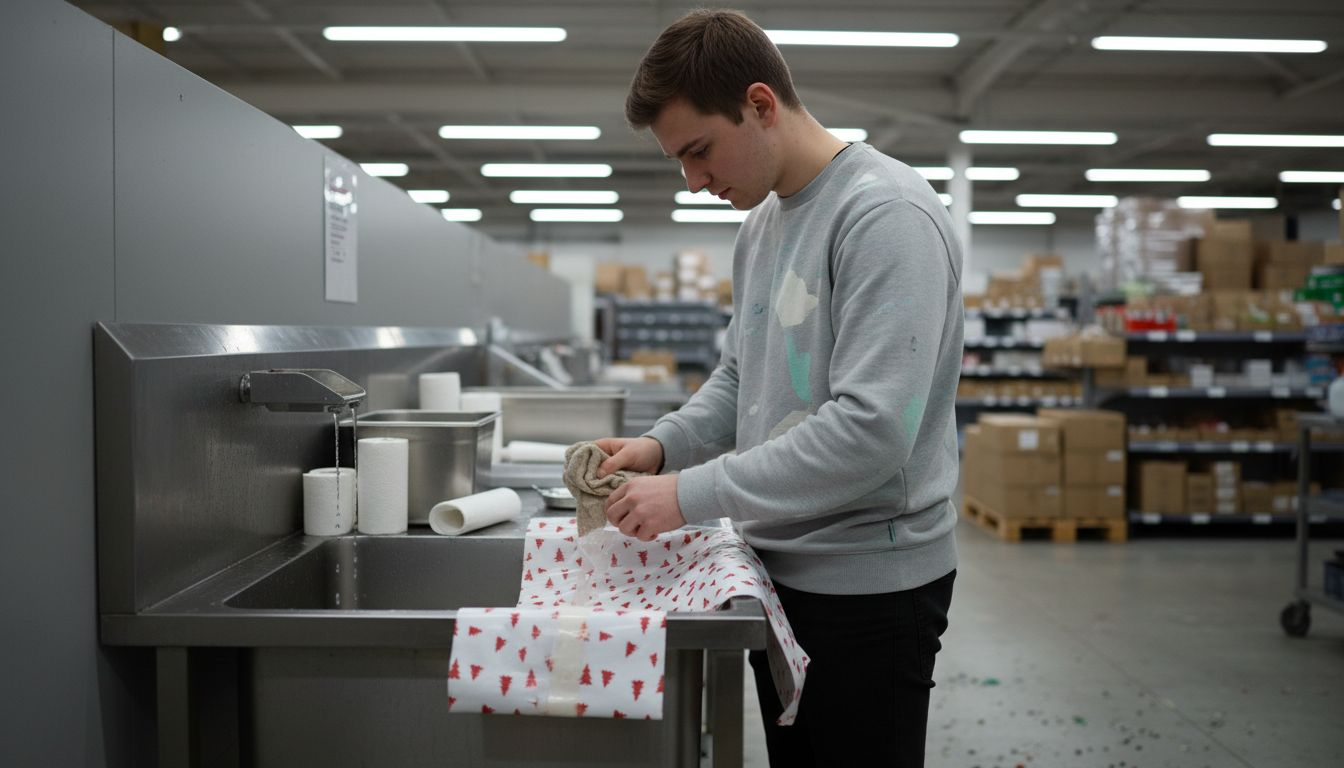
Carefully cleaning packaging materials is a critical step in the recycling process. Recycling requires clean materials to prevent contaminants that could hinder reuse.
Follow these detailed cleaning instructions for different packaging materials:
-
Remove all loose materials :
- adhesive tape
- Labels
- Decorative accessories
- Clean paper packaging carefully:
- Use a soft dry cloth
- Avoid water or moist cleaning agents
- Remove food residue or stains
- Check materials for:
- Cracks
- Stains
- Distortions
- Allow materials to dry completely before recycling
- Use separate cleaning stations for different material types
A thorough cleaning process improves the quality of recycled materials and supports sustainable business practices.
Below is an overview of common material types and their impact on the recycling process:
| Material type | Recyclability | Common problem | Best practice |
|---|---|---|---|
| Paper | High | Stains and moisture | Store dry, clean |
| Cardboard | High | Adhesive tape residue | Removing adhesive tape |
| Plastic film | Low | Difficult to separate | Separate collection |
| Ribbons | Variable | Metal wires inside | Check for metals |
| Laminated paper | Low | Multiple material types | Manual separation |
| Decorative accessories | Low | Complex compounds | Not with recyclable waste |
Please note: Even small contamination can disrupt the entire recycling process.
Pro Tip: Develop a standard procedure for material cleaning and train your team to apply it consistently.
Step 5: Check your municipality's recycling instructions
Strict adherence to local recycling guidelines is crucial for a successful sustainability policy. Specific municipal guidelines determine the correct method for separating and recycling packaging materials.
Follow these steps to carefully understand and apply your municipality's recycling instructions:
- Contact your local waste management authority
- Collect official documentation on:
- Specific sorting rules
- Recycling processes
- Acceptable material types
- Check the recycling classification codes for different packaging
- Please note specific municipal requirements such as:
- Separation rules
- Cleaning standards
- Collection times
- Train your team on local recycling protocols
- Document and follow municipal instructions carefully
Detailed knowledge of local regulations prevents errors in the recycling process and supports your sustainability goals.
Please note: Each municipality may have different recycling instructions.
Pro tip: Host annual training sessions to keep your team up to date on changing municipal recycling guidelines.
Step 6: Implement sustainable recycling in your store
Sustainable recycling is essential for modern retailers seeking to reduce their environmental impact. EU targets for sustainable packaging require stores to actively develop and implement recycling programs.
To implement an effective recycling process in your store, follow these strategic steps:
- Create a clear recycling infrastructure :
- Collection points for various materials
- Marked collection containers
- Instructional signage
- Develop an awareness strategy for your team:
- Regular training sessions
- Clear recycling guidelines
- Performance indicators for recycling
- Communicate transparently with customers about:
- Your recycling initiatives
- Environmental impact of your efforts
- Customer participation opportunities
- Document and evaluate your recycling processes
- Invest in education and awareness
An integrated approach transforms your store from a traditional retailer into a sustainable, environmentally conscious business.
The following chart shows simple actions employees can take to support sustainable recycling:
| Action | Business impact | Recommended training |
|---|---|---|
| Separation of materials | Lower waste costs | Sorting instructions |
| Cleaning of packaging | Higher recycling quality | Cleaning protocols |
| Check for damage | Less rejection during recycling | Recognition training |
| Follow municipal rules | Prevents fines and errors | Annual training |
| Maintain documentation | Better process control | Registration procedures |
Please note: Consistency and dedication are key to a successful recycling program.
Pro tip: Create a reward system for employees who actively contribute to your sustainability goals.
Make Sustainable Gift Wrapping Simple and Effective
Shops striving for a sustainable approach to gift packaging recycling often face challenges such as collecting undamaged materials, accurately sorting, and carefully cleaning packaging. The article emphasizes the importance of an efficient system to prevent waste and ensure quality. These complex tasks require reliable and sustainable packaging solutions that are not only reusable but also easy to integrate into your business operations.
At Kadopapier.net, you'll find a wide range of packaging materials that perfectly align with your sustainability goals. From eco-friendly wrapping paper to recycled gift bags and high-quality ribbons in various styles. Our products make disposing of non-recyclable materials and keeping packaging clean and organized. Discover how our decorative accessories and sturdy cardboard boxes can help you offer your customers responsible, yet stylish, packaging.
Start optimizing your sustainable gift wrapping today by exploring our selection at Kadopapier.net . Make your store stand out for its environmental awareness and customer satisfaction by investing in packaging materials that support reuse and recycling. Visit our website now and take the first step toward a greener future!
Frequently Asked Questions
How can I efficiently collect used gift wrapping in my store?
Start by creating a structured collection system for used gift wrapping. Make sure you select undamaged materials and collect them in separate containers for different types of packaging.
What are the best ways to sort gift wrapping for recycling?
Use separate containers for different types of materials, such as paper, ribbons, and plastic. Sort each item by type and check its suitability for reuse to optimize recycling processes.
Which non-recyclable materials should I immediately remove when collecting gift packaging?
Identify materials such as metal wires, laminated surfaces, and plastic films as non-recyclable. Remove these components immediately to prevent contamination of the recycling stream.
How do I clean gift wrapping for recycling?
First, remove all loose materials, such as tape and labels, and gently clean paper packaging with a dry cloth. Ensure all packaging is clean and dry before collecting it for recycling.
What are the most important recycling instructions I need to follow in my municipality?
Contact your local waste management authority for specific recycling regulations and processes. Make sure you are familiar with separation rules and cleaning standards to ensure compliance.
How do I implement sustainable recycling in my store?
Create a clear recycling infrastructure with marked collection bins and informative signage. Regularly train your team on recycling procedures and involve customers in your recycling initiatives.