
Plastic Bags: Efficient Packaging for Retailers
Finding the right packaging solution can be challenging, especially when you need to quickly switch between different product shapes and designs. Plastic bags offer a solution thanks to their incredible flexibility and versatility, making them a key tool for retailers and organizers in Central Europe. Thanks to the beneficial properties of plastic polymers , this article will help you discover which types of plastic bags best suit your needs, how they simplify your daily processes, and what the latest sustainability trends mean for your market.
Table of contents
- What exactly are plastic bags?
- Main types and uses
- Environmental impact and European regulations
- Sustainable alternatives and best practices
Key Summaries
| Point | Details |
|---|---|
| Use of Plastic Bags | Plastic bags are lightweight, durable and versatile, making them essential for retail. |
| Environmental impact | Retailers must comply with EU regulations on recyclability and sustainable practices to reduce negative environmental impacts. |
| Types and Applications | Choose the right type of plastic bag based on product type, weight, and brand presentation for optimal customer satisfaction. |
| Sustainable Alternatives | Consider bioplastics and compostable options as sustainable replacements for traditional plastic bags in your packaging strategy. |
What exactly are plastic bags?
Plastic bags are flexible packaging made from plastic polymers . They are among the most commonly used packaging materials in retail and are an essential part of your daily operations as a retailer.
These bags are typically made of thermoplastics such as LDPE (low-density polyethylene) and HDPE (high-density polyethylene). What makes plastic bags so attractive to retailers? They are incredibly lightweight , durable, and versatile.
What are the basic characteristics of plastic bags?
- Flexible material : Adapts to the shape of your products
- Low weight : Reduce shipping costs and transport emissions
- Cost-effective : An affordable packaging solution for large quantities
- Durable : Protect products against damage and moisture
- Recyclable : Many variants can be reused
Plastic bags are used for countless purposes in retail, including shopping bags, food packaging, gift bags, and event materials. Thermoplastic polymers can be melted and reformed, making them recyclable.
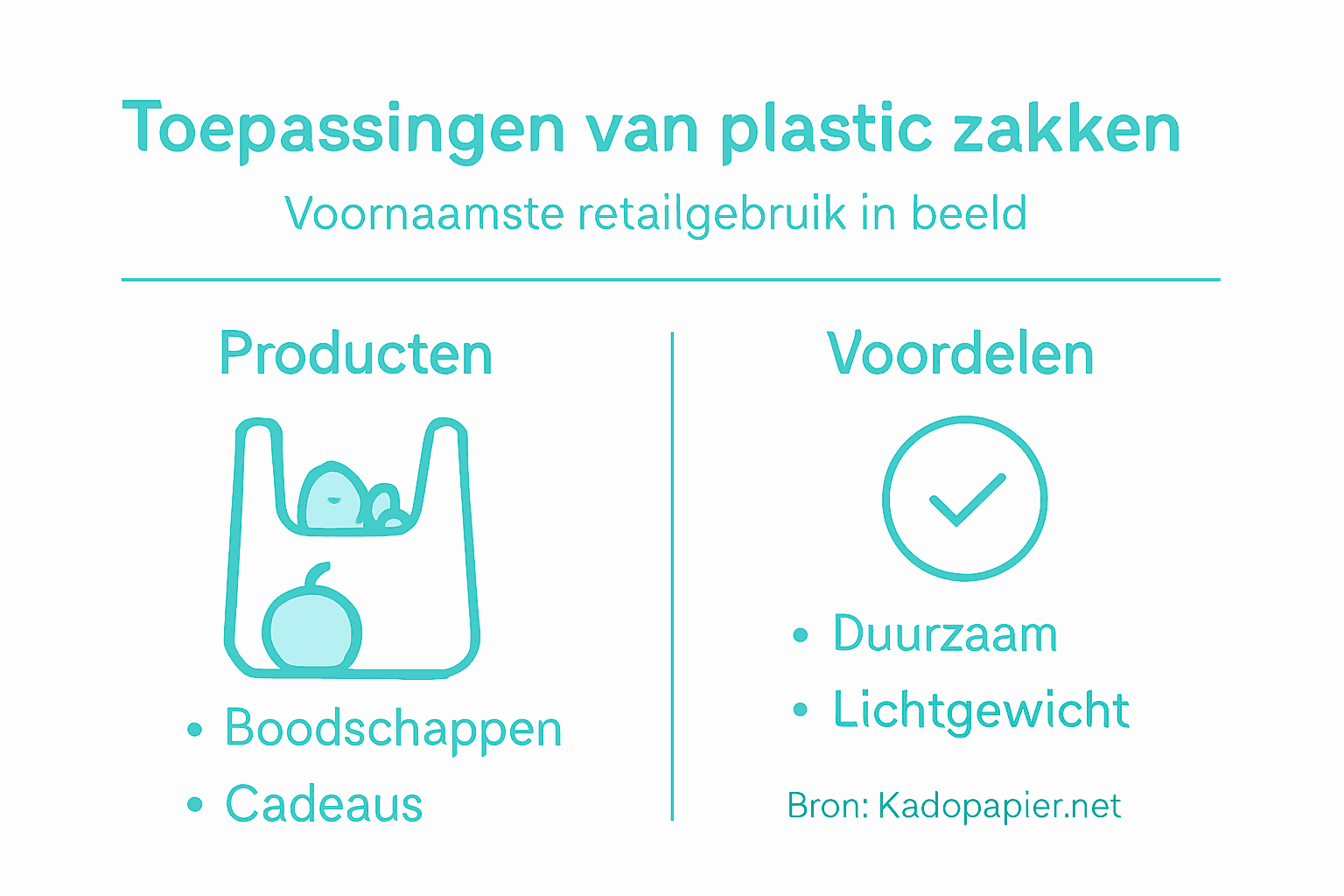
The demand for plastic bags has grown enormously since their introduction. They are increasingly replacing paper alternatives because they offer better protection and are more flexible. These bags are indispensable for gift wrappers and event organizers in Central Europe.
It's important to understand that not all plastic bags are created equal. Different thicknesses, sizes, and closure mechanisms influence their suitability for specific applications. Some retailers opt for standard open bags, while others prefer resealable plastic bags for better product protection.
Plastic bags have increased exponentially in production and use since 1950, underscoring their central role in modern packaging.
Plastic bags are part of a larger ecosystem of packaging materials. They work together with other elements like ribbon, paper, and decorations. So when planning your packaging strategy, you should view plastic bags as the foundation upon which everything else is built.
Choosing the right type of plastic bag depends on your specific needs. Consider what products you're packaging, how your customers use them, and what value you want to add.
Professional advice: Select plastic bags based on your product's net weight, expected customer handling, and whether you plan on branding or decoration. This prevents you from purchasing unsuitable material.
Main types and uses
Plastic bags come in different shapes and designs, each with its own purpose. As a retailer, you need to understand which type best suits your products.
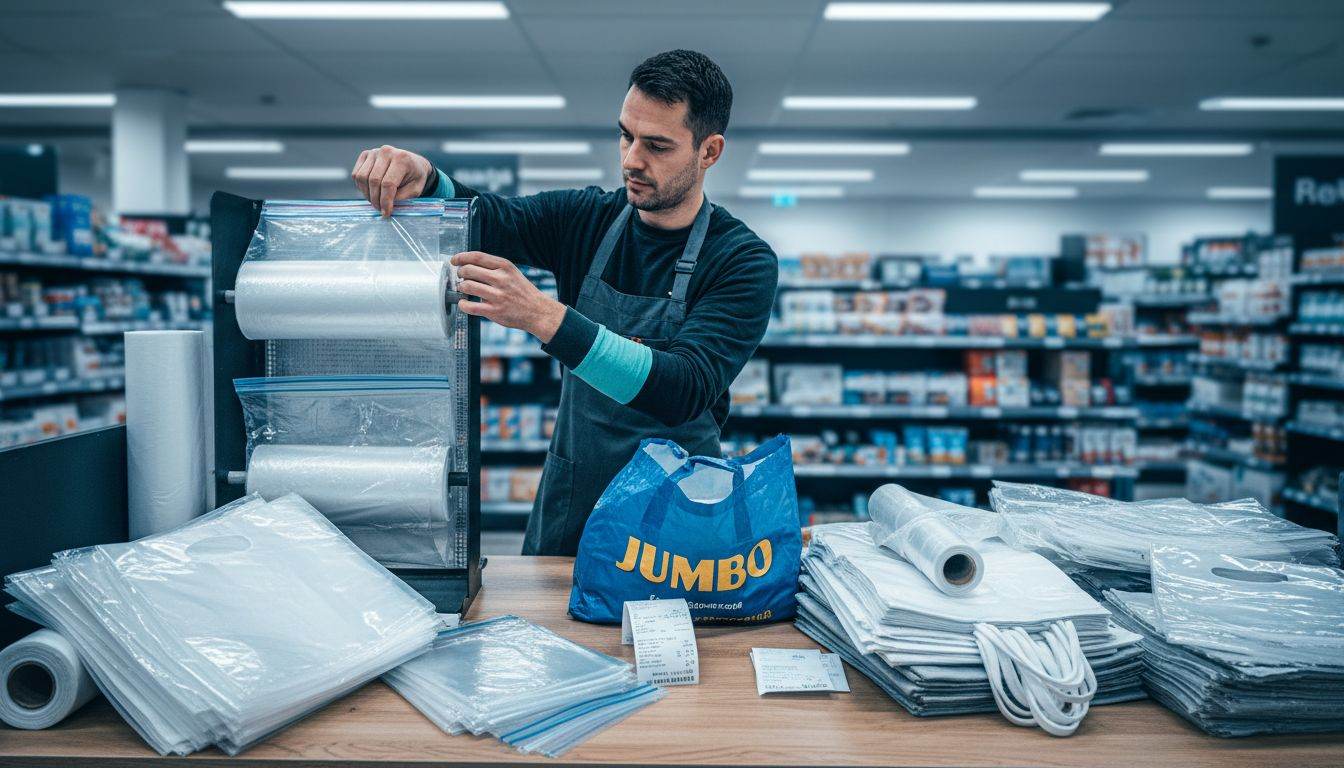
The two main categories are monolayer and multilayer films . Monolayer bags consist of a single layer of plastic, while multilayer films have multiple layers. This construction determines strength, protection, and cost.
What are the most common monolayer variants?
- LDPE (Low Density Polyethylene) : Flexible, soft, ideal for shopping bags
- HDPE (high-density polyethylene) : Stiffer, stronger, suitable for heavier products
- PP (Polypropylene) : Shiny, durable, perfect for gift bags
- LLDPE (Linear Low Density Polyethylene) : Stronger than LDPE, flexible use
Multilayer films offer something extra. By combining different polymers, you get better protection against oxygen, moisture, and grease. This is crucial for food products or sensitive goods.
Flexible packaging materials play a central role in retail. They offer practical properties that monolayer bags don't always offer.
Which applications are most popular in your sector?
- Shopping bags : Standard LDPE or HDPE bags, durable for reuse
- Food packaging : Multi-layer films with moisture protection
- Gift bags : Decorative PP bags with gloss
- Event Supplies : Strong Merchandise and Goodie Bags
- Shop storage bags : Flexible bags for various products
The choice between types depends on three factors: product type, shipping weight, and brand presentation. A jewelry store has different needs than a supermarket.
Here's a comparison of the main types of plastic bags for retail applications:
| Type of plastic bag | Strength & protection | Application | Price range |
|---|---|---|---|
| LDPE (low) | Moderate, flexible | Shopping bags | Low |
| HDPE (high) | Strong, stiff | Product bags, vegetables | Low |
| PP (polypropylene) | Glossy, durable | Gift wrapping | Average |
| Multilayer film | Very strong, barrier | Food, sensitive goods | High |
Multilayer films offer better protection against external factors, but cost more than monolayer alternatives—determine your budget first.
It's important to understand that tissue paper and plastic bags can work together. Many retailers use tissue paper for extra protection within the plastic bag.
For gift wrappers, presentation plays a major role. A matte-finish plastic bag with a logo feels premium, while glossy bags appear more elegant.
Practical advice: First, determine your core products, weigh them physically, and then test different bag types. This prevents costly errors and ensures a professional-looking final product.
Environmental impact and European regulations
Plastic bags have a significant environmental impact. As a retailer in Central Europe, you need to know which regulations you need to comply with and how to conduct your business responsibly.
The environmental impact begins with production and only ends when the material fully degrades or is recycled. Plastic bags can remain in the environment for decades if not disposed of properly.
What are the main environmental risks?
- Ocean pollution : Litter reaches aquatic ecosystems and harms animals
- Waste dumps : Plastic takes up a lot of space in waste dumps
- Production Emissions : Manufacturing generates significant CO2 emissions
- Microplastics : When broken down, tiny particles are created that end up everywhere
- Toxic additives : Some plastics contain harmful chemicals
Fortunately, regulators are active. The European Regulation on Packaging and Packaging Waste sets strict requirements from 2026 onwards.
What obligations apply to you?
- Recyclability : All plastic bags must actually be recyclable
- Minimum content : Packaging must contain recycled material
- No overpacking : Use only necessary material
- Avoid harmful substances : Lead, mercury and cadmium are prohibited
- Ecodesign : Bags must be designed in an environmentally friendly way
The regulations also focus on limiting single-use plastics . This means phasing out single-use bags.
European regulations require retailers to offer customers the option of bringing their own packaging—this will affect you.
Furthermore, manufacturers must take full responsibility for packaging waste. This means that as a retailer, you can impose requirements on suppliers regarding their plastic bags.
How will you approach this in practice?
Find suppliers who are transparent about their materials. Ask for certificates and recycling statements. Choose bags made from recycled plastic whenever possible. This not only helps the environment but also appeals to customers.
Consumers are increasingly choosing retailers that operate in an environmentally conscious manner—this is a business advantage.
Regulations are evolving rapidly. What's optional today could be mandatory tomorrow. Therefore, stay informed about updates to packaging and waste legislation .
Professional advice. Audit your current plastic bags now: are they recyclable, do they contain harmful substances, and what does the recycling process look like? This prevents problems when regulations become stricter.
Sustainable alternatives and best practices
The future of retail packaging doesn't lie solely with traditional plastic. Sustainable alternatives offer real solutions for the environment and business operations.
Bioplastics are a promising alternative. These are plastics made from plant-based sources instead of fossil fuels. They can be stronger and more flexible than conventional plastic.
What sustainable materials are available?
- Compostable packaging : Biodegrades in industrial composting facilities
- Bioplastics from plant fibers : Made from bamboo, sugar and other raw materials
- Paper bags : A classic alternative with reusability
- Biodegradable plastics : Degrade in 60 to 180 days under natural conditions
- Recycled plastic : Additional use of previously processed plastic
New bioplastic materials retain their strength with use and degrade quickly without leaving toxic residues. This makes them ideal for food and gift packaging.
But materials are just the beginning. Best practices also include behavioral changes.
How do you implement sustainability in practice?
- Choose sustainable suppliers : Ask for certificates and biodegradability guarantees
- Encourage customers to reuse : Offer rewards for returned bags
- Minimize packaging : Do not pack more than necessary
- Educate your team : Make sure everyone understands why sustainability is important
- Monitor your impact : Track how much waste your company creates
The circular economy is crucial. This means that products and materials are used multiple times instead of just once.
Circular packaging strategies include reuse, recycling, and education—together they make a difference.
Consumers now expect sustainability. This presents an opportunity for gift wrappers and event organizers to differentiate themselves from their competitors. A beautiful, eco-friendly bag feels both premium and responsible.
Not all sustainable options are suitable for everyone. A supermarket has different needs than a jewelry store. Therefore, you should evaluate specific alternative packaging materials for each industry.
The investment sometimes costs more upfront, but cost savings come from efficiency and customer satisfaction.
Below you will find an overview of sustainable alternatives to traditional plastic bags and their business benefits:
| Alternative material | Environmentally friendly advantage | Business advantage |
|---|---|---|
| Compostable plastic | Biodegradable | Enhances sustainable image |
| Bioplastic (plant-based) | Renewable raw material | Innovative character |
| Paper bag | Easy to recycle | Traditional look |
| Recycled plastic | Less use of raw materials | Low switching costs |
Practical advice: Start with one sustainable product per category, measure customer response, and scale. This reduces risk and helps you find the right mix.
Discover the perfect plastic bags for your retail packaging
Efficient packaging is a challenge for any retailer seeking to meet stricter European environmental regulations while simultaneously offering a high-quality customer experience. When choosing plastic bags, not only the right strength and protection are important, but also sustainability and recyclability. Understanding terminology such as LDPE, HDPE, and multilayer films can help you select the right product that aligns with your business goals and customer expectations.
At Kadopapier.net, you'll find a wide range of professional packaging solutions that meet these needs. Combine our high-quality plastic bags with matching tissue paper and sustainable accessories to enhance your presentation while packaging in an environmentally conscious way. Start optimizing your packaging process today and experience the convenience of our user-friendly webshop with fast delivery.
Browse our range and make a difference in your business packaging. Show your customers the quality they deserve and wrap sustainably through Kadopapier.net .
Frequently Asked Questions
What are the main types of plastic bags and their uses?
Plastic bags come in various types, including LDPE, HDPE, PP, and multilayer films. Each type has specific applications, such as shopping bags, food packaging, and gift bags. LDPE is flexible and suitable for shopping bags, while HDPE is better for heavier products.
How can I minimize the environmental impact of plastic bags?
To minimize the environmental impact of plastic bags, choose recyclable and compostable options. It's also important to check if the bags contain any harmful substances and to reduce the use of single-use plastic bags.
What are the advantages of using multilayer films over monolayer bags?
Multilayer films offer better protection against moisture, oxygen, and grease, making them ideal for food products and sensitive goods. They are generally stronger than monolayer bags, but also more expensive.
How can I encourage my customers to use reusable bags?
You can encourage customers to use reusable bags by offering rewards for returning bags or by highlighting the benefits of reusability in your marketing. Offering sustainable alternatives can also be an effective strategy.
Recommendation
- Sealable Plastic Bags – Efficiency and Safety for Retail – Kadopapier.net
- Plastic Party Bags: Important for Retail 2026 – Kadopapier.net
- Plastic Bags – Sustainable Choices for Retailers – Kadopapier.net
- Top Gift Bag Wholesale - Best Comparisons 2025 - Kadopapier.net
- Cozee Bay - Benefits of Sustainable Packaging for Restaurants