
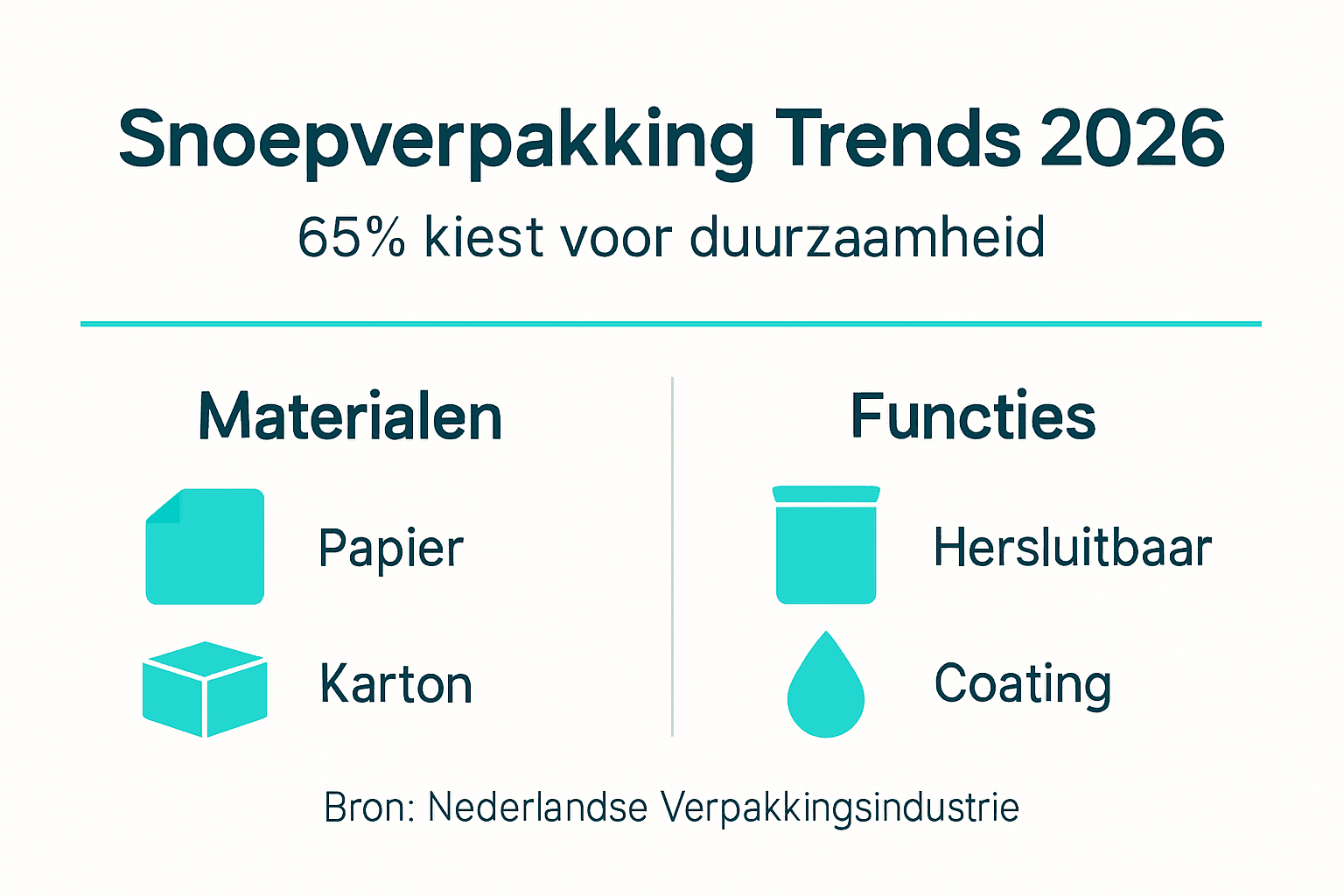
Candy packaging trends 2026: 65% of consumers choose sustainable
The Dutch confectionery market has experienced impressive 19% revenue growth since 2019, while consumers are increasingly demanding sustainable packaging. Retailers and event planners are challenged to choose candy packaging that is sustainable, functional, and attractive. This article provides concrete insights and practical advice to help you find the right balance between environmental friendliness, ease of use, and brand experience in your packaging choices.
Table of contents
- Sustainability and regulations in candy packaging
- Ease of use and ergonomics of candy packaging
- Aesthetics and brand experience through candy packaging
- Practical examples and applications for shop owners and event planners
- Common misconceptions about sustainable candy packaging
- Conclusion and practical tips for choosing candy packaging
- Discover sustainable packaging solutions at kadopapier.net
Key Points
| Point | Details |
|---|---|
| Sustainability essential | Modern consumers highly value environmentally friendly packaging and actively choose sustainable options |
| Innovative features | Resealability and smart materials extend shelf life by 20 to 30 percent |
| Aesthetics increases sales | Premium packaging design creates stronger brand loyalty and boosts social media exposure |
| Practically applicable | Retailers such as Kruidvat and Albert Heijn show that material reduction of up to 50 percent is possible |
| Myths debunked | Sustainable packaging is often more cost-effective than conventional alternatives in the long run |
Introduction to candy packaging in the Netherlands
The Dutch confectionery sector is experiencing strong growth. Retail accounts for 96% of total candy sales, confirming the dominant role of brick-and-mortar stores. The Dutch consume an average of 51 kilograms of candy per person per year, a figure that underscores the size of this market.
Consumer behavior is clearly shifting toward environmentally conscious choices. Buyers are increasingly paying attention to the origin and recyclability of packaging materials. This trend is forcing store owners to adapt their packaging strategies to meet changing expectations.
Candy packaging plays a crucial role in the overall shopping experience. It not only protects the product but also communicates brand values and directly influences purchasing decisions. For event planners, visual appeal is especially important because packaging often becomes part of the decoration and ambiance.
The most important factors in packaging choices:
- Protection and shelf life of the candy product
- Environmental impact and recyclability of the material
- Visual appeal and brand identity
- Practical ease of use for consumers
- Cost efficiency over the entire life cycle
This context forms the basis for all subsequent decisions regarding candy packaging. Understanding market size and consumer preferences allows you to better respond to current needs.
Trends and innovations in candy packaging
The packaging industry is rapidly innovating to meet sustainability requirements. Biobased materials and smart technologies like QR codes are gaining ground because they improve traceability and reduce food waste. These developments make packaging both more functional and more environmentally friendly.
Natural coatings are increasingly replacing plastic layers for grease and moisture resistance. These biobased protective layers maintain functionality while reducing the ecological footprint. Manufacturers conduct intensive testing to achieve optimal barrier properties without synthetic materials.
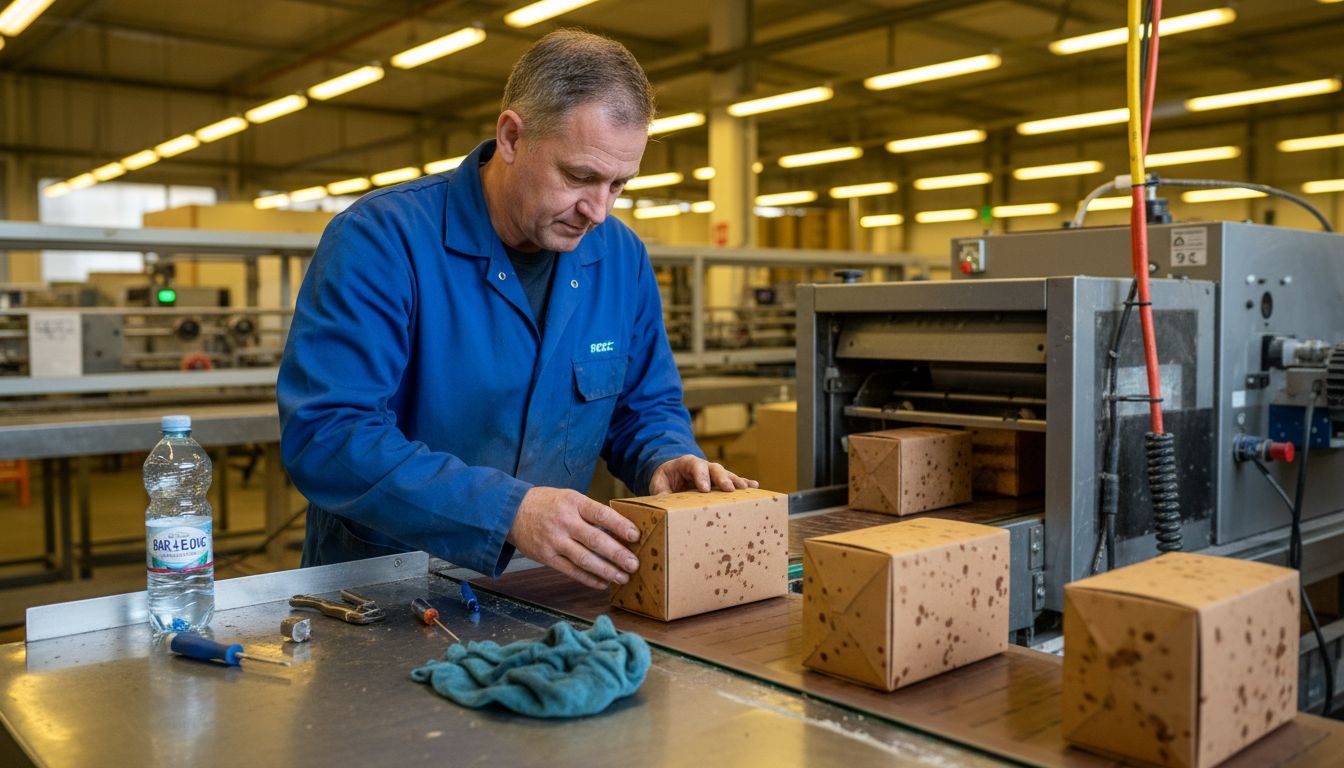
Minimalist designs create surprising unboxing experiences. Tactile elements like textured cardboard or natural fibers add a sensory dimension that digital images can't match. This approach strengthens the emotional connection between consumer and brand.
Comfort and reusability are central to modern designs. Packaging that fulfills multiple functions or can be reused after use is highly popular with environmentally conscious buyers. Reusable packaging fits perfectly into this trend.
Smart technologies are transforming consumer interactions:
- QR codes link to product stories and usage tips
- NFC chips provide real-time product information and authentication
- Temperature-sensitive ink warns of storage outside optimal conditions
- Interactive packaging drives brand engagement through apps
Pro tip: Choose packaging that includes a storytelling element, such as information about the origin or production process, to strengthen customer loyalty.
The market for alternative packaging materials is growing exponentially. Companies that invest in innovative packaging materials are positioning themselves as pioneers and benefiting from increased consumer confidence.
Sustainability and regulations in candy packaging
Dutch legislation actively encourages plastic reduction. Retailers are adapting their product ranges to meet stricter standards for single-use plastics and recycling requirements. These regulations are forcing the sector to innovate and refocus on sustainable alternatives.
Kruidvat replaced plastic paper cone bags with paper ones in 1,250 stores, resulting in a significant annual reduction in plastic consumption. This step demonstrates that a large-scale transition is feasible without sacrificing quality. Paper bags offer comparable functionality at a reasonable additional cost.
Biobased cardboard packaging is increasingly replacing petroleum-based materials. Cardboard coatings save 1200 kg of plastic annually per product line for chocolate Advent calendars. These innovations prove that sustainability and product protection can go hand in hand.
Comparison of packaging materials for candy:
| Material | Recyclability | Barrier properties | Costs | Sustainability score |
|---|---|---|---|---|
| Traditional plastic | Limited | Excellent | Low | 2/10 |
| Biobased plastic | Moderate | Good | Average | 6/10 |
| Coated cardboard | High | Good | Average | 8/10 |
| Uncoated paper | Very high | Moderate | Low | 9/10 |
| Composite materials | Variable | Excellent | High | 7/10 |
The choice of sustainable packaging material depends on specific product requirements. Moist candies require better barriers than dry products, which influences the material choice.
Practical considerations when selecting materials:
- Check certifications such as FSC for paper and cardboard
- Ask suppliers about end-of-life scenarios and recycling options
- Test barrier properties under realistic storage conditions
- Calculate total environmental costs including transport and production
Pro-tip: Proactively inquire with suppliers about certifications and specific recycling options for your region.
Those who stay informed about sustainability and candy packaging regulations can respond promptly to new requirements. The market for sustainable candy packaging is evolving rapidly, making early adoption a competitive advantage.
Ease of use and ergonomics of candy packaging
Practical features determine whether consumers remain satisfied after purchase. Resealable packaging extends shelf life by 20 to 30 percent by protecting the candy from moisture and air. This feature reduces waste and significantly increases customer satisfaction.
Improved grip prevents damage during use. Textured surfaces and ergonomic shapes make packaging easier to handle, especially for children and the elderly. These details may seem small, but they significantly impact the user experience.
Stackability supports efficient storage and transport. Stable packaging reduces transportation costs and retail space requirements. For retailers, this means lower operating costs and improved inventory rotation.
Ergonomic design goes beyond just form:
- Easy-open features reduce frustration and improve accessibility
- Transparent windows show content without opening
- Dosing openings control portion size and reduce waste
- Handles and grip zones improve handling of larger packages
Pro tip: Test packages for repeated opening and closing to ensure practical usability under realistic conditions.
Logistics optimization of packaging plays a crucial role in overall cost efficiency. Packaging that conforms to standard crate and pallet sizes substantially reduces transport costs. This synergy between design and logistics is often underestimated but delivers measurable savings.
Aesthetics and brand experience through candy packaging
Visual appeal directly influences purchasing decisions. 65% of consumers associate premium packaging with higher quality , proving that investment in design pays for itself. This perception is especially true in the confectionery sector, where pleasure and experience are paramount.
Storytelling through packaging design strengthens brand identity. Illustrations, color, and typography communicate brand values without words. Tactile elements like embossing or unique paper textures add a memorable dimension that digital competitors can't match.
Unboxing experiences drive social media exposure. Consumers spontaneously share eye-catching packaging on platforms like Instagram and TikTok, generating free brand awareness. This organic promotion often reaches younger audiences more effectively than paid advertising.
Retail and event-specific designs optimize impact per context:
- Retail packaging focuses on shelf visibility and scannable information
- Event packaging emphasizes thematic coordination and photogenic elements
- Seasonal designs create urgency and relevance
- Limited editions encourage collector behavior and repeat purchases
The relationship between packaging and branding deserves strategic attention. Understanding the value of personalized packaging allows for more targeted investment in brand differentiation.
Premium packaging justifies higher price points through added value. Consumers are happy to pay more for products that combine a luxurious appearance with sustainability. Designing luxury gift packaging requires a balance between visual impact and practical functionality.
Consumer preferences for premium packaging reveal clear patterns. Applying these insights to design decisions significantly increases the likelihood of commercial success.
Practical examples and applications for shop owners and event planners
Custom packaging can reduce material usage by up to 50 percent by optimally adapting to product dimensions. This savings applies to both material costs and transport volume. Well-known chains like Albert Heijn and Kruidvat demonstrate that large-scale implementation is feasible.
Packaging is tailored to logistical processes and crate sizes. This integration minimizes empty space during transport and storage. Retailers who take retail packaging optimization seriously achieve measurable cost benefits.
Comparison of packaging options by application:
| Application | Recommended material | Typical dimensions | Primary function | Average costs |
|---|---|---|---|---|
| Retail shelves | Coated cardboard with window | 100-250g portion | Visibility + protection | €0.08-€0.15 per piece |
| Bulk packaging store | Kraft paper with reseal strip | 500g-1kg | Stock + freshness | €0.12-€0.22 per piece |
| Event gifts | Premium cardboard with ribbon | 50-150g portion | Presentation + brand experience | €0.25-€0.45 per piece |
| Scoop candy takeaway | Paper cone | Variable volume | Ease of use + durability | €0.03-€0.06 per piece |
| Seasonal promotions | Thematically printed paper | 200-400g portion | Temporary promotion | €0.10-€0.18 per piece |
Practical tips for events:
- Coordinate packaging colors with event theme for a cohesive look
- Choose lightweight materials to facilitate transport and assembly
- Integrate QR codes for interactive elements or feedback
- Plan sufficient stock including reserves for unexpected demand
- Test packaging in advance for stability under different temperatures
Practical examples of sustainable paper cones are inspiring other retailers to take similar steps. Successful implementations often share characteristics such as phased rollout, employee training, and clear customer communication about the transition.
Common misconceptions about sustainable candy packaging
Several myths unnecessarily hinder the transition to sustainable packaging. These misconceptions deserve to be corrected with factual information.
- Sustainable packaging is always more expensive
Long-term cost savings from reduced material use often offset higher initial costs. Reductions in transportation costs and improved brand perception strengthen the business case. Focusing solely on the purchase price misses the bigger picture.
- Cost savings means lower quality
Optimization focuses on eliminating unnecessary materials, not on reducing quality. Smarter designs maintain or improve functionality while reducing waste. Efficiency and quality are not mutually exclusive.
- Plastic is necessary for optimal shelf life
Modern biobased coatings and resealable paper packaging offer similar barrier properties. Many confectionery products perform excellently in non-plastic alternatives. The assumption that only plastic works is outdated.
- Sustainable packaging looks less attractive
Consumers associate high-quality, sustainable packaging with a better shopping experience and quality. Natural materials and tactile finishes create a premium feel. Sustainability and aesthetics reinforce each other when the design is well-thought-out.
Pro tip: Focus on the bigger picture of cost, quality, and brand experience instead of just the initial purchase price.
Misconceptions about sustainable packaging are often fueled by outdated information. The sector is evolving rapidly, and what was true five years ago is no longer valid. Current knowledge about the cost savings of sustainable packaging and consumer preferences for sustainable packaging helps form realistic expectations.
Conclusion and practical tips for choosing candy packaging
The right candy packaging combines sustainability, ease of use, and visual appeal. This balance requires careful consideration of materials, costs, and brand objectives. Retailers and event planners who integrate these factors create optimal customer value.
Innovation and brand experience differentiate in a competitive market. Investing in surprising unboxing experiences or interactive elements strengthens customer loyalty. These aspects often justify premium pricing and generate organic promotion.
Collaborating with suppliers who offer customized solutions and a sustainable focus accelerates successful implementation. Partners with expertise in material optimization and design help avoid pitfalls. Open dialogue about objectives and constraints leads to better solutions.
Practical checklist for packaging choices:
- Assess packaging for usability in your logistics chain
- Test materials under realistic storage conditions
- Ask customer feedback on ease of use and aesthetics
- Monitor regulations and anticipate future requirements
- Calculate total cost of ownership including indirect benefits
Consumer trends are constantly shifting toward sustainability and transparency. Those who follow these developments and anticipate them in a timely manner maintain their relevance and market position. Regularly evaluating your packaging strategy prevents you from falling behind competitors.
Discover sustainable packaging solutions at Kadopapier.net
Kadopapier.net offers a wide range of candy packaging that combines sustainability and functionality. From classic paper bags to innovative resealable options, the selection covers all retail and event needs. Custom solutions are tailored to your specific needs and brand identity.
Our expertise in packaging materials helps you make the right choice for your situation. We stay up-to-date on the latest trends and environmental regulations, ensuring your packaging meets current requirements. Advice on materials and design ensures maximum brand experience and customer satisfaction.
Discover inspiration for creative and sustainable packaging or explore our complete range of sustainable packaging solutions . We're happy to help you create packaging that strengthens your brand and delights customers.
Frequently asked questions about candy packaging
What are the most environmentally friendly materials for candy packaging?
Uncoated paper and FSC-certified cardboard score highest on sustainability. These materials are fully recyclable and biodegradable. For products requiring additional barrier properties, biobased coatings offer a good alternative that combines functionality with a low environmental impact.
How do I extend the shelf life of sweets with my packaging?
Choose resealable packaging that seals out moisture and air. Coated materials offer additional protection from environmental influences. Store candy in a cool, dry place and avoid direct sunlight to maintain optimal quality, regardless of the packaging material.
Are sustainable candy packaging more expensive than conventional ones?
Initial costs are sometimes higher, but long-term savings through material reduction and transport efficiency often offset this. Improved brand perception and customer loyalty deliver additional value. When you consider the entire life cycle, you'll see that sustainable options are often more cost-effective.
Which packaging trends appeal to consumers in the Netherlands?
Minimalist designs with natural materials and tactile elements score highly. Reusability and interactive elements like QR codes for product stories increase engagement. More details on current developments can be found in the sustainability regulations for candy packaging.
How do I combine aesthetics with functionality in my packaging?
Start with a clear brand identity and translate this into color, shape, and material. Test designs for practicality, such as accessibility and stackability. Balance visual impact with logistical efficiency to optimize both customer experience and operational costs.