
Choosing sturdy shopping bags: guide for retailers
Many retailers think that plastic bags are always the sturdiest, but that is not true. The material and construction determine whether a shopping bag can handle heavy weight without tearing. Sturdy bags improve customer satisfaction, prevent damaged products, and strengthen your brand image. In this guide, you will discover which materials and features are truly important for sustainable, reusable shopping bags that suit your store or hobby project.
Table of contents
- Key insights on sturdy shopping bags
- Materials for sturdy shopping bags: a comparison
- Functional properties that determine strength
- Sustainability and eco-friendliness of sturdy shopping bags
- Personalization and branding of shopping bags
- Common misconceptions about sturdy shopping bags
- Purchasing criteria and reliable suppliers in the Netherlands
- Conclusion and practical recommendations for retailers and hobbyists
- Discover a wide selection of sturdy shopping bags and gift packaging.
- Frequently asked questions about sturdy shopping bags
Key insights on sturdy shopping bags
| Point | Details |
|---|---|
| Material impact | Non-woven, cotton, and kraft paper determine strength and reusability differently than plastic. |
| Construction features | Reinforced handles and bottom padding increase load capacity and prevent tearing during heavy use. |
| Sustainability benefit | Reusable bags reduce plastic waste by 60-70% and are biodegradable. |
| Personalization options | Printing strengthens brand recognition without compromising durability if you choose the right method. |
| Dutch suppliers | Small order quantities starting from 10 pieces and fast delivery times of 1 to 2 working days are available. |
Materials for sturdy shopping bags: a comparison
Following the overview of the importance of durability, a detailed comparison of the most commonly used materials now follows. The material determines not only how long a bag lasts, but also how eco-friendly and professional it appears. For retailers and hobbyists, this is a crucial choice that impacts costs, customer experience, and sustainability.
Non-woven bags are sturdy, inexpensive, and partially recycled, making them suitable for retailers on a limited budget. They are lighter than cotton but stronger than standard plastic, ideal for medium-heavy use. Cotton bags offer the highest reusability and can carry heavy weight without deforming. They exude quality and fit a premium brand experience. Kraft paper combines a natural look with surprising sturdiness, especially when extra layers are applied or handles are reinforced.
Plastic contributes to environmental pollution and has a negative image among consumers. It seems cheap to purchase, but its weak construction often leads to complaints and repeat purchases. Natural materials, on the other hand, improve your brand image and meet the growing demand for sustainable packaging.
| Material | Firmness | Environmental friendliness | Cost price |
|---|---|---|---|
| Non-woven | Good | Partially recycled | Low |
| Cotton | Excellent | Biodegradable | Medium to high |
| Kraft paper | Good to very good | Biodegradable | Low to medium |
| Plastic | Weak to medium | Bad | Very low |
Pro tip: Always ask for samples to experience the quality beforehand. Feel the material, test the handles, and check if the base remains stable under weight. This way, you avoid disappointment and returns.
Functional properties that determine strength
After selecting the material, it is important to understand how construction features enhance sturdiness and usability. Even the best material fails if handles come loose or the bottom collapses under the weight. Construction details make the difference between a bag that is used once and a bag that lasts for years.
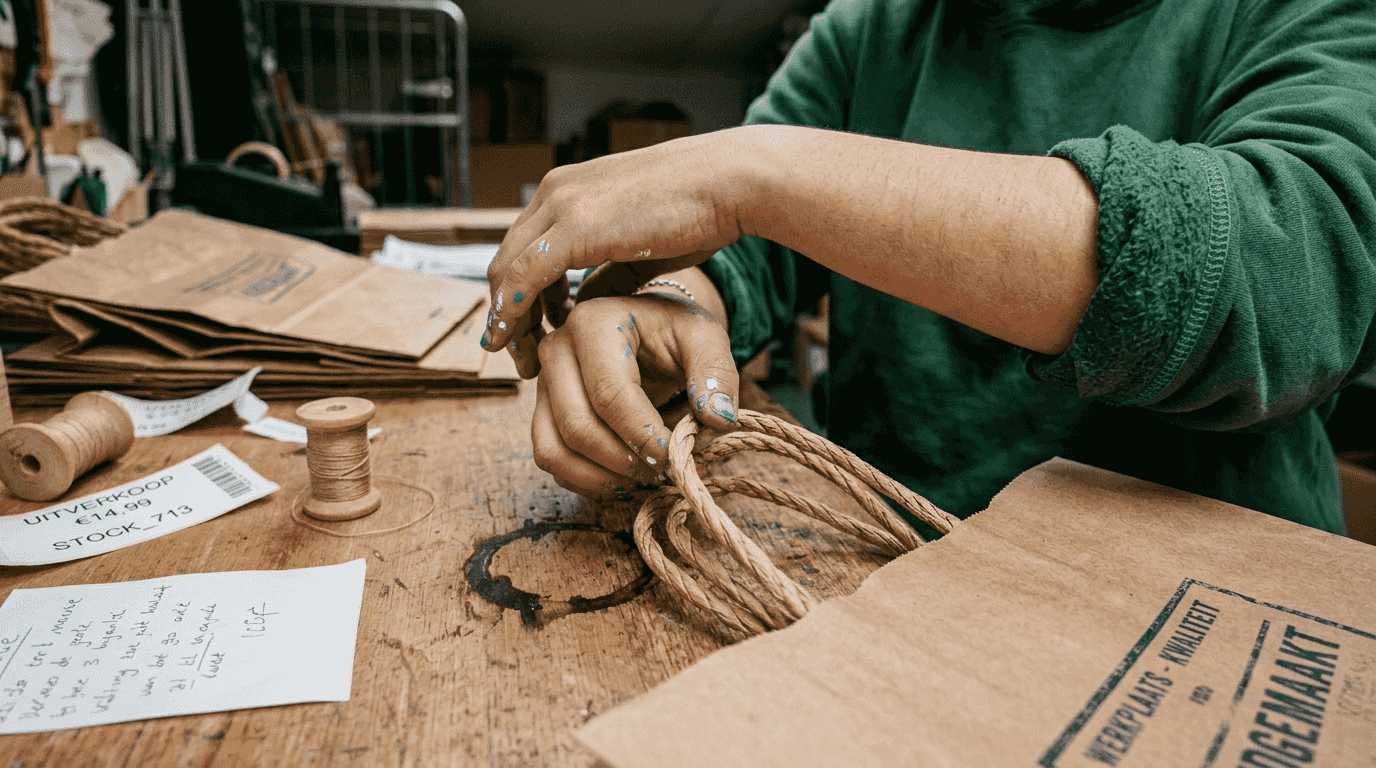
Reinforced handles prevent tearing when handling heavy weight. Double-stitched or reinforced with extra layers of material, handles can support kilos without cutting into the material. This is essential for shops selling books, bottles, or other heavy products. Bottom padding increases load capacity and stability by distributing the weight evenly. A reinforcing cardboard insert or extra layer of material ensures that products do not sink through the bottom.
Extra interior pockets provide increased functionality and prevent small items from shifting. For hobbyists who assemble their own bags, the interior pockets offer space for personal touches. Double handles double the carrying capacity and offer an alternative grip for longer distances. A zipper protects the contents from the elements and prevents products from falling out during transport.
Recognize quality characteristics by paying attention to these details:
- Stitched seams instead of glued joints
- Handles that wrap completely around the bag
- Double or folded material layers on wear areas
- Sturdy base construction with visible reinforcement
- Smooth finish without fraying or cracks
These characteristics are visible upon inspection and provide certainty regarding the lifespan. Invest in reusable packaging that lasts for several years for maximum customer value.
Sustainability and eco-friendliness of sturdy shopping bags
Now that the functional strength is clear, a deeper look at the sustainable aspect of materials follows. Consumers are making more conscious choices and expect retailers to take responsibility. Sustainable bags are not only good for the environment, but they also strengthen your brand image and increase customer loyalty.
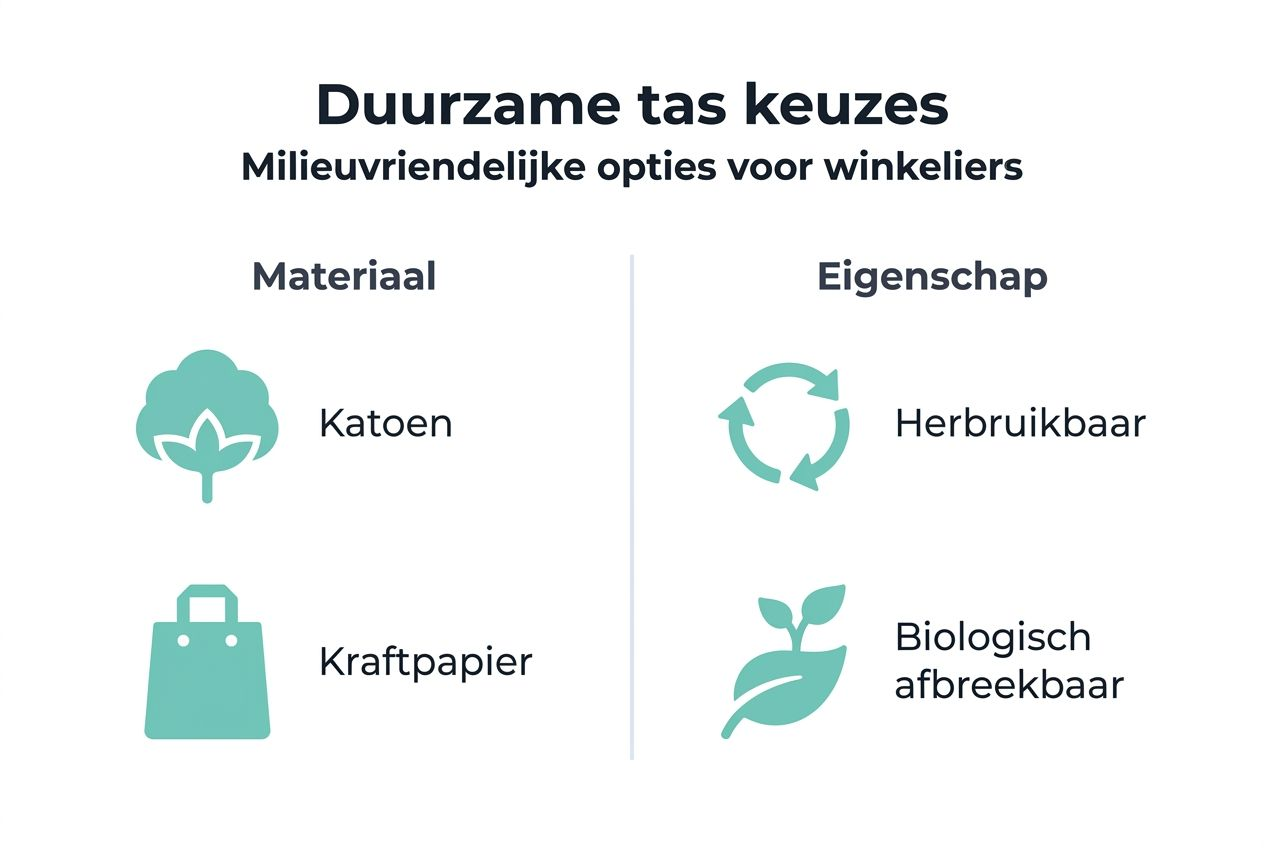
Synthetics contribute to the pollution of oceans and soil, with microplastics remaining for hundreds of years. Natural materials such as cotton and kraft paper biodegrade within months to years. Reusable bags reduce plastic waste by 60 to 70%, which has a direct impact on your store's ecological footprint. Biodegradability means that, over time, a bag returns to the natural cycle without harmful residues.
Reusability is the most powerful factor for sustainability. A cotton bag used 100 times more than compensates for the higher production costs and energy. Non-woven bags are less sustainable to produce but offer an affordable intermediate step for retailers switching from plastic. The practical impact for stores is that customers associate a reusable bag with quality and commitment.
For hobbyists, natural materials offer creative possibilities:
- Painting or stamping cotton bags
- Personalize with natural paints
- Combine with recycled decorations
- Adding ecological labels or tags
Pro tip: Choose bags that align with your sustainability strategy. If you already sell organic products, a kraft paper bag visually reinforces that message. Transparency regarding material choices builds trust with customers who value environmental awareness.
Personalization and branding of shopping bags
In addition to sturdiness and durability, branding also plays a major role in the choice of bags. A printed shopping bag becomes a walking billboard that carries your brand message to new customers. Retailers view personalization as an investment in brand awareness, while hobbyists use them to create unique gift packaging.
Printing increases the visibility and recognizability of the store, especially when customers reuse the bag in public spaces. A simple logo or slogan is sufficient to strengthen brand recall. Small print runs with fast delivery are possible for flexible campaigns, ideal for seasonal promotions or new product launches. Many suppliers offer personalization starting from 25 pieces, which is cost-effective for start-up entrepreneurs.
Incorrect printing can reduce strength due to material weakness. Heavy ink applications weaken fibers in cotton, and heat pressing techniques can make non-woven material brittle. Choose printing methods that are compatible with the selected material. Screen printing works excellently on cotton, while flexography is ideal for kraft paper.
Tips for effective and durable printing:
- Place logos on flat parts, not on folds or handles.
- Use eco-friendly water-based inks
- Limit the number of colors for clarity and cost savings
- Test the wash resistance of cotton bags
- Consultation with suppliers regarding optimal printing techniques
A balance between branding and functional quality is achieved by prioritizing legible, simple designs. An overcrowded bag with text looks messy and lowers perceived value. Reusable gift packaging with subtle branding exudes class and encourages reuse.
Common misconceptions about sturdy shopping bags
To make an informed choice, it is important to dispel misconceptions about bags. Incorrect assumptions lead to disappointing purchases, wasted budgets, and dissatisfied customers. By debunking myths, you make better choices that suit your specific needs.
Thin plastic bags are often mistakenly perceived as sturdy because they appear to carry weight temporarily. In reality, they tear at sharp edges or with repeated use. The low weight suggests practical convenience but masks structural weakness. Cotton bags are not necessarily heavy; weight varies greatly depending on the weave and thickness. Lightweight cotton combines sturdiness with carrying comfort and is available in varieties from 80 to 300 grams per square meter.
Printing can affect strength in both a positive and negative way, depending on the chosen technique. High-quality screen printing strengthens cotton through extra layers, while cheap transfers can weaken the material. Another misconception is that all reusable bags are automatically environmentally friendly. Production processes, transport, and lifespan determine the ultimate ecological impact.
Examples of incorrect assumptions with an impact on procurement:
- “Cheap is cheap” leads to repeat purchases that are ultimately more expensive.
- “Heavy bags are always better,” while lightweight materials can be just as strong.
- “Plastic is always worse,” although recycled non-woven sometimes scores better than virgin cotton.
- “More handles mean more stability,” while incorrect placement actually creates weakness.
You measure the quality of a shopping bag not only by the material, but by how all the parts work together under load.
The importance of accurate information for a better choice lies in comparing specifications, testing samples, and asking targeted questions of suppliers. Transparency regarding production processes and material certifications helps separate marketing claims from facts.
Purchasing criteria and reliable suppliers in the Netherlands
With insight into materials, durability, and branding, it is now time to discuss practical purchasing steps. The Dutch market offers various suppliers with different specializations. Choosing the right partner saves time and money and ensures consistent quality.
Note the minimum order quantities starting from 10 pieces, which is attractive to small business owners and hobbyists who want to experiment without maintaining a large inventory. Larger volumes of 100 pieces or more offer more competitive prices per piece. Fast delivery times of 1 to 2 days are possible with suppliers holding local stock, essential for last-minute events or unexpected peaks in demand.
Thoroughly check material, sturdiness, and price-quality ratio by ordering and comparing samples. Measure load capacity by filling the bag with weights and testing for tears or deformation. Suppliers with local stock offer greater certainty regarding availability and can respond more quickly to questions or problems. International shipping increases the risk of delays and complications with returns.
Step-by-step plan for efficient purchasing and inventory management:
- Determine your specific needs: load capacity, size, material, and budget.
- Request samples from at least three suppliers to compare quality.
- Test the bags under realistic conditions with the weight that customers will carry.
- Compare total costs including shipping, VAT, and any personalization.
- Start with a small order to measure customer satisfaction before purchasing large inventories.
- Build a relationship with one or two reliable suppliers for consistency.
- Monitor stock and order in time to prevent sell-outs during peak periods.
Suppliers with extensive product information, customer service in Dutch, and transparent return conditions are preferred. Types of gift bags for retailers offer insight into additional packaging solutions that complete your assortment.
Conclusion and practical recommendations for retailers and hobbyists
The guide is summarized with clear tips so that you can get started immediately with confidence. Choosing sturdy shopping bags requires attention to material, construction, durability, and personalization. Every choice impacts customer satisfaction, brand perception, and operational costs.
Understand the pros and cons of the materials used by comparing non-woven, cotton, and kraft paper in terms of durability, reusability, and price. No single material is perfect for every situation, so tailor your choice to your target audience. Weigh sustainability against cost and functionality by considering total lifespan and ecological impact. A slightly more expensive cotton bag that lasts for years is ultimately cheaper than repeated purchases of plastic.
Explore personalization options without sacrificing durability by choosing printing techniques that respect the material. Subtle branding often works better than cluttered designs. Order from reliable Dutch suppliers with good service, fast delivery, and transparent communication regarding quality and specifications.
Use this knowledge to strengthen customer satisfaction and branding:
- Offer multiple bag options so that customers can choose based on need
- Clearly communicate sustainability benefits on receipts or in-store signage.
- Train staff to explain the benefits of reusable bags.
- Collect feedback on bag sturdiness and adjust purchasing based on experience.
- Use bags as a marketing tool through attractive designs that encourage reuse.
Discover a wide selection of sturdy shopping bags and gift packaging.
After all the practical tips, Kadopapier.net is the logical partner for your sturdy shopping bags and gift packaging. The extensive range offers various materials and sizes to suit every store, from small-scale hobby projects to professional retail environments. Easily personalize with additional accessories such as red organza ribbon for festive accents or a stylish brown organza bag for smaller gifts.
Short delivery times and small order quantities make it possible to respond flexibly to seasonal demand without maintaining large stocks. Handy gift packaging accessories such as ribbons, bows, and decorations complete your range and increase the presented value. Whether you are looking for non-woven bags for everyday use, premium cotton bags for brand reinforcement, or kraft paper for a natural look, the assortment offers quality at competitive prices. Visit Kadopapier.net for professional packaging materials that make your customers and projects shine.
Frequently asked questions about sturdy shopping bags
What makes a shopping bag sturdy?
Sturdiness is achieved through strong materials such as cotton or kraft paper combined with reinforced handles and a reinforced bottom. A good construction prevents tearing and increases the load capacity, so the bag can handle heavy weight without deforming or breaking.
Which materials are best for sustainability?
Cotton and kraft paper are biodegradable and reusable, making them sustainable choices for eco-conscious retailers. Non-woven bags are affordable and partially recycled, a practical intermediate step for those switching from plastic.
How does personalization work without losing sturdiness?
Select printing methods that do not weaken the material, such as screen printing for cotton and flexography for kraft paper. Avoid heavy printing on vulnerable areas such as handles and choose eco-friendly water-based inks that leave fibers intact.
What are the minimum order quantities?
Many suppliers have a minimum of 10 pieces for standard bags, while personalization often starts at 25 to 50 pieces. This is advantageous for small business owners and hobbyists who want to experiment without large investments.
How quickly can I get sturdy bags delivered?
Delivery times vary by supplier but can be 1 to 2 working days with local stock in the Netherlands. Fast delivery supports timely store stock and enables last-minute orders for events or seasonal peaks.