
What is wrapping paper design: styles and applications
TL;DR:
- Gift wrap design encompasses material, color, and printing technique, enhancing the experience of a gift. Choosing the right paper type and technique reinforces the look and message, depending on the occasion and target audience. Personalization and eco-design are the main trends in gift wrap for 2026.
For many, gift wrap is just a piece of paper you throw away as soon as the gift is unwrapped. But what exactly is gift wrap design, and why do designers, retailers, and consumers pay so much attention to it? The reality is that good gift wrap design completely changes the gift experience long before the ribbon comes off. This article explains the basics: from material selection and printing techniques to trending styles such as striped gift wrap and floral gift wrap, and everything you need to make informed choices or start designing yourself.
Table of Contents
- Key Insights
- What Exactly is Gift Wrap Design?
- Materials, Colors, and Textures
- Design Techniques and Creative Applications
- Comparison of Styles and Applications
- Practical Tips for Designing Your Own Gift Wrap
- My Vision on Gift Wrap Design
- Gift Wrap and Accessories at Kadopapier
- FAQ
Key Insights
| Point | Details |
|---|---|
| Design goes beyond pattern | Gift wrap design includes material, color, texture, and printing technique combined. |
| Paper choice determines appearance | The right paper type enhances the design story and desired emotion. |
| Personalization is growing strongly | Custom logos and photos on gift wrap are becoming increasingly popular in 2026. |
| Style must suit the occasion | Traditional, modern, luxury, or eco: each situation requires a different design. |
| Practical design requires preparation | From concept to production: structure prevents pitfalls and delivers professional results. |
What Exactly is Gift Wrap Design?
Gift wrap design is the conscious design of wrapping paper based on visual, tactile, and functional principles. It's not just about a pretty pattern. It involves the combination of paper type, color use, printing, texture, and the ultimate application. Think of the difference between simple kraft paper with a subtle geometric pattern and laminated glossy paper with a full-color print. Both are gift wrap, but the design process behind each is fundamentally different.
For consumers, this means knowing which paper suits which occasion. For creative professionals, it means understanding how each design choice affects the experience. Gift wrap inspiration comes not only from color trends but also from material developments, printing techniques, and brand positioning.
What is gift wrap at its core? It's packaging material with a communicative function. It says something about the giver, the brand, or the occasion. And that makes its design a serious discipline.
Materials, Colors, and Textures
The foundation of any gift wrap design lies in the material. The choice of paper type directly influences color reproduction, contrast, and the tactile feel. This sounds logical, but the nuances are greater than most people expect.
Here are the most commonly used paper types and their characteristics:
- Kraft paper: Rough, natural, and durable. Ideal for eco-designs and a handcrafted look. Colors are rendered less brightly, but that suits the style.
- Coated paper: Smooth surface, bright colors, high gloss. Suitable for luxury and commercial designs with full photo prints.
- Recycled paper: Environmentally friendly and increasingly popular. Products like the EcoLeaf 70g are made from 100% FSC-recycled material and combine sustainability with a premium leaf print.
- Tissue paper and tracing paper: Thin, flexible, and decorative. Less suitable as primary wrapping paper, but strong as an interlayer or accent packaging.
Color usage in gift wrap design is more than just taste. Off-white gives a warm look, while glossy white makes a more professional impression. Dark background colors like midnight blue or emerald green immediately increase the perception of luxury. Light, pastel-colored backgrounds such as light pink or mint green work excellently for birth or spring occasions.
Texture adds an extra dimension that color alone cannot provide. Embossed paper with relief patterns feels heavier than it actually is. That feeling increases the perceived value of the gift itself.
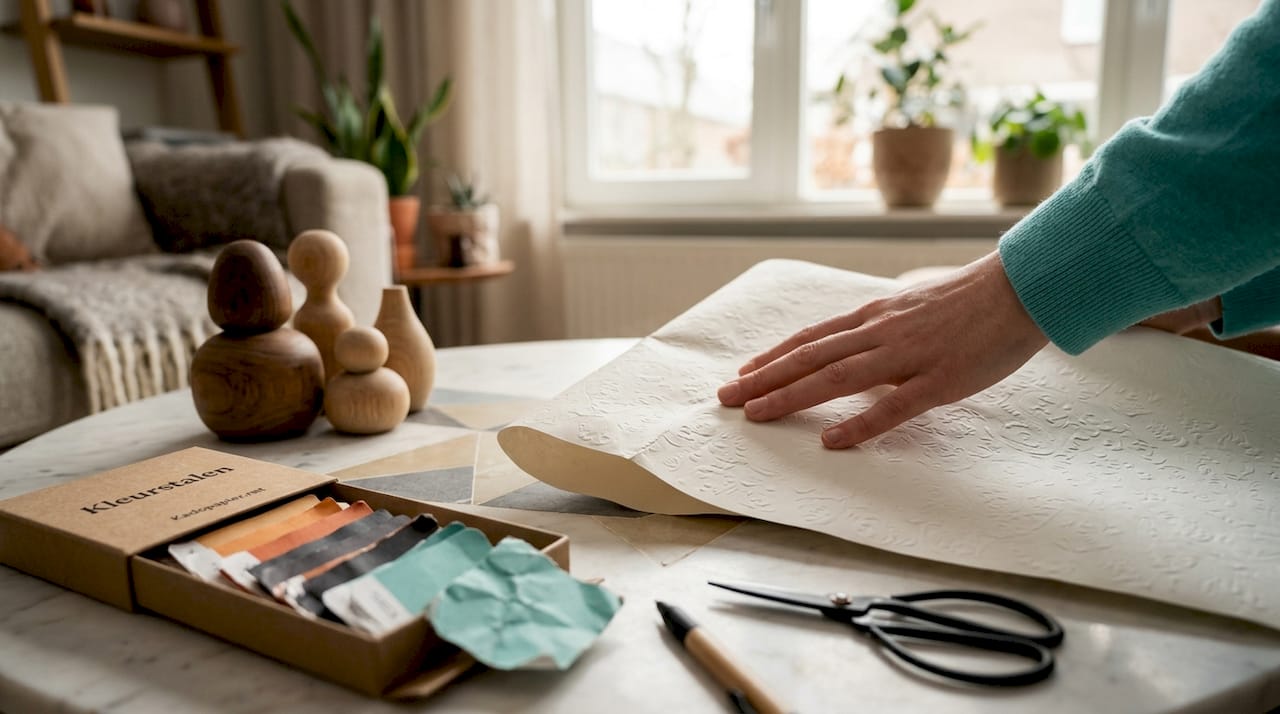
Pro-tip: Choose your color palette based on the occasion and the desired emotion, not just on what's trending. A warm terracotta color works beautifully for an autumn gift but feels out of place for a birth announcement.
Paper thickness also plays a role. 70 g/m² paper weight provides flexibility and environmental friendliness, while heavier paper above 100 g/m² exudes sturdiness and luxury. For a complete overview, also check out the types of gift wrap to make the right choice for your project.
Design Techniques and Creative Applications
Once the material is fixed, the printing technique determines how the design comes to life. Each technique has specific advantages depending on print run, budget, and desired appearance.
- Offset printing: Suitable for large print runs with consistent color reproduction. Cheaper per unit at high volumes. Ideal for commercial gift wrap trends in retail.
- Digital printing: Flexible and suitable for small print runs or personalized designs. Customers can have their own photos and logos printed via online editors, which strengthens brand perception.
- Screen printing: Excellent for solid colors and graphic designs with a handmade character. Popular for limited series.
- Foil printing: Metallic accents and gloss effects that are not achievable with other techniques. Increases the perception of luxury.
- Embossing: Creates a three-dimensional effect in the paper itself, without ink.
In addition to printing, die-cut shapes are a powerful yet underestimated design tool. Die-cut shapes and cut-outs not only improve aesthetics but also the functionality of packaging. Think of round cut-outs that make packaging instantly recognizable, or handles cut with millimeter precision into paper bags. This is design and engineering at the same time.
| Technique | Best application | Cost |
|---|---|---|
| Offset printing | Large runs, retail | Low per unit |
| Digital printing | Small series, personalization | Medium |
| Screen printing | Graphic designs, limited colors | Medium |
| Foil printing | Luxury accents | High |
| Embossing | Premium packaging | High |
Personalization of gift wrap through digital printing techniques is gaining significant popularity. This applies to both individuals and businesses that want to strengthen brand communication through packaging. Eco-design and sustainable materials will be one of the fastest-growing gift wrap trends in 2026, where environmentally friendly products and custom prints come together.
Pro-tip: Combine digital printing with recycled kraft paper for a design that feels both personal and environmentally conscious. This combination is currently the fastest-growing niche in the market.
Comparison of Styles and Applications
Not every gift wrap suits every occasion. The choice of style is as important as the technique. Below is an overview of the most common styles and their optimal application.
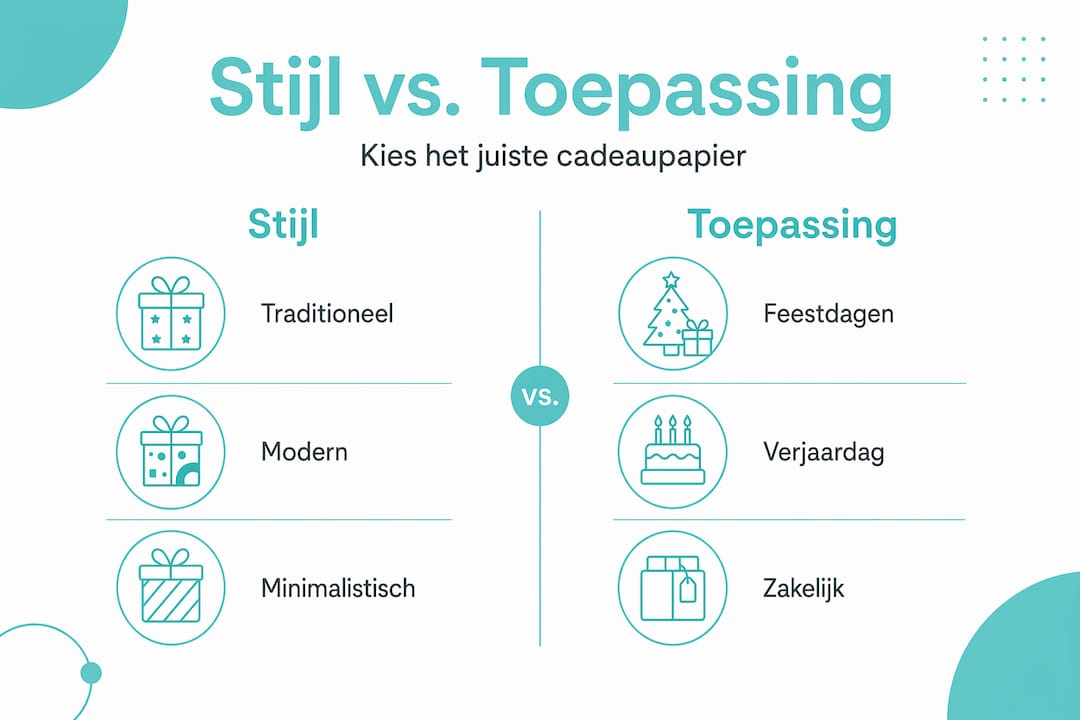
| Style | Best application | Typical material |
|---|---|---|
| Traditional (flowers, red/green) | Holidays, Christmas | Coated paper, foil print |
| Modern (geometric, minimalist) | Birthdays, corporate gifts | Kraft paper, digital printing |
| Luxury (metallic, embossed) | Weddings, anniversaries, high-end retail | Heavy coated paper, foil printing |
| Eco (natural, FSC) | Conscious consumers, sustainable brands | Recycled kraft or FSC paper |
| Personalized (logo, photo) | Corporate gifts, unique occasions | Digital printing on any format |
Striped gift wrap falls into the category of modern classics. It is graphically strong, timeless, and works in almost any color variation. Floral gift wrap is popular for personal occasions such as Mother's Day, birthdays, and weddings. It brings a soft, warm atmosphere that geometric patterns lack.
Commercial gift packaging combines decorative design with practical functions. Design and engineering together help limit material waste and increase ease of use. A store that uses custom-printed gift wrap reinforces its brand identity with every purchase. This effect is cumulative: the more often a customer sees the paper, the stronger the brand association.
The core difference between personal and business gift wrap design:
- Personal gift wrap: Emphasis on emotion, occasion, and aesthetics. The giver determines the style.
- Business gift wrap: Emphasis on brand identity, consistency, and functionality. Corporate identity colors and logo integration are crucial.
For retailers looking to refine their packaging strategy, gift bags for retailers offer a useful addition to printed gift wrap as part of a cohesive visual system.
Practical Tips for Designing Your Own Gift Wrap
How to design gift wrap without pitfalls? The process from concept to production requires structure and attention to material technique. This is the step-by-step process that works:
- Step 1: Determine the occasion and target audience. A birth design requires different colors and shapes than a corporate Christmas package. Always start here.
- Step 2: Choose the material. Determine the paper weight, finish (matte or glossy), and whether the material needs to be recycled or FSC-certified.
- Step 3: Design the pattern. Work with a repeating pattern that seamlessly connects at the edges. Use vector software like Adobe Illustrator for print-ready files.
- Step 4: Choose the printing technique. Small print run? Digital printing. Large series? Offset printing. Budget for luxury? Consider foil printing as an accent.
- Step 5: Request a proof print. Colors on screen differ from print results. A proof print prevents surprises.
- Step 6: Test the wrapping. Is the paper flexible enough to fold? Is it sturdy enough for the product's weight?
Common mistakes when designing your own gift wrap include too little contrast between pattern and background, too small repeating patterns that print distorted, and forgetting a bleed margin at the edges. Always use a color profile suitable for printing (CMYK, not RGB).
Pro-tip: Always design your pattern in a larger format than needed and then scale down. Detail is lost when scaling down, but not when enlarging.
A professional finish starts with the paper but ends with the accessories. The right color ribbon, a decorative bow, or subtle adhesive decorations complete the ensemble. Personalized gift wrap that perfectly matches a coordinating ribbon creates a strong overall look.
My Vision on Gift Wrap Design
In my experience, gift wrap design is systematically underestimated. People see it as an afterthought, as something that will be thrown away. But I have seen how branded packaging increases customer satisfaction, how carefully chosen colors change the perception of a gift even before it's unwrapped, and how sustainable choices actively bring customers back to a store.
What I find most interesting about this field is the intersection of aesthetics and functionality. Die-cut designs are the best example of this. They look great and they make packaging more usable. That's not a coincidence. That's good design.
The trends I see growing strongest in 2026 are personalization and eco-design. Not as separate movements, but as a combination. Consumers want something unique that is also responsible. That combination was rare five years ago. Now it's the expectation.
My honest observation: anyone who thinks the choice between kraft paper and glossy paper is purely aesthetic misses the point. That choice partly determines how a brand or person comes across. A thoughtful paper choice strengthens the story behind every gift.
— M
Gift Wrap and Accessories at Kadopapier
Kadopapier offers a wide range of materials to complete your gift wrap design. From FSC-certified wrapping paper to decorative finishing accessories: everything is available for both individuals and retailers. Do you want to professionally finalize your designs? Check out the assortment of luxury organza Christmas ribbon for festive occasions, or choose one of the many curling ribbon options in color for a subtle, elegant finish. For sustainable choices, Kadopapier also offers environmentally friendly packaging options that suit any eco-design. Order Monday to Friday before 15:00 and receive your order shipped the same business day.
FAQ
What exactly is gift wrap design?
Gift wrap design is the process of designing wrapping paper based on material choice, color, pattern, printing technique, and application. It combines aesthetics with functional and communicative elements.
Which gift wrap is the most sustainable?
FSC-recycled paper like the EcoLeaf 70g is a sustainable choice: made from fully recycled material with an environmentally friendly certification and still offering a premium look.
How do I choose the right printing technique for my gift wrap?
Choose digital printing for small runs and personalized designs, and offset printing for large volumes. Foil printing and embossing are suitable if you want to achieve a luxurious look.
Can I design my own personalized gift wrap?
Yes. With vector software, the correct CMYK color settings, and a proof, you can design professional gift wrap yourself. Choose the material based on the occasion and print run.
What are the biggest gift wrap trends in 2026?
Personalization through digital printing and eco-design with FSC materials are the strongest growing trends in 2026. Consumers increasingly expect a combination of both.
Recommendation
- 7 Tips for Choosing Gift Wrap for the Holidays – Kadopapier.net
- Wholesale wrapping paper with print – 50+ designs, sustainable & fast delivery – Kadopapier – Kadopapier.net
- Types of gift wrap: understanding and choosing – Kadopapier.net
- Gift wrap with logo: Strengthen brand experience – Kadopapier.net