
What is wrapping paper? Discover the best choices for gifts
Many people think that any paper is suitable for wrapping gifts, but not all types of paper offer the strength and appearance you need. The difference between tissue paper, kraft paper, and coated paper is crucial for a professional result. Thin paper tears easily when folded, while paper that is too thick can be difficult to handle. This guide explains exactly what wrapping paper is, what types are available, and how to choose the right one for your gifts and creative projects. With the right knowledge, you can create packaging that is not only beautiful but also durable and practical.
Table of Contents
- What is wrapping paper? Definitions and basic properties
- Types of wrapping paper: differences between kraft, coated, and tissue paper
- Tips and techniques for choosing and using wrapping paper for gifts
- Sustainability and environmental impact of wrapping paper: how to make the best choice
- Find sustainable wrapping paper and accessories at kadopapier.net
- Frequently asked questions
Key points
| Point | Details |
|---|---|
| Paper weight determines quality | Not all wrapping paper is equal, as weight and material directly influence strength and appearance |
| Kraft paper is reusable | Kraft paper offers robustness and durability, while coated paper is tear-resistant |
| Avoid thin paper | Paper under 60 grams per square meter is too fragile for gift wrapping |
| Eco-friendly choice | Eco-friendly kraft paper significantly reduces waste compared to plastic alternatives |
| Correct paper improves presentation | The right paper choice enhances both the visual appeal and the durability of your gift |
What is wrapping paper? Definitions and basic properties
Wrapping paper is specially developed paper intended for wrapping gifts and for creative projects such as decorations and crafts. It distinguishes itself from ordinary printer paper by a sturdier structure that is resistant to folding, creasing, and light pulling without tearing immediately. This extra sturdiness comes from the paper composition and thickness, expressed in grammage.
The optimal thickness for wrapping paper is around 80 to 85 grams per square meter. This grammage offers the perfect balance between flexibility and sturdiness, making the paper easy to fold without breaking. Paper with a weight under 60 grams per square meter is too fragile and tears easily when handled, making it unsuitable for gift wrapping. On the other hand, paper above 100 grams can be too stiff and difficult to work with.
Different types of paper have various coatings and textures that determine both functionality and style. Some papers have a glossy coating that makes colors more vibrant and provides protection against moisture and wear. Others have a matte or natural texture that gives a rustic look. These properties make the difference between simple packaging and a presentation that makes an impression.
Key characteristics of good wrapping paper are:
- Sufficient thickness to prevent tearing during normal use
- Good foldability without breaks or white creases
- Colorfastness that does not fade with touch or light
- Texture that matches the desired style and type of gift
It is also important to know the difference between wrapping paper and tissue paper and its applications. Tissue paper is significantly thinner and is mainly used as filler material or a decorative layer within packaging, not as the main packaging material. Wrapping paper, on the other hand, acts as the primary protective and decorative layer around the gift.
Pro tip: Always test the sturdiness of wrapping paper by gently folding it between your fingers. Good paper will not show white crease lines and will feel firm yet pliable. This prevents disappointments during wrapping.
Types of wrapping paper: differences between kraft, coated, and tissue paper
Kraft paper is a robust type of paper often produced from recycled materials and known for its natural brown color. It is recycled, biodegradable, and 100% recyclable, making it an excellent choice for environmentally conscious consumers. Its sturdy structure makes kraft paper ideal for wrapping heavy or irregularly shaped gifts, as it withstands tension and effectively conceals creases. It has a rustic, artisanal look that pairs perfectly with natural decorations such as jute ribbon or dried flowers.
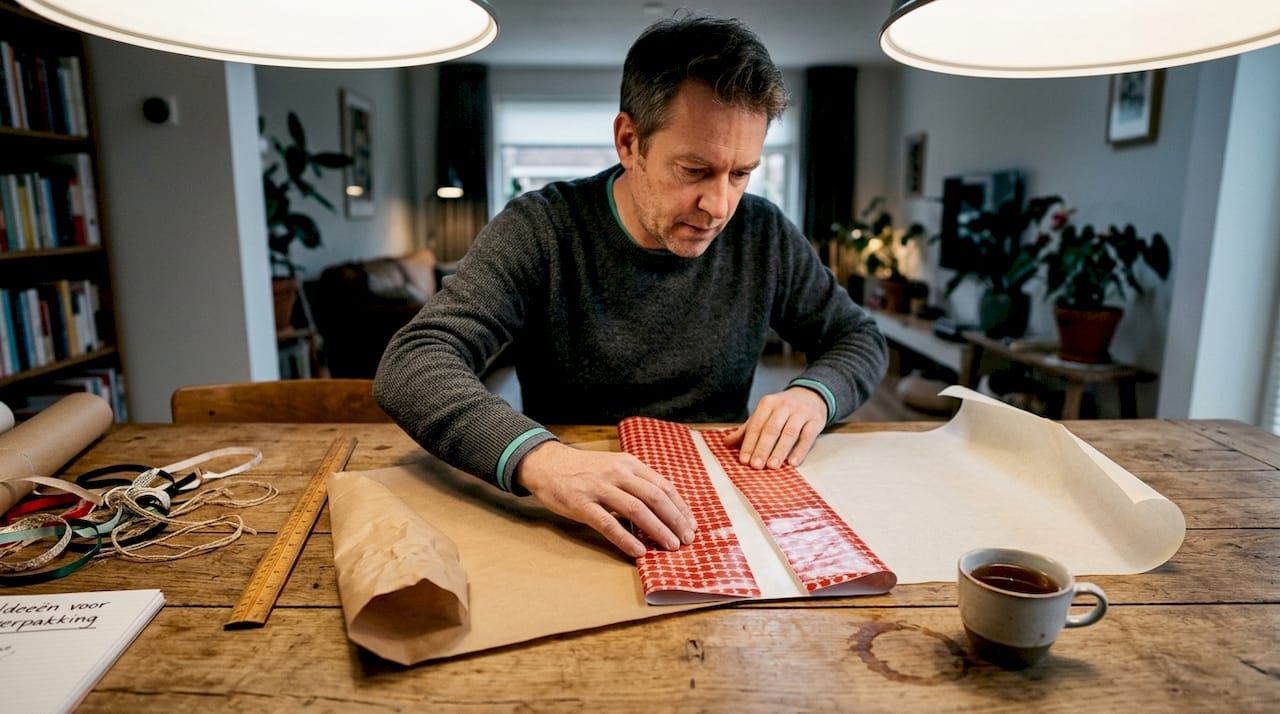
Coated wrapping paper has a protective layer on the outside that makes the paper tear-resistant and enhances color vibrancy. This coating can be glossy or matte, depending on the desired effect. The advantage of coated paper is that it feels smoother and looks more professional, making it suitable for formal occasions or delicate gifts with smooth surfaces. The coating also protects against moisture and fingerprints, which is important if the gift is handled multiple times before being unwrapped.
Tissue paper is distinguished by its thin structure of approximately 45 grams per square meter, which makes it too fragile to serve as the main packaging material. It is primarily used as filler material in boxes, as a protective layer between fragile items, or as a decorative layer within sturdier packaging. The difference between tissue paper and gift paper therefore lies in their function: tissue paper fills and protects, while wrapping paper forms the primary packaging.
| Paper Type | Grammage | Best Use | Advantages |
|---|---|---|---|
| Kraft Paper | 70-90 g/m² | Heavy and irregular gifts | Sturdy, eco-friendly, natural look |
| Coated Paper | 80-85 g/m² | Delicate and formal gifts | Tear-resistant, vibrant colors, smooth |
| Tissue Paper | 45 g/m² | Filler and decoration | Light, soft, suitable for protection |
For wrapping heavy items such as books, electronic devices, or multiple smaller items in one package, kraft paper is the best choice. Its sturdiness prevents tearing during handling, and its natural appearance suits a wide range of decorative styles. You can personalize kraft paper with stamps, stickers, or handwritten texts, making it a versatile option for creative projects.
Coated paper is perfect for gifts that require a luxurious appearance, such as jewelry, perfume, or other premium products. Its smooth finish and vibrant colors attract attention and create a professional impression. It is also suitable for gifts that will be stored for a longer period before being unwrapped, as the coating protects against dust and minor damage.
Pro tip: Combine different paper types for a layered effect. Use kraft paper as a base for sturdiness, add a layer of tissue paper for texture and color, and finish with a decorative ribbon. This technique adds depth to your packaging and makes each gift unique.
Tips and techniques for choosing and using wrapping paper for gifts
Selecting the right wrapping paper begins with determining the weight and texture that suit your gift. Always choose a paper weight of 80 to 85 grams per square meter for a sturdy yet pliable wrap that is easy to handle. This weight prevents tearing during folding and provides sufficient protection for most gifts. For extra heavy or irregularly shaped objects, consider using kraft paper with a slightly higher grammage around 90 grams.
Proper storage of wrapping paper is crucial to maintain its quality. Store rolls vertically or horizontally in a dry place to prevent warping and creasing. Moisture can weaken the paper structure and fade colors, so avoid basements or other damp areas. If you use individual sheets, store them flat in a drawer or folder to prevent wrinkles.
When wrapping, there are practical steps that facilitate the process:
- Measure enough paper by placing the gift on the paper and ensuring all sides can be covered with an overlap of at least 5 centimeters.
- Use extra filler material or more paper for round or square objects to neatly cover corners and curves.
- Fold the edges inwards before taping them down to create a neat finish without rough paper edges.
- Work from the center outwards when smoothing the paper to avoid air bubbles and creases.
- Use double-sided tape for heavier gifts to prevent the packaging from opening during transport.
For professionally wrapping large gifts, it is important to use multiple overlapping pieces of paper. This prevents you from having to work with pieces of paper that are too large and difficult to handle. Make sure the overlaps are on the bottom or back of the gift so that the front looks neat and professional.
The way you handle the edges largely determines the final result. Fold neatly and avoid tearing by working carefully with the edges and not pulling too hard. If the paper does tear, you can camouflage it with a decorative ribbon or sticker on the damaged spot. For an extra neat finish, you can smooth the edges with a ruler or the flat end of scissors to create sharp creases.
For original gift wrapping tips, you can experiment with various techniques such as pleating paper, creating rosettes, or adding natural elements like twigs or dried flowers. These personal touches make each gift unique and show the effort you've put into the presentation.
Pro tip: Choose kraft paper for a natural, sustainable look that suits eco-conscious gifts, and coated paper for a smoother, colorful presentation for formal occasions. The right choice reinforces the message you want to convey with your gift.
Sustainability and environmental impact of wrapping paper: how to make the best choice
The use of recycled kraft paper and biodegradable materials significantly reduces the ecological footprint of gift packaging. Traditional wrapping papers often contain plastic coatings or glitter that are not recyclable and persist in the environment for centuries. By choosing sustainable options, you reduce waste by 70% compared to plastic packaging. This makes a substantial difference, especially during holidays when millions of gifts are wrapped.
Thick wrapping paper with a grammage of 80 to 85 grams per square meter is more recyclable than thin tissue paper or plastic alternatives. The sturdier structure means that the paper can be more easily separated and processed in recycling facilities after use. Tissue paper is often too thin and mixes with other waste, making it harder to recycle. Plastic packaging is almost entirely non-biodegradable and contributes to the growing waste problem.
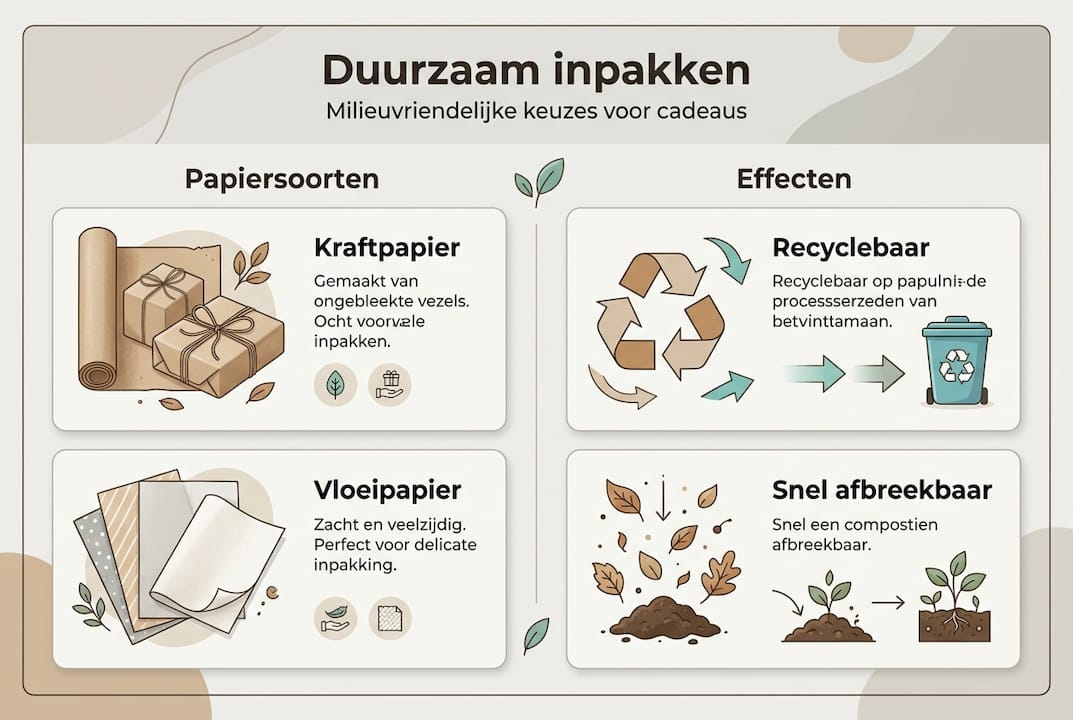
| Material | Recyclability | Decomposition Time | Environmental Impact |
|---|---|---|---|
| Kraft paper | 100% recyclable | 2-6 months | Very low |
| Coated paper | Limited recyclability | 6-12 months | Medium |
| Plastic packaging | Hardly recyclable | 500+ years | Very high |
| Tissue paper | Difficult to recycle | 3-8 months | Low to medium |
Sustainable wrapping options not only offer environmental benefits but also a stylish appearance that aligns with modern design trends. The natural textures and colors of kraft paper and unbleached paper provide an authentic, artisanal look that many consumers appreciate. These papers are often available in various shades and can be combined with natural decorations such as jute, cotton, or dried plants for a complete eco-friendly presentation.
It is essential to avoid plastic coverings and packaging with glitter or metallic coatings. These materials are virtually non-biodegradable and pollute the environment for extended periods. Even small amounts of microplastics from these packages can enter the food chain and harm ecosystems. By making conscious choices when selecting wrapping materials, you contribute to a cleaner planet.
With the right material choice, you can significantly reduce the ecological footprint of gifts without sacrificing aesthetics or quality. Many sustainable options are now affordable and widely available, making it easy to make environmentally friendly choices. Moreover, recipients increasingly appreciate the effort you put into sustainable wrapping, which adds an extra dimension to your gift.
Practical tips for sustainable wrapping:
- Choose paper without plastic coating or glitter for optimal recyclability
- Use natural decorations such as twigs, cotton, or dried flowers instead of plastic embellishments
- Save and reuse wrapping paper that is still in good condition after unwrapping
- Consider reusable alternatives such as fabric bags or boxes that can be used multiple times
- Avoid excessive use of adhesive tape by using minimal amounts or opting for paper tape
For more information on sustainable and eco-friendly wrapping, you can consult various resources that offer practical advice on combining aesthetics with sustainability. These guides help you make choices that are both beautiful and responsible.
Find sustainable wrapping paper and accessories at kadopapier.net
At Kadopapier.net, you'll find an extensive range of sustainable and stylish wrapping paper that perfectly suits your creative projects and gift packaging. Our selection includes eco-friendly kraft paper, coated paper in various colors and designs, and tissue paper for decorative applications. Each product is carefully selected to meet the highest quality and sustainability standards.
In addition to wrapping paper, we offer luxurious accessories that complete your packaging. Discover our red organza ribbon for an elegant finish at festive occasions, or choose the soft soft pink curling ribbon that's perfect for baby showers and romantic gifts. For a refined presentation, our brown organza bags are ideal for stylishly wrapping smaller gifts.
Our products combine environmental friendliness with aesthetics, so your gifts not only look beautiful but also contribute to a more sustainable world. Whether you're a hobbyist working on creative projects or a private consumer looking for quality wrapping materials, at Kadopapier.net you'll find everything you need for perfectly wrapped gifts.
Frequently Asked Questions
What is the difference between wrapping paper and tissue paper?
Wrapping paper is thicker and sturdier, with a grammage of 80 to 85 grams per square meter, designed as primary packaging for gifts. Tissue paper is thinner, around 45 grams per square meter, and is used as void fill or a decorative layer within packaging. It is too fragile to serve as gift wrap on its own.
Which paper weight is best for gift wrapping?
A paper weight between 80 and 85 grams per square meter offers the ideal balance between sturdiness and flexibility. This weight prevents tearing when folding and provides sufficient protection for most gifts. For heavier items, you can opt for kraft paper with a grammage around 90 grams.
Is kraft paper better for the environment than coated paper?
Yes, kraft paper is fully recyclable and biodegradable, often made from recycled materials. Coated paper has a protective layer that limits its recyclability, although modern coatings are becoming increasingly environmentally friendly. For maximum sustainability, uncoated kraft paper is the best choice.
Can I reuse wrapping paper after unwrapping?
Yes, wrapping paper with a grammage of 80 grams or higher can be reused if it is unwrapped carefully and doesn't have large tears or creases. Smooth out the paper and store it flat for future use. This reduces waste and saves costs.
How do I prevent wrapping paper from tearing during folding?
Use paper of sufficient thickness, handle the edges carefully, and don't pull too hard on the paper. First, fold the edges inwards before taping them for a neater finish. If the paper does tear, camouflage the damage with a decorative ribbon or sticker.
Which type of paper is suitable for irregularly shaped gifts?
Kraft paper is ideal for irregularly shaped gifts due to its sturdiness and flexibility. It can be creased and folded without tearing and hides wrinkles well. Use extra void fill to fill empty spaces and create a neat finish.