
Saving Money on Packaging: A Practical Guide
TL;DR:
- Packaging costs significantly impact margins as materials, processing, and shipping represent invisible expenses.
- A thorough analysis of all components and correct sizing can reduce costs by up to 30%, while sustainable materials and effective negotiation help save money.
- When implementing sustainability and cost savings, continuous monitoring is essential to optimize efficiency and enhance brand image.
At first glance, packaging costs may seem like a minor item. But if you seriously look at your figures, you'll quickly see that materials, processing, and shipping together significantly impact margins. Whether you run a webshop, have a physical store, or simply want to pack smartly: saving on packaging costs starts with understanding where the money is going. In this guide, you'll get a concrete approach, from analysis to implementation, including sustainable alternatives that benefit both your wallet and your image.
Table of Contents
- Key Insights
- What Packaging Costs Really Entail
- Step-by-Step Guide to Reducing Packaging Costs
- Pitfalls in Saving on Packaging
- Comparison: Low-Cost Packaging Alternatives
- My Perspective on Packaging Savings
- Packaging Materials from Kadopapier
- FAQ
Key Insights
| Point | Details |
|---|---|
| Analyze hidden costs | Packaging costs involve more than just materials: also include waste disposal and shipping weight. |
| Choose the right sizing | Smaller, appropriate packaging can reduce transport and material costs by up to 30%. |
| Reduce unnecessary layers | Fewer protective layers mean less material consumption without sacrificing protection. |
| Choose sustainable materials | Recyclable or reusable packaging materials reduce costs in the long run. |
| Negotiate with suppliers | Bundle purchases and align inventory management to secure better prices. |
What Packaging Costs Really Entail
Before you can reduce packaging costs, you need to know what you're measuring. Most entrepreneurs only count material costs. That's an expensive mistake.
Packaging material is an invisible cost item that significantly reduces margins if not properly included in cost calculations. In addition to material costs, consider labor costs for packing, storage costs, waste disposal costs, and the impact on shipping rates due to weight and volume.
Components with Direct Cost Impact
- Material costs: paper, plastic, cardboard, void fill, tape, and closures
- Processing time: how long does packing take per shipment? More layers mean more time.
- Shipping weight: carriers charge based on actual weight or dimensional weight. Large, light boxes cost you more than you think.
- Waste costs: excess packaging material you throw away costs twice. First to buy it, then to dispose of it.
- Returns: damaged products due to poor packaging lead to additional costs and customer loss.
Legislation Influencing Your Material Choice
The European Packaging and Packaging Waste Regulation (PPWR) increasingly obliges companies to use recyclable or reusable materials. This has direct consequences for what materials you can and may use. Those who act early on this will not only be ahead of regulations but also gain a competitive advantage.
Pro-tip: Use a simple spreadsheet to track total packaging costs per product: material, labor, shipping costs, and waste. You'll be surprised how much room there is for savings once you see the full picture.
Paper and cardboard often account for 30 to 40% of waste volume in many companies and offer the highest savings potential through separation and reuse.
Step-by-Step Guide to Reducing Packaging Costs
This is where it really matters. Not theory, but an approach that works.
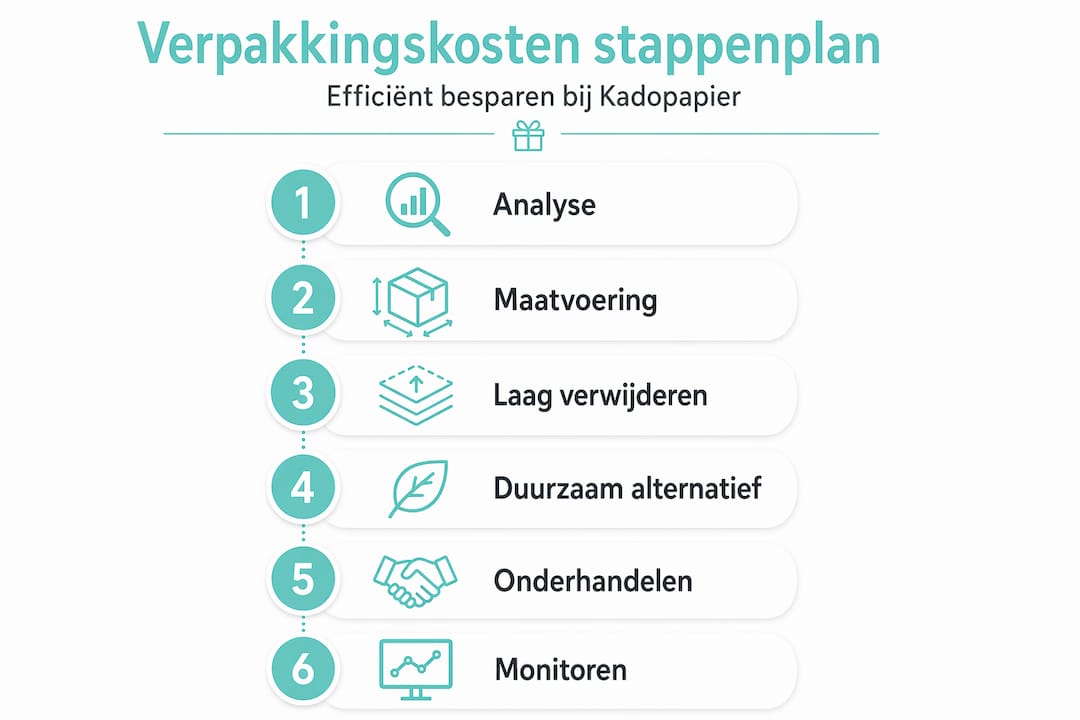
Step 1: Analyze your current packaging and costs
First, identify which packaging you use and what it costs. Don't just count the purchase price, but also invisible costs such as waste disposal, returns, and the contribution to shipping weight. For webshops, it's wise to create a packaging overview per product category.
Step 2: Adjust the sizing
Many packages contain too much air. A product in a box twice as large as needed costs you double. Correct sizing can reduce packaging costs by up to 30%. Carriers use dimensional weight as a calculation method: a large empty box costs as much as a heavy package. Adjust box sizes per product group and choose packaging that fits the product dimensions well.
Step 3: Remove unnecessary layers
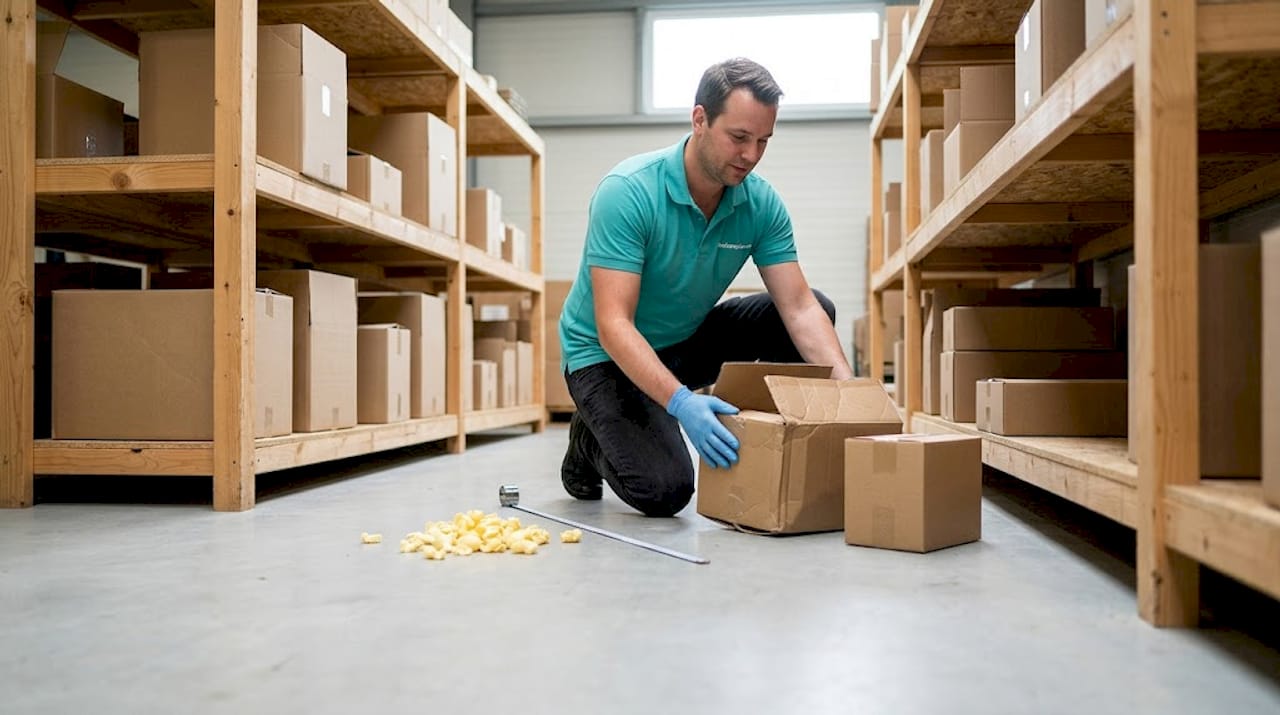
More protective layers seem safer, but excessive labels and double protective layers increase costs without a proportional increase in protection. Ask yourself per layer: what does this material concretely do? If the answer is unclear, the layer can be removed.
Step 4: Explore sustainable and lighter alternatives
Light materials like poly mailers reduce both material and shipping costs as weight and volume significantly decrease. This works particularly well for non-fragile products like clothing, books, and documents. For heavier or fragile products, protective cardboard often remains the best choice.
Step 5: Negotiate with suppliers and bundle purchases
Those who buy larger quantities pay less per item. That's no secret. But many small business owners buy too scattered: different suppliers, small quantities, little bargaining power. Bring your suppliers together, assess realistic volumes, and formalize agreements on price, delivery time, and quality. Also, consider whether you can buy together with other entrepreneurs for extra volume.
Step 6: Continuously monitor and improve
Cost saving is not a one-time action. Set a quarterly review to evaluate packaging costs. Measure return rates, damage complaints, and average packaging costs per shipment. This way, you quickly see if an adjustment works or needs modification.
Pro-tip: Order a test batch of a new size or material before buying in bulk. This way, you test protection, weight, and customer reaction without major financial risks.
Pitfalls in Saving on Packaging
Saving on packaging sometimes goes wrong. Here are the most common mistakes, and how to avoid them.
- Too frugal on protection: A cheaper box that breaks costs you double in returns, customer service, and reputational damage. Save on material weight, not on protective function.
- Ignoring dimensional weight: Many shippers charge based on volume, not weight. A large, light box can be more expensive than a smaller, heavier package. Always calculate the dimensional weight of your shipments.
- Overlooking environmental regulations: Companies that do not meet recyclability requirements risk fines and customer loss. Consumers are willing to pay more for sustainable packaging, and unethical or difficult-to-recycle packaging directly leads to customer loss.
- Forgetting logistics inefficiencies: If your packaging doesn't fit standard pallets or roll containers, you pay extra for transport. Always align packaging formats with your logistics process.
- Disregarding return costs: Poor packaging leads to more returns. These costs are real but are rarely included in savings calculations.
Saving on packaging only works if you see the whole picture. Those who only focus on material costs shift costs to returns, shipping, or waste disposal.
Effective cost savings in shipping start with reducing air in packages. Every unnecessary inch of space costs money.
Comparison: Low-Cost Packaging Alternatives
Not every material works for every product. The comparison below helps you make the right choice based on cost, protection, and sustainability.
| Material | Cost | Protection | Sustainability | Suitable for |
|---|---|---|---|---|
| Plastic film | Low | Good (waterproof) | Poor | Clothing, documents |
| Cardboard (custom) | Medium | Excellent | Good (recyclable) | Fragile products |
| Kraft paper | Low | Reasonable | Excellent | Light, non-fragile items |
| Biodegradable | High | Reasonable | Excellent | Gifts, premium products |
| Reusable bags | High (one-time) | Good | Excellent | Retail, gift packaging |
The switch from plastic to paper-based packaging leads to 45% less plastic use and a lower total weight. This directly translates to lower shipping costs and stronger brand positioning.
Reusable Packaging: Investment or Saving?
Reusable packaging seems expensive at first purchase. But over multiple use cycles, the cost per use is structurally lower than disposable packaging. Especially for retail, trade shows, and gift shops, the investment quickly pays off. A robust fabric bag or reusable box that can be used ten times costs less per use than ten disposable bags.
For a complete overview of eco-friendly options per sector, Kadopapier's guide on alternative packaging materials is a good starting point.
Recycling and Waste Separation as a Saving
Organizations that collect paper and cardboard separately save an average of 20 to 40% on waste costs. Paper and cardboard are often collected for free or even generate a fee. Those who set up an efficient waste separation system reduce the total cost of their packaging process without modifying a single product.
Pro-tip: Choose packaging that is also easily recyclable for your customer. Clear recycling instructions on the packaging lower the barrier for consumers and strengthen your sustainable image.
Also, check out Kadopapier's guide on reusable packaging for concrete applications per product type.
My Perspective on Packaging Savings
Over the years, I've seen that most saving opportunities aren't in choosing the cheapest material. They lie in reducing the mismatch between product and packaging. A product shipped in an oversized box costs more in material, more in void fill, more in shipping, and also more in packing time. Four cost points simultaneously, for one wrong choice.
What I also notice time and again: entrepreneurs underestimate how strongly sustainable choices contribute to brand trust. Consumers see and feel the packaging. A well-chosen kraft paper or a neatly tied ribbon communicates quality in a way no advertising text can match.
My concrete tip for anyone looking to get started now: don't start with the cheapest alternative, but with the right size. Only then look at material and sustainability. In that order, it yields the most, both financially and in customer experience. Those who choose wisely save structurally without compromising on appearance or protection.
— M
Packaging Materials from Kadopapier
At Kadopapier, you'll find a wide range of affordable packaging materials that fit an efficient packaging strategy. From decorative elastic in various colors and metallic finishes to luxurious organza Christmas ribbon for gift wrapping: each product is selected for quality and cost-effectiveness. High-quality material that breaks or wears less quickly reduces the cost per use in the long run. View the full assortment and discover which materials suit your packaging needs.
FAQ
How do I start saving on packaging costs?
Start with a complete cost analysis: material, labor, shipping weight, and waste disposal. Then look at sizing and unnecessary layers.
What is dimensional weight and why is it important?
Dimensional weight is a calculation method used by carriers where the volume of a package determines the price. Large, light boxes are often more expensive than compact packages.
Are sustainable packaging always more expensive?
Not always. Kraft paper and recycled cardboard are often cheaper than plastic and recyclable. Reusable packaging costs more upfront but is cheaper per use over multiple cycles.
How much can I save by using correct sizing?
Correct sizing of packaging can reduce costs by up to 30%, as both material and transport costs decrease.
Which packaging materials are the most sustainable?
Kraft paper, recycled cardboard, and biodegradable materials score best on sustainability. Paper and cardboard are also easily recyclable and are collected for free by many collectors.