
Beautiful gift wrapping without tape: a step-by-step guide
You've just found the perfect gift and want to wrap it beautifully, but the tape sticks to your fingers, tears the paper, and leaves ugly residue. This recognizable problem has a surprisingly elegant solution: tape-free wrapping. This creative method combines Japanese traditions with modern sustainability, giving your gifts a unique, professional look without mess or waste. In this guide, you will learn step-by-step how to beautifully and securely wrap gifts without using a single piece of tape.
Table of Contents
- Key Points
- What do you need for beautiful tape-free wrapping?
- Step-by-step: Furoshiki technique for tape-free wrapping
- Alternatives and additional ideas for tape-free wrapping
- Discover sustainable wrapping materials at kadopapier.net
- Frequently asked questions about beautiful tape-free wrapping
Key Points
| Point | Details |
|---|---|
| Furoshiki technique | This Japanese method uses reusable fabric and knotting techniques for sustainable packaging without tape. |
| Fabric choice determines outcome | Cotton, silk, and polyester offer different advantages for functionality and aesthetic appeal. |
| Ideal for specific shapes | Rectangular and cube-shaped gifts are easiest to wrap tape-free using knotting techniques. |
| Knotting techniques as a basis | Correct knots ensure firmness and a professional finish without adhesive materials. |
| Environmentally friendly alternative | Reusable materials reduce waste and add a personal touch to every package. |
What do you need for beautiful tape-free wrapping?
Successful tape-free wrapping starts with the right preparation and materials. You'll need a suitable cloth, preferably square, with dimensions between 45x45 cm and 70x70 cm, depending on your gift size. Smaller gifts require less fabric, while larger items need a more spacious cloth. Sharp scissors help with cutting fabric to size, and an iron ensures neat folds and a professional appearance.
The choice of fabric significantly influences the look and durability of your packaging. Cotton is sturdy and easy to wash, making it ideal for beginners and repeated use. Silk gives a luxurious look and glides smoothly when tying, perfect for special occasions. Polyester dries quickly and wrinkles less, handy for daily use. Organic cotton or recycled fabrics add sustainability to your eco-friendly gift wrapping.
The fabric size determines which gifts you can wrap. A 50x50 cm cloth works perfectly for small to medium-sized items like books or boxes up to 20 cm. For larger gifts, you'll need at least 70x70 cm. Measure your gift beforehand and add 20 cm to each side for enough fabric to tie.
Pro-tip: choose fabrics with an interesting pattern or texture that you can use multiple times, so the packaging itself becomes an extra gift for the recipient.
Prepare your fabric by washing and ironing it. Clean, smooth fabric makes knotting easier and gives a neat appearance. Iron the edges extra smooth for sharp folds.
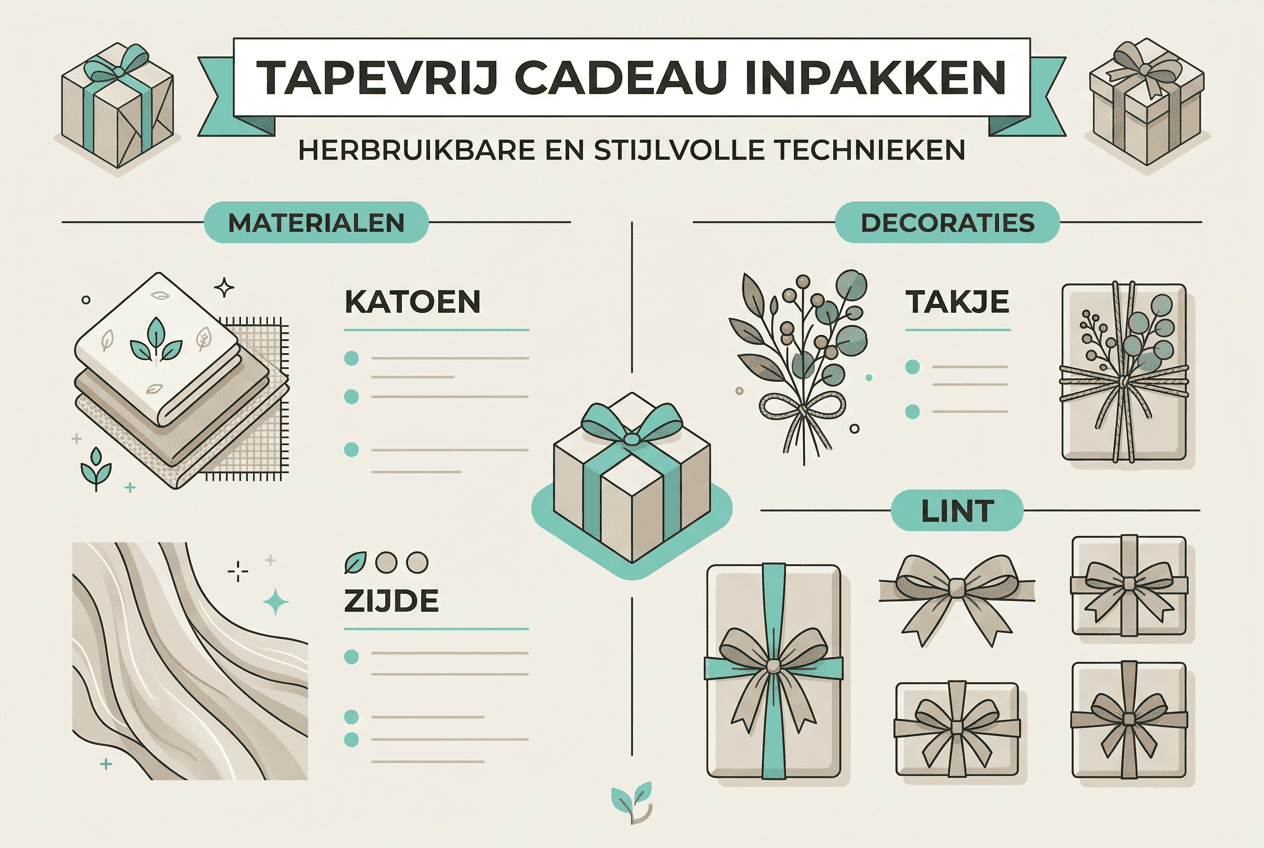
Best fabrics for tape-free wrapping
| Fabric type | Advantages | Sustainability |
|---|---|---|
| Organic cotton | Sturdy, washable, affordable | Fully biodegradable |
| Silk | Luxurious look, smooth knotting | Long-lasting reusable |
| Recycled polyester | Wrinkle-free, quick-drying | Made from recycled materials |
| Linen | Natural texture, breathable | Durable and strong |
Don't forget decorations that don't require tape. Think of loose rosemary sprigs, dried flowers, or small ornaments that you can incorporate into the knot. These natural elements enhance the sustainable look.
Step-by-step: Furoshiki technique for tape-free wrapping
The furoshiki method uses knotting techniques to secure gifts without tape. This Japanese tradition offers various knotting methods for different gift shapes. Follow these steps for a perfect basic wrapping.
- Lay your square cloth flat with a point towards you, forming a diamond shape.
- Place your gift exactly in the center of the cloth with the front facing up.
- Fold the bottom point over the gift until it reaches the middle of the top.
- Fold the top point down so it overlaps the bottom point by about 5 cm.
- Take the left point and fold it tightly over the gift to the right.
- Repeat this with the right point to the left, so both sides overlap.
- Turn the gift over and make a firm knot with the two protruding points.
- Decorate the knot by arranging the ends decoratively or forming a rosette.
For rectangular gifts like books, the basic knotting technique works best. Place the book diagonally on the cloth and fold two opposite corners over each other. Knot the other two corners together at the top. This method creates a handle that makes it easy to carry the gift.
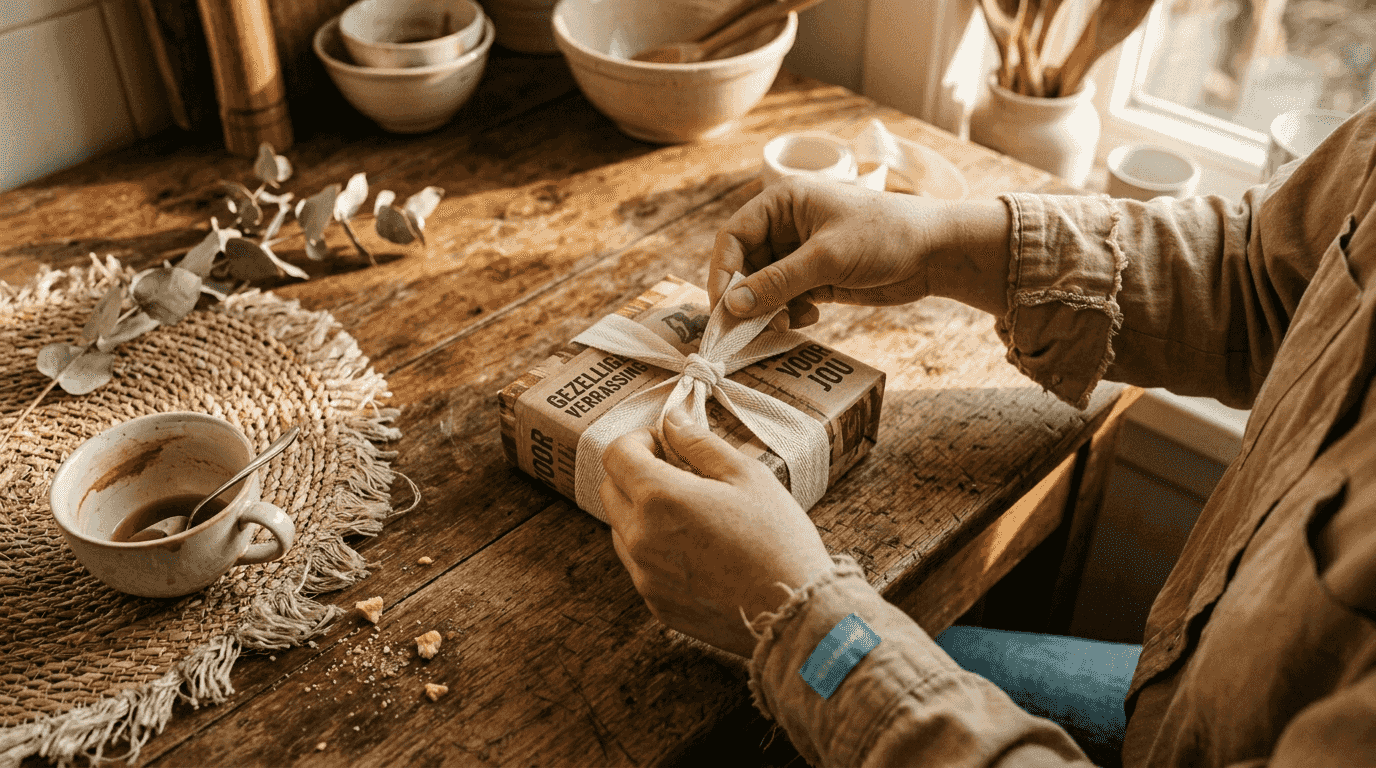
Cube-shaped boxes require a different approach. Use the four-corner knot by folding all four corners to the center and knotting them together there. This technique securely holds square boxes without shifting.
Pro-tip: practice your knotting techniques first with an old tea towel and an empty box before wrapping your actual gift, so you master the movements smoothly.
Common mistakes are easily avoided:
- Knotting too tightly damages delicate fabrics and makes it difficult to undo later
- Not leaving enough fabric sticking out results in weak knots that come loose
- Forgetting to center the gift leads to uneven ends
- Ignoring wrinkles in the fabric gives a messy appearance
For an extra professional touch, you can decorate the knot with natural elements. Insert a sprig of eucalyptus or lavender through the knot for a fragrant addition. This fits perfectly into the step-by-step plan for neat wrapping.
If you want to wrap several small items, combine furoshiki with tissue paper for stylish packaging. Wrap each item in tissue paper first, then bundle them in the furoshiki cloth. The layers provide extra protection and visual interest.
Alternatives and additional ideas for tape-free wrapping
In addition to furoshiki, there are various creative methods for tape-free wrapping, each with its own charm. Fabric bags offer a quick solution for small gifts and are reusable. Simply pull the drawstring closed and add a decorative tag. This method works excellently for jewelry, soap, or other compact items.
Folded paper according to origami principles creates unique packaging without tape. The Japanese envelope method folds paper around a gift with interlocking flaps. This technique requires precision but yields surprisingly sturdy results. For round objects, you can pleat paper into a rosette shape that you seal with a string knot.
Ribbons and cords act as decorative closures that replace tape. Wrap organza ribbon crisscross around your gift and tie a bow at the top. Jute twine gives a rustic look and holds paper firmly in place. Satin ribbon adds elegance and glides smoothly when tying.
Comparison of tape-free methods
| Method | Simplicity | Aesthetics | Environmental impact | | — | — | — | | Furoshiki | Moderate | High | Very low | | Fabric bags | Very high | Moderate | Low | | Origami folding | Low | Very high | Moderate | | Ribbons and cords | High | High | Low |
The tape-free wrapping method is minimalist and reduces waste by using reusable materials. This approach fits perfectly with modern sustainability trends and saves money in the long run.
Pro-tip: save all the fabrics, ribbons, and bags you receive and create a reusable collection of wrapping materials that you can use again and again for different occasions.
Decorations without tape enhance the visual impact of your packaging. You can make curly ribbon by simply pulling a regular ribbon over a scissor blade, after which it curls automatically. Attach this to your knot for a festive touch. Dried orange slices, cinnamon sticks, or pinecones can be added by weaving them into the bow or tying them with string.
Minimalist packaging style uses neutral colors and natural materials for a modern look. Choose unbleached paper or linen-look fabrics in beige, gray, or white. Add one striking element like a fresh flower or a handwritten label for contrast. This style looks sophisticated without extra cost.
For DIY packaging tips, you can experiment with different materials. Old cards become labels, magazine pages serve as unique wrapping paper, and fabric scraps transform into decorative accents. This creative approach makes every gift unique.
Small gifts deserve special attention when wrapping tape-free. Use the packaging tips for small gifts by first wrapping them in tissue paper and then knotting them in a small furoshiki cloth. The double layer protects the gift and adds visual depth.
Discover sustainable wrapping materials at Kadopapier.net
Now that you've mastered the techniques, it's time to upgrade your materials with quality options that are perfect for tape-free wrapping. Kadopapier.net offers an extensive range of organza ribbons and curling ribbons in dozens of colors, from classic red organza ribbon to subtle pastel shades. These ribbons glide smoothly when tying and give your packaging a professional finish without tape.
For those looking for ready-made alternatives, the brown organza bags are ideal. These reusable bags combine a natural look with practical convenience. Pull the drawstring closed and your gift is stylishly wrapped in seconds. The organza texture adds elegance while the contents remain subtly visible.
The complete assortment includes tissue paper, decorative ribbons, and accessories, all contributing to sustainable, tape-free packaging. Fast delivery and user-friendly online access make it easy to find exactly what you need for your creative wrapping projects.
Frequently asked questions about beautiful tape-free wrapping
What is furoshiki and why is it sustainable?
Furoshiki is a Japanese wrapping technique where square fabric cloths are used to wrap and transport objects using knotting techniques. It is sustainable because the cloth is infinitely reusable, produces no waste, and functions as both packaging and gift.
Which fabrics are best for tape-free wrapping?
Cotton is the most versatile due to its sturdiness and washability, ideal for beginners. Silk offers luxury and suppleness for special occasions, while linen gives a natural texture. Choose organic or recycled variants for maximum sustainability.
Does this method also work for irregular gifts?
Irregular shapes are more challenging but definitely possible. First, wrap the item in tissue paper to create a more regular shape, then use a larger cloth with extra fabric for flexibility. The bag method also works well for odd shapes.
How do you keep the packaging secure without tape?
The key lies in correct knotting techniques and sufficient fabric. Ensure your cloth is at least 20 cm larger than your gift on each side. Make double knots for extra security and pull the fabric tight before knotting.
Can I combine tape-free wrapping with traditional wrapping paper?
Absolutely, paper folding methods like the Japanese envelope technique use overlapping flaps instead of tape. Wrap paper around your gift, fold the edges inwards, and secure with ribbon or string. This hybrid approach combines the best of both worlds.