
What is void fill? Complete Guide to Gifts
TL;DR:
- Filling material not only fills space but also offers protection, shaping, and decorative appeal. It comes in various types, such as granules, polyester batting, and decorative paper, each with unique properties and applications. When choosing and using, it's important to consider weight, washability, and project size for optimal results.
Filling material is exactly what the name says: material that fills space. But anyone who thinks it's just about a bit of foam in a box is mistaken. What is filling material in practice? It is both functional and decorative. It protects, shapes, provides sturdiness, and makes the difference between a professional-looking gift and one that looks sloppy. Many consumers and hobbyists don't know what options are available or which type best suits their project. This guide will give you all the information you need.
Table of Contents
- What is filling material and what types are there?
- Properties and applications of common filling materials
- Comparison table: characteristics and use of filling materials
- Tips for choosing and using filling material for your project
- Unique insights about filling material from hobby practice
- Discover our range of gift and decorative filling material
- Frequently asked questions about filling material
Key Insights
| Point | Details |
|---|---|
| Diversity of filling material | Filling material varies from fine granules to soft polyester, each suitable for different projects. |
| Match with project | Choose filling material that matches the size and use of your gift or decoration. |
| Washability | Pay attention to washability with filling material, especially for plush toys that are often washed. |
| Stability important | For decorations such as amigurumi, weight and stability are crucial, for example due to plastic granules. |
| Sufficient quantity | Use the right amount of filling material to prevent clumping and a messy finish. |
What is filling material and what types are there?
Filling material is any material that serves to fill space, support an object, or enhance the appearance of packaging or a hobby project. The definition of filling material thus goes beyond mere protection: it also concerns aesthetics and structure.
In the packaging materials guide you can see how broadly the concept is applicable, from gift packaging to decorative hobby projects. The applications of filling material therefore vary widely. Think of filling a gift box so that a perfume bottle does not shift, but also filling a handmade plush toy or decorative pillow.
The types of filling material can be roughly divided into three main categories:
- Granules and pellets: Small, sturdy balls of polyester or plastic. They provide good support, add weight, and prevent objects from falling over. Glorex Hobby filling material is available in granules and polyester batting, suitable for plush toys and pillows needing support.
- Polyester filling (batting): Soft, fluffy material that adds volume without weight. Ideal for soft objects such as plush toys and decorative pillows.
- Decorative filling material: Tissue paper, paper filling, crinkle paper, or organza. Purely for visual impact in gift packaging.
Each type has its own texture, weight, and application area. The choice depends on what you want to achieve: sturdiness, softness, stability, or a beautiful presentation.
Properties and applications of common filling materials
Different filling materials behave completely differently in use. That sounds logical, but practice shows that hobbyists regularly make mistakes here. They choose by feel, while a good choice is based on concrete properties.
With these properties in mind, we compare the most commonly used types of filling material.
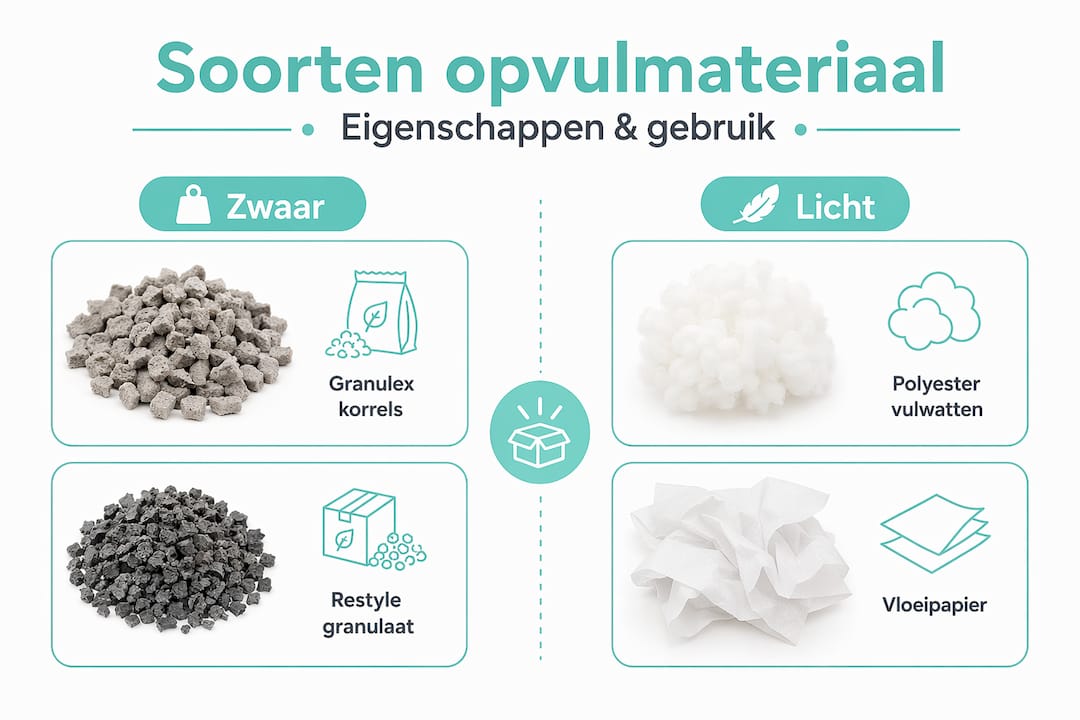
Granulex pellets are fine, round balls that you can distribute evenly throughout an object. They are suitable for approximately 60 cm plush toys and offer good support without clumping. The weight they add makes plush toys and decorations more stable. A plush toy filled with Granulex feels different from one filled with polyester: heavier, more compact, with more structure.
Polyester batting gives a very different result. It is soft, washable up to 95 degrees, and great for smaller pillows. Its high washability makes this type ideal for projects that are regularly washed, such as children's toys or everyday pillows. The material springs back after compression, ensuring a durable, full shape.
Plastic granules, such as Restyle granules, work differently than polyester. Restyle plastic granules are washable up to 40 degrees and provide extra stability for amigurumi and decorations. Amigurumi are crocheted or knitted toys, popular in the hobby world, and they naturally have a narrow base that easily topples without the right filling. Plastic granules solve that problem.
Also check out the packaging tips for small gifts for more context on how filling material fits into a complete gift presentation.
| Type of filling material | Weight | Washability | Application |
|---|---|---|---|
| Granulex pellets | Heavy | High | Large plush toys, pillows |
| Polyester batting | Light | Up to 95°C | Small pillows, plush toys |
| Restyle plastic granules | Heavy | Up to 40°C | Amigurumi, decorations |
| Decorative tissue paper | Very light | Not washable | Gift packaging |
Pro-tip: Choose filling material that matches the size of your project to prevent clumping and maintain durability. A large plush toy filled only with polyester will sag over time. Combine materials for the best result.
Comparison table: characteristics and use of filling materials
With this, you have a clear overview of materials; now we discuss tips for choosing and using them.
Glorex products and Restyle granules have different washable temperatures and applications, which has direct consequences for your project choice. Below is a comprehensive overview that helps you quickly make the right decision.
| Property | Granulex pellets | Polyester batting | Restyle granules | Tissue paper |
|---|---|---|---|---|
| Material | Polyester pellets | Polyester fibers | Plastic pellets | Paper |
| Weight per volume | High | Low | High | Very low |
| Washability | Check label | Up to 95°C | Up to 40°C | Not washable |
| Firmness | High | Low to medium | High | None |
| Decorative value | Low | Low | Low | High |
| Ideal project size | Large (60 cm+) | Small to medium | Small to medium | All sizes |
| Clump resistant | Yes | Variable | Yes | Not applicable |
| Price per gram | Medium | Low | Medium | Low |
Washability is a property that hobbyists often overlook. A child's plush toy is used intensively and washed regularly. If you then choose granules that can only be washed up to 40 degrees, you risk problems during washing. Polyester batting gives you more freedom here.
The weight of the filling also has a direct impact on the finish. Too light filling material results in a flimsy end product. Too heavy material can put stress on seams with thin fabrics. The table above helps you quickly make that assessment.
Tips for choosing and using filling material for your project
Practical application is where theory turns into results. The following points apply to both beginners and experienced hobbyists who want to improve their work.
Use 1000g Granulex for a 60cm plush toy and 500g polyester for small pillows, matching dimensions and firmness. This is not arbitrary advice: it is based on product specifications and practical experience.
Here are the most important guidelines:
- Match size and filling quantity. A pillow too small with too little filling feels flat. A plush toy too large with too few granules will sag.
- Weigh the filling before you start. Guessing almost always leads to uneven filling and a crooked finish.
- Check washability before purchase. This is especially important for children's projects or decorations that are regularly cleaned.
- Use granules as a base, batting as a supplement. For larger projects, granules at the bottom provide stability, while batting at the top adds softness.
- Test the amount progressively. Fill the object three-quarters, temporarily close it, assess the shape, and add more if necessary.
The gift wrapping checklist provides additional guidance if you combine filling material with a complete gift presentation. And for inspiration on how to use filling material decoratively, the gift bag inspiration is a handy starting point.
Pro-tip: Always consider filling material with washability that suits the maintenance ease of your project. A beautiful handmade plush toy that loses its shape after the first wash is a disappointment you can easily avoid.
Unique insights about filling material from hobby practice
There is one thing that experienced hobbyists almost unanimously say when they look back on their early days: they underestimated how important the choice of filling material is for the final result.
Starting with filling material is not difficult. But making the right choice requires insight into both aesthetics and functionality. That distinction is greater than it seems. You can technically sew a plush toy perfectly and still get a disappointing result if the filling is not right.
Many beginner hobbyists forget the importance of stability with plastic granules, an essential aspect for amigurumi decorations. The result is a crocheted figure that does not stand upright, no matter how beautifully made. One bag of granules in the bottom part completely changes that.
Using too little filling material or the wrong type leads to clumping and an uneven finish in plush toys and pillows. This is a problem that is difficult to correct afterward. Opening seams, adjusting filling, and reclosing takes much more time than doing it right the first time.
There is also a less discussed aspect: the combination of materials. Most beginner hobbyists choose one type of filling material and stick with it. But using granules as a base with polyester as a top layer gives a result that you never achieve with a single material. Stable at the bottom, soft at the top. This is the approach professionals use but rarely explicitly state.
The packaging materials guide shows how this principle also works outside of hobby projects: you use layers in gift packaging in the same way. Sturdy base, decorative top layer.
Pro-tip: Experiment with combinations of filling material to achieve the best effect. Start with a small test project before purchasing a large amount of material.
Discover our range of gift and decorative filling material
With the right materials from this assortment, you give your gifts and creations the perfect finishing touch. At Kadopapier.net you will find a wide range of decorative materials that perfectly match the applications in this guide. Are you looking for the right ribbon to finish your gift? Check out our decorative elastic assortment for a versatile closure with visual impact. For a festive atmosphere, our organza Christmas ribbon collection fits every occasion. And for finishing gifts with extra flair, our gift decoration curls pins are a quick and stylish choice. Combine these accessories with the right filling for a professional-looking result.
Frequently asked questions about filling material
What is the main difference between Granulex pellets and polyester batting?
Granulex pellets are small, sturdy balls ideal for larger plush toys that require a lot of support, while polyester batting is softer and fluffier and is mainly suitable for small pillows and plush toys. Granulex offers good support without clumping, polyester is softer and suitable for small pillows.
Can I wash filling material?
Polyester batting from Glorex is washable up to 95 degrees Celsius, while plastic granules such as Restyle granules can be washed up to 40 degrees. Always check the label: polyester batting washable up to 95°C, plastic granules up to 40°C.
How much filling material do I need for a 60 cm plush toy?
For a plush toy of approximately 60 cm, 1000 grams of Granulex pellets are usually recommended for sufficient firmness and shape retention. A bag of 1000 grams of Granulex is sufficient for a plush toy of about 60 cm.
Is plastic granules suitable for decorative amigurumi?
Yes, Restyle plastic granules add extra weight and stability to amigurumi, allowing them to stand better as decoration. Restyle granules give amigurumi and decorative pieces the stability they need.
How do I prevent my filling material from clumping?
Use a sufficient quantity and the correct type of material, such as Granulex pellets, which prevent clumping, and adjust the quantity to the size of the project. Granulex fine pellets prevent clumping and ensure good, even support.