
Buy Plastic Bags: 30% More Sustainable & 20% Cost Savings
Since July 2021, the free distribution of plastic bags has been prohibited in the Netherlands. This legislation is forcing retailers and event planners to reconsider their packaging strategies. The challenge? Finding affordable plastic bags that deliver quality without compromising environmental goals. This article offers practical insights to help you make smart choices when purchasing plastic bags for your store or event, including cost savings of up to 20% and sustainability gains of 30%.
Table of contents
- Key insights on buying plastic bags
- Introduction to buying plastic bags
- Types of plastic bags and materials
- Cost factors and price comparisons
- Sustainability and regulations in the Netherlands
- Branding and printing of plastic bags
- Common misconceptions about plastic bags
- Practical tips for ordering and inventory management
- Conclusion and applicable insights
- Discover Our Sustainable Plastic Bags & Packaging
- Frequently asked questions about buying plastic bags
Key insights on buying plastic bags
| Point | Details |
|---|---|
| Choice of material determines price | LDPE and HDPE differ in strength, thickness and cost per unit. |
| Price range per bag | Costs vary between €0.05 and €0.20 depending on volume and specifications. |
| Ban on free distribution | Since 2021, you are not allowed to give out plastic bags for free, and fines can reach up to €4,500. |
| Printing increases visibility | Printed bags increase brand recognition by 30% with print runs of 5,000 or more. |
| Efficient inventory management saves money | Strategic planning prevents surpluses and capital ties. |
Introduction to buying plastic bags
Plastic bags play a crucial role in everyday retail and the event industry. They serve as practical packaging and simultaneously serve as a subtle marketing tool for your brand. Since the ban on free plastic bags was implemented in July 2021, businesses have been forced to make more conscious choices.
New legislation has changed the playing field. You now have to balance cost savings, quality, and environmental compliance. This combination of factors makes selecting the right plastic bags more complex than ever.
For retail owners and event planners, customer experience is essential. A sturdy, attractive plastic bag contributes to a positive experience. At the same time, you don't want to spend too much on packaging that could erode your profit margin.
The main challenges you will face:
- Choose between different materials such as LDPE and HDPE
- Balancing costs versus quality and sustainability
- Navigating legal obligations and environmental responsibility
- Determining the right order quantities for optimal prices
Environmentally conscious consumers increasingly expect companies to offer sustainable plastic bags . This adds another dimension to your purchasing decision. You want not only an affordable and durable option, but also one that aligns with your sustainability goals.
The transition to paid plastic bags has forced retailers to think about value and quality, ultimately leading to more conscious choices for both entrepreneurs and consumers.
This guide will help you make informed decisions. We cover material choices, cost factors, legislation, and practical tips for efficient inventory management.
Types of plastic bags and materials
Choosing the right material is the foundation of your purchasing strategy. The two most commonly used plastics are LDPE and HDPE, each with unique properties.
LDPE stands for Low Density Polyethylene. This material is the most popular for plastic bags because of its flexibility and strength. LDPE bags feel softer and are stretchable, making them ideal for heavier products. They are also easily recyclable, contributing to a lower environmental footprint.
HDPE stands for High Density Polyethylene. This variant is stiffer and more crunchy than LDPE. HDPE bags are usually thinner yet strong enough for lighter products. They are cheaper to produce but have a less premium feel.
The thickness of plastic bags is expressed in microns. A higher micron rating means a stronger, more durable bag. Standard thicknesses range from 20 to 50 microns:
- 20-30 micron: Lightweight bags for small items and clothing
- 30-40 micron: Medium-weight bags for general retail use
- 40-50 micron: Heavy bags for books, shoes or multiple products
The thicker the bag, the higher the price per unit. For events where you're handing out goodie bags, a thinner version is often sufficient. For retail with heavier products, it's better to invest in sturdier types of plastic bags.
| Material | Courage | Feeling | Price | Best Application |
|---|---|---|---|---|
| LDPE | High | Soft, flexible | Medium to high | Retail, heavy products |
| HDPE | Resourse | Stiff, creaky | Low to medium | Light items, events |
| Paper | Resourse | Sturdy, premium | High | Luxury retail, gift wrapping |
| Recycled LDPE | High | Similar to LDPE | Resourse | Sustainable retail, environmentally conscious brands |
Paper bags are an alternative to plastic, but are considerably more expensive. They offer a premium look and are a good fit for luxury brands. The downside is their water resistance: paper bags become flimsy in the rain.
The choice between these materials depends on your budget and brand image. Looking for an affordable solution for large volumes? Then choose HDPE. Looking to combine quality and sustainability? Then LDPE or recycled LDPE is the better option.
Cost factors and price comparisons
The price of plastic bags varies significantly and depends on several factors. Understanding these factors will help you purchase cost-effectively and maximize your budget.
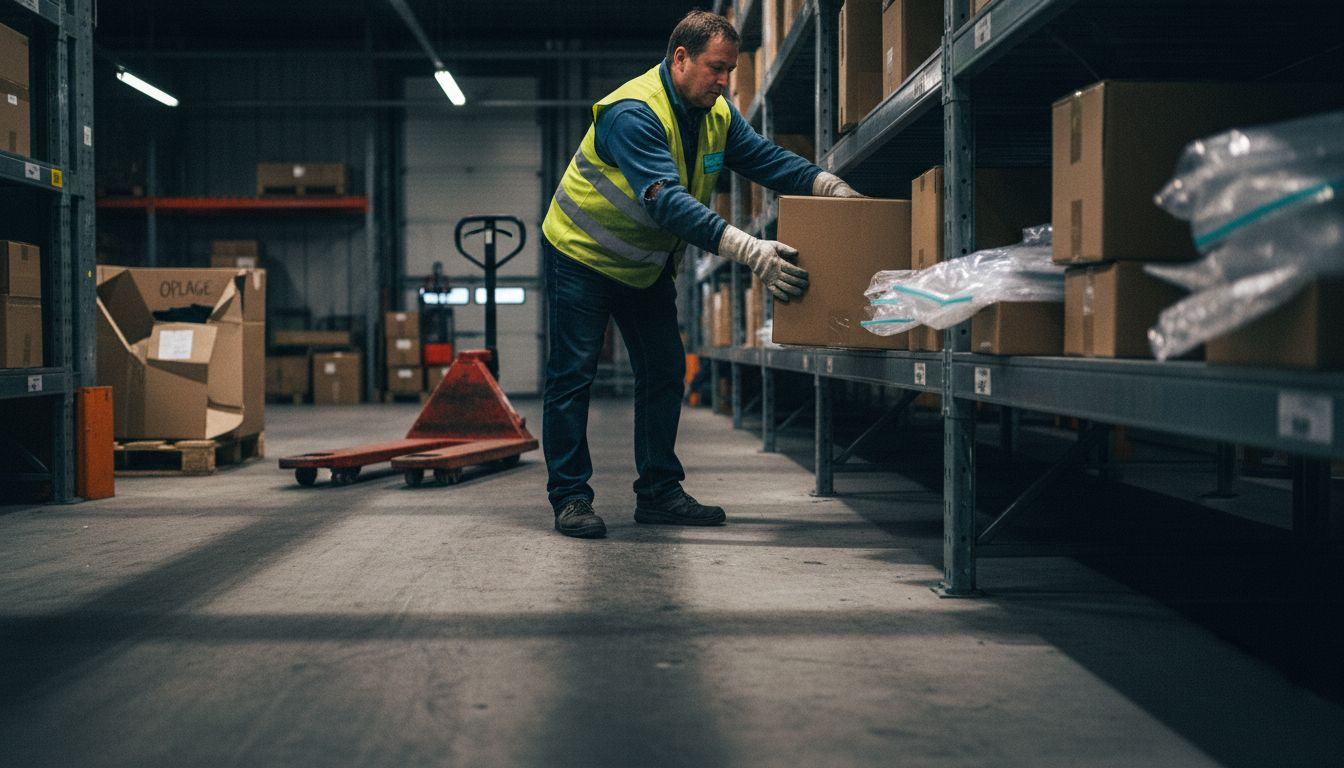
Volume is the most important factor in determining price. The more you order, the lower the price per bag. With bulk purchases, the costs drop dramatically. An order of 1,000 costs approximately €0.15 per bag, while 10,000 can bring the price down to €0.07 per bag.
Size and thickness directly influence the price. A small bag measuring 20x30 cm with 25 microns is cheaper than a large bag measuring 38x45 cm with 40 microns. The price ranges from €0.05 to €0.20 per bag depending on these specifications.
Printing adds a premium, but this investment pays off with larger print runs. For orders under 1,000, printing can double the cost. For orders over 5,000, the additional cost drops to approximately 5% of the base price. This makes printed bags accessible to medium-sized retailers.
| Order quantity | Price per piece (unprinted) | Price per piece (printed) | Savings in bulk |
|---|---|---|---|
| 500-1000 pieces | €0.15-€0.18 | €0.25-€0.30 | Basic |
| 1000-5000 pieces | €0.10-€0.13 | €0.15-€0.18 | 20-30% |
| 5000-10000 pieces | €0.07-€0.10 | €0.11-€0.13 | 40-50% |
| 10,000+ pieces | €0.05-€0.08 | €0.08-€0.11 | 50-60% |
Material type also plays a role in the cost of plastic bags . HDPE is cheaper than LDPE, but feels lower-quality. Recycled LDPE is priced between virgin LDPE and HDPE, but offers sustainability benefits that can strengthen your brand.
Shipping costs are an often-overlooked factor. Plastic bags are lightweight but bulky. For smaller orders, shipping costs can increase the price per unit. Bundle your orders with other packaging materials to spread the shipping costs.
Pro Tip: Plan your purchases around peak periods like holidays or seasonal events. By ordering early, you can take advantage of bulk discounts and avoid last-minute surcharges for rush deliveries.
Inventory management is essential for cost savings. Too much inventory ties up capital and requires storage space. Too little inventory leads to expensive emergency orders. Calculate your average monthly consumption and order three to six months in advance to find the best balance.
Sustainability and regulations in the Netherlands
The Dutch government has implemented strict rules to reduce plastic use. The ban on free plastic bags, effective July 1, 2021, is the most impactful measure for retailers and event organizers.
This ban means you must charge at least a nominal fee for each plastic bag. Most stores charge between €0.10 and €0.25 per bag. Violations result in fines of up to €4,500, so compliance is not optional.
The legislation aims to discourage plastic use and raise consumer awareness. For you as a business owner, it means plastic bags will become part of your sales strategy. You can no longer give them away as a free service.
Sustainable alternatives are gaining popularity:
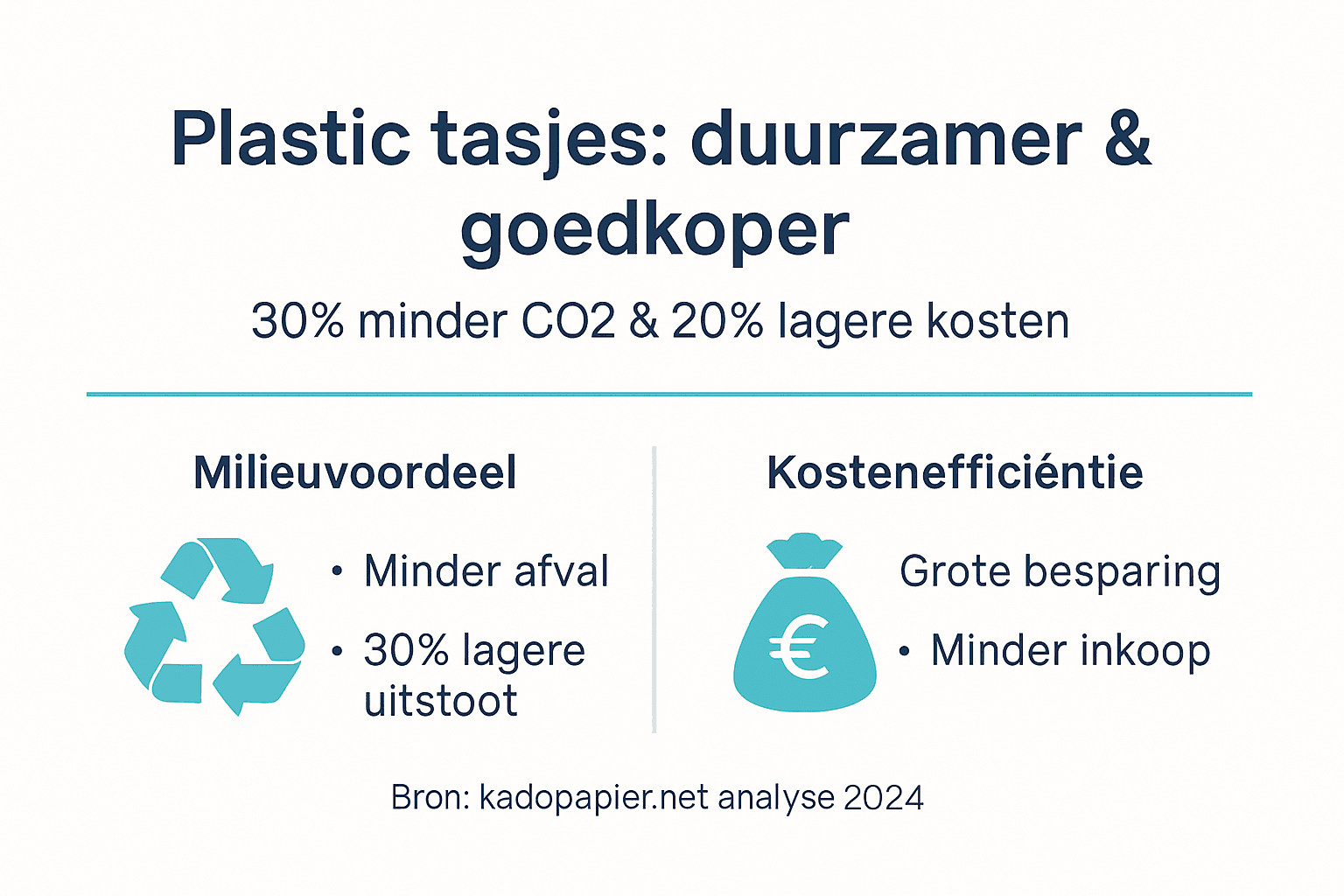
- Recycled LDPE reduces CO2 emissions by 30% compared to virgin material
- Biodegradable plastics offer an environmentally friendly image but are more expensive
- Reusable bags made of sturdy material stimulate customer loyalty
Recycled LDPE offers an excellent balance between sustainability and affordability. The material performs comparable to virgin LDPE but has a smaller environmental footprint. For brands that want to emphasize their sustainability, this is an attractive option.
Consumers value transparency about material use. State on your website or in your store what type of plastic you use and why. This builds trust and demonstrates your responsibility.
“Companies that invest in sustainable packaging materials often see a positive effect on customer satisfaction and brand perception, especially among younger target groups who highly value environmental awareness.”
The environmental impact of plastic bags extends beyond just production. Transport, use, and waste management all play a role. Choose local suppliers to reduce transport emissions. Encourage customers to reuse bags by making them durable and attractive.
Pro Tip: Partner with a sustainability certification to officially recognize your efforts. This can be a marketing advantage and demonstrates that you're going above and beyond legal minimums.
Compliance with regulations also requires good record-keeping. Keep invoices and documentation that prove you provide plastic bags for a fee. In the event of inspections, you must be able to prove your compliance with the law.
Branding and printing of plastic bags
Printed plastic bags transform simple packaging into a walking billboard for your brand. Studies show that printed bags increase brand recognition by an average of 30%, making them a valuable marketing investment.
Printing costs depend heavily on your print run. For small quantities under 1,000, printing is relatively expensive, often €0.10 to €0.15 extra per bag. For volumes over 5,000, this additional cost drops to €0.02 to €0.05 per bag, making it financially attractive.
Several printing methods are available. Screen printing is the most cost-effective for large print runs and offers clear, durable prints. Digital printing works better for smaller volumes or complex multi-color designs. Flexographic printing is a good compromise for medium-sized orders.
Your design should be simple and recognizable. Logos with too much detail will disappear on plastic. Use high contrast and limit yourself to a maximum of two or three colors to control costs. One-color printing is the least expensive and often just as effective if you approach it wisely.
Placement of your print is strategic. The front of the bag attracts the most attention. Some retailers choose to print on both sides to maximize visibility, but this increases the cost. Also consider printing on the bottom or handles for a unique touch.
Strategic benefits of printed bags:
- Increased brand visibility with every use of the bag
- Professional appearance that strengthens quality perception
- Word of mouth advertising when customers reuse the bag
- Differentiation from competitors with unprinted bags
Want to combine printing with sustainability? Use water-based ink instead of solvent-based ink. This is better for the environment and appeals to environmentally conscious consumers. Mention this on your bag or website to gain extra recognition.
Pro Tip: Legally protect your logo and corporate identity by applying for trademark registration . This prevents competitors from copying your visual identity and ensures that your investment in printed plastic bags works exclusively for your brand.
Test your design before ordering large volumes. Request samples or print a small test run to see how the colors and details look on the chosen plastic material. This prevents disappointment and costly mistakes with bulk orders.
Common misconceptions about plastic bags
There are many myths circulating about plastic bags that can cloud your decision-making. Let's clear up the most common misconceptions so you can make informed choices.
Misconception 1: I can still give away free bags if I call them gifts This is incorrect and can lead to fines of up to €4,500 per violation. The law explicitly prohibits the free distribution of plastic bags, regardless of how they are packaged. You must charge at least a nominal fee, usually between €0.10 and €0.25.
Misconception 2: Printed plastic bags are unaffordable for small retailers This is only true for very small volumes. For orders of 5,000 or more, the additional cost for printing becomes negligible, approximately 5% above the base price. For medium-sized retailers, this is a feasible investment that significantly increases brand visibility.
Misconception 3: Paper bags are always more environmentally friendly than plastic The reality is more nuanced. Paper bags require more energy and water to produce. They are only more sustainable if consumers reuse them multiple times. Plastic bags made from recycled LDPE often have a lower total environmental impact, especially if they are also reused.
Misconception 4: HDPE is inferior quality compared to LDPE HDPE has different properties, but isn't inherently inferior. For lightweight products and events, HDPE is perfectly suitable and cost-effective. The choice depends on your specific application, not on overall quality.
Misconception 5: Thin plastic bags always tear easily This depends on the thickness and the material. A 30-micron LDPE bag is surprisingly strong and suitable for heavy products. The problem only arises if you use bags that are too thin for items that are too heavy. Match the thickness to your products.
Other common thinking errors:
- “Customers do not accept paid plastic bags” – Most consumers are now used to paid bags and accept this as normal.
- "I don't have storage space for bulk orders" – Plastic bags are compact and stackable. A pallet of 10,000 bags takes up less space than you think.
- “Recyclable plastic bags are much more expensive” – Recycled LDPE is only marginally more expensive than virgin material, often within 10-15%.
By breaking down these misconceptions, you'll make more rational choices that serve both your budget and your business goals.
Practical tips for ordering and inventory management
Efficient purchasing and inventory management of plastic bags saves money and prevents frustration. These practical tips will help you order smartly and keep your inventory optimized.
-
Calculate your monthly consumption accurately Tracking how many bags you use each month provides insight into your needs. Count your daily usage for four to eight weeks. This average forms the basis for smart ordering.
-
Know suppliers' minimum order volumes Most suppliers have minimum order quantities, often 1,000 or 2,500 units. Minimum order quantities determine your purchasing strategy and significantly impact your unit price.
-
Plan ahead for peak times Retail has distinct peak periods: holidays, sales, and local events. Order six to eight weeks in advance of these periods to ensure timely delivery and avoid last-minute price increases.
-
Combine orders for shipping savings Order plastic bags together with other plastic bag inventory management materials, such as wrapping paper or bows. This spreads transport costs and makes larger volumes feasible.
-
Create a buffer stock of 20 percent Unexpected rushes or delivery delays can catch you off guard. An extra 20% buffer on top of your normal inventory prevents you from running out of bags during crucial moments.
-
Use inventory management software or spreadsheets Tracking your inventory levels doesn't have to be complicated. A simple spreadsheet with incoming orders and daily usage provides sufficient insight. Specialized software is available for larger retailers.
Pro Tip: Negotiate payment terms and delivery frequency with your supplier. Some suppliers offer discounts for regular orders or longer payment terms, which will benefit your cash flow.
Plastic bags require a dry, clean storage area. Moisture can damage plastic and fade printing. Do not stack boxes higher than 2 meters to prevent warping. Keep bags out of direct sunlight to prevent discoloration.
Rotate your inventory according to the FIFO principle: First In, First Out. Use older inventory first to prevent plastic from becoming obsolete. Although plastic has a long shelf life, very old bags can become brittle.
Evaluate your supplier regularly. Quality, delivery time, and customer service are just as important as price. A reliable partner that delivers consistently is worth more than the cheapest option that proves unreliable.
Conclusion and applicable insights
Choosing the right plastic bags for your retail or event requires a balance between several factors. Material, price, sustainability, and regulations all play a role in your decision.
LDPE offers strength and a premium feel, ideal for retailers who want to project quality. HDPE is cost-effective for events and lighter products. Recycled LDPE combines both advantages with a 30% sustainability gain, meeting growing consumer expectations.
Dutch law requires paid plastic bags. Compliance prevents fines and simultaneously offers an opportunity to position bags as a valuable service. Customers now accept payment as normal, especially if you offer quality.
Printing significantly enhances your brand experience without significant costs for volumes exceeding 5,000 units. An investment in printed bags pays off thanks to increased visibility and a professional appearance. Combine this with sustainable materials for maximum impact.
Key points for successful purchasing:
- Match material and thickness to your specific products and brand positioning
- Take advantage of bulk discounts by planning ahead and ordering larger volumes
- Take sustainability seriously with recycled LDPE for a smaller environmental footprint
- Invest in printing for volumes above 5,000 units for brand reinforcement
- Comply with legal obligations to avoid fines of up to €4,500
Good inventory management prevents both shortages and unnecessary capital ties. Calculate your average consumption, plan around peak times, and create a 20% buffer. This ensures flexibility without waste.
The right plastic bags support your business goals in several ways. They protect products, communicate your brand identity, and demonstrate environmental responsibility. By choosing wisely and ordering efficiently, you'll maximize the value of this essential packaging.
Discover Our Sustainable Plastic Bags & Packaging
Looking for affordable, sustainable plastic bags that are perfect for your retail store or event? Kadopapier.net offers a wide range of packaging materials for shops that combine quality with competitive prices. From LDPE to recycled plastic, we have options for every budget and application.
Our range includes various sizes, thicknesses, and colors, with printing options for attractive volumes. You'll find sustainable plastic bags that comply with Dutch regulations and simultaneously strengthen your brand identity.
We also support you with practical inventory management tips to optimize your purchasing. Our team will help you determine the right specifications and volumes for your situation, so you get the most value from your packaging investment.
Frequently asked questions about buying plastic bags
Can I still give away plastic bags for free to customers?
No, as of July 1, 2021, the free distribution of plastic bags has been prohibited in the Netherlands. You must charge a minimum of a nominal fee, usually between €0.10 and €0.25 per bag. Violations result in fines of up to €4,500 per case.
Are printed plastic bags much more expensive than unprinted ones?
For small volumes, yes, but for orders over 5,000 units, the additional cost becomes negligible. The additional printing costs then drop to approximately 5% of the base price, making printed bags accessible to medium-sized retailers and increasing their brand visibility by 30%.
Is recycled LDPE really better for the environment?
Yes, recycled LDPE reduces CO2 emissions by approximately 30% compared to virgin LDPE. The material performs similarly in terms of strength and durability, making it an excellent choice for sustainability-conscious retailers without compromising on quality.
What is the minimum order quantity for plastic bags?
Most suppliers have minimum orders of 1,000 to 2,500 units. These minimum volumes are necessary to offer competitive prices and cover production costs. Larger volumes result in significant savings per unit.
What is the difference between LDPE and HDPE plastic bags?
LDPE feels softer and more flexible, is stronger, and suitable for heavier products. HDPE is stiffer, more crunchy, and less expensive, ideal for lighter items. LDPE offers a premium feel, while HDPE is cost-effective for high-volume applications.
How long can I store plastic bags without loss of quality?
When stored properly in a dry, dark place out of direct sunlight, plastic bags will last for years. Moisture and UV radiation can damage the material and printing. Use older stock first, using the FIFO principle, to ensure optimal quality.